M’Hamid El Ghizlane
The oasis is the meeting point for many treks and the transition from the Drâa Valley into open desert.
Explore this trek →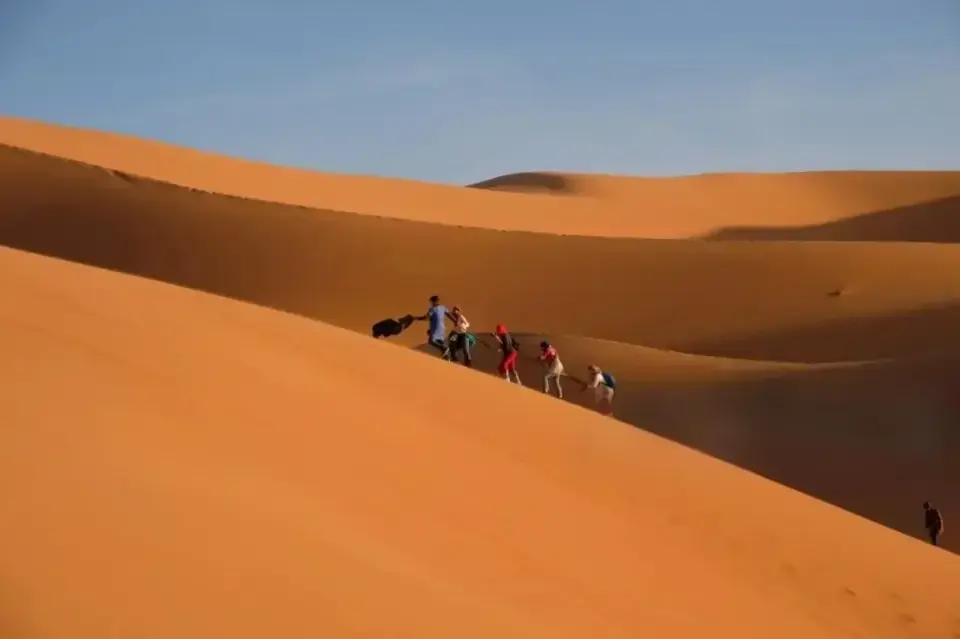
Leave the road at M’Hamid and walk into the Sahara with local guides and pack camels. Choose a short introduction to desert life or a longer journey through dunes, tamarisk country and remote bivouacs.
Beyond the oasis, the lower Drâa opens into dunes, dry riverbeds and stony plains. Explore the places before choosing how many days you want to walk.
Select a place to explore
The oasis is the meeting point for many treks and the transition from the Drâa Valley into open desert.
Explore this trek →A landmark dune area reached on several walking routes through the landscapes beyond M’Hamid.
Explore this trek →A dune area featured in longer walks linking Zahar with the western desert.
Explore this trek →A destination on the longer Zahar–Smar–Sedra walking circuit.
Explore this trek →A broad dune field farther west, reached on foot on selected treks or by desert track in a vehicle.
Explore this trek →The Iriki area adds wide open terrain to selected longer desert crossings; conditions vary.
Dunes and open country on the published caravan circuit through Zahar, Zmila and Aït Ounir.
Explore this trek →Walking is the centre of the journey. The guide, camel handlers and camp team organise each stage according to the chosen programme and conditions.
Meet the team at the agreed starting point. Road transfers from Marrakech or another city depend on the itinerary.
Cross sand and firmer ground with a small daypack. Pack camels carry the main luggage and camp equipment where included.
At a mobile bivouac the team prepares camp and meals. Facilities and the number of nights depend on the trip.
Some treks return on foot; others use a 4×4. Check whether a final camp night and onward transfer are part of your itinerary.
Photographs from our desert trekking collection; scenes are representative, not a promise of a particular camp or stop.
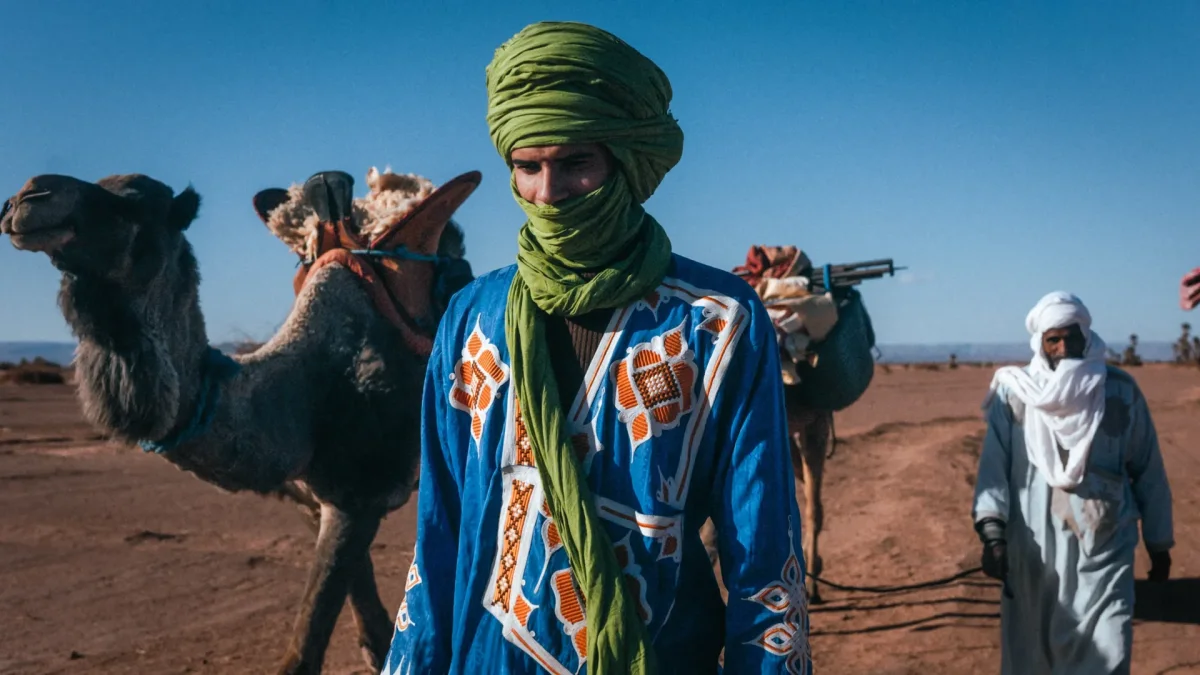
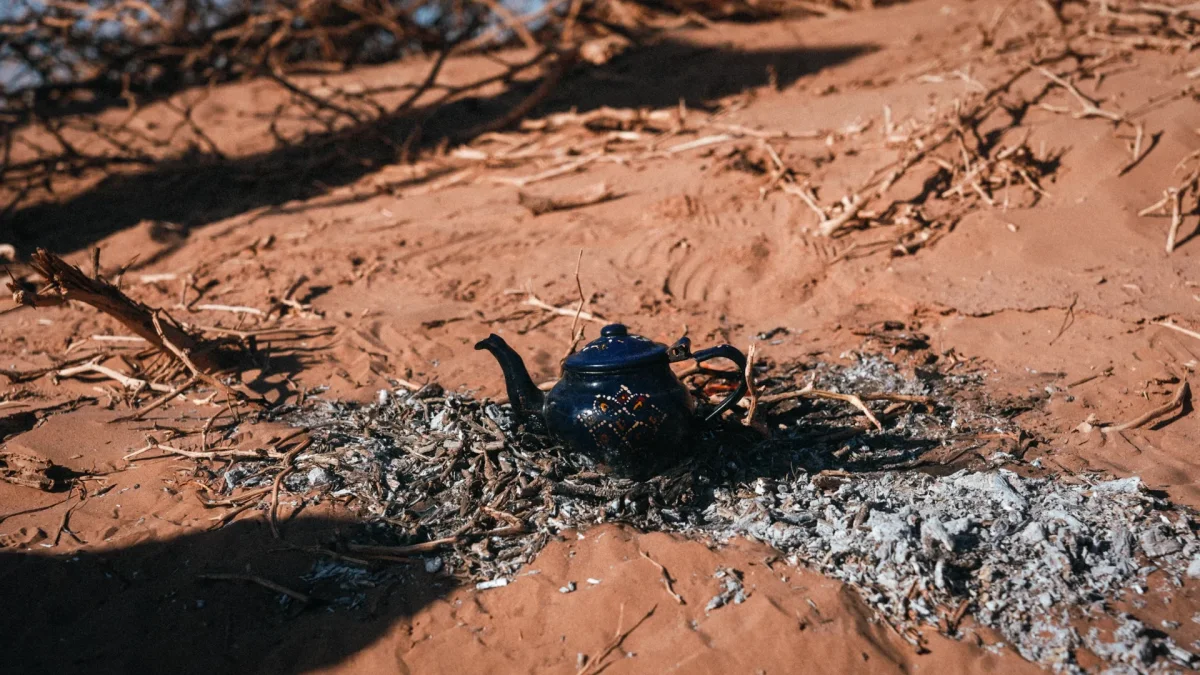
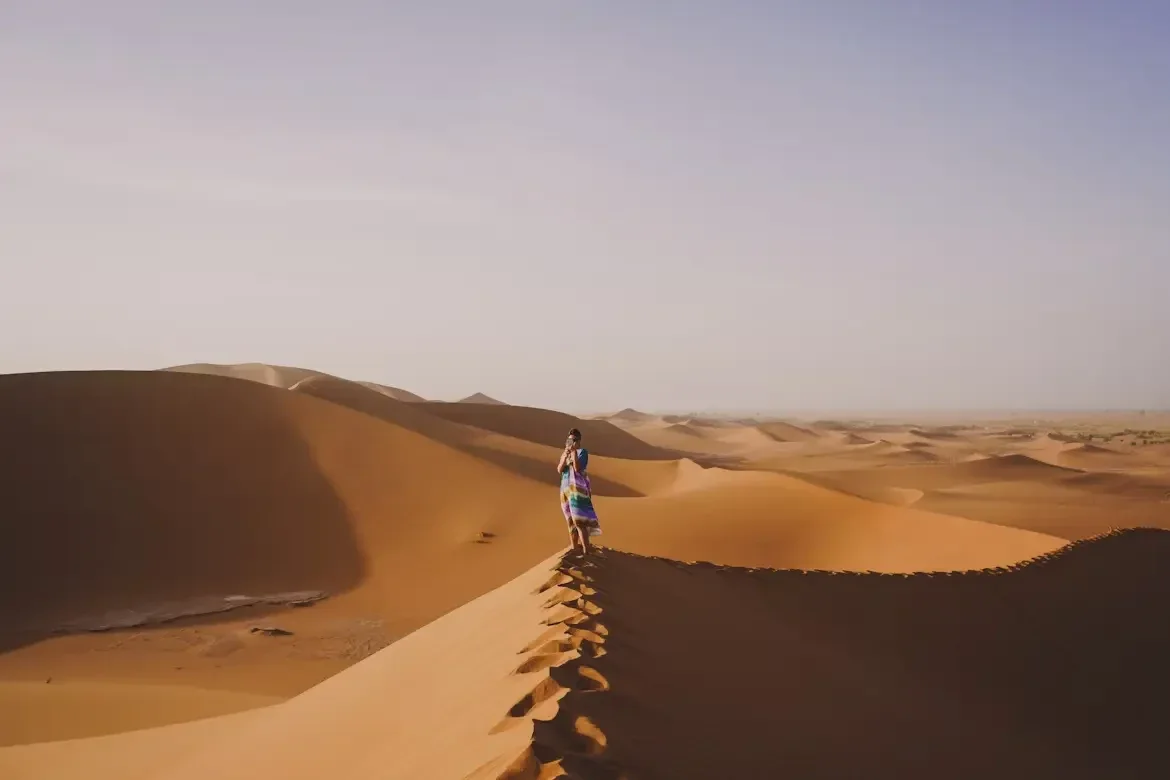
From M’Hamid, the route gradually leaves the oasis and settlements behind. Depending on the itinerary, walkers cross firm desert plains, dry riverbeds, tamarisk areas and belts of sand. The variety of ground is part of the journey; the Sahara is more than one dune landscape.
On a moving trek, the guide leads the walk while the team manages the bivouac logistics. Pack camels may carry luggage and camp equipment. Keep drinking water, sun protection and personal essentials in a small daypack. Walking times and breaks depend on the route, season and conditions.
A travelling bivouac changes location as the group progresses. The team sets up camp and prepares meals using the arrangements specified for the trip. Conditions are generally simpler than at a fixed camp: tents, bedding, water and toilets depend on the package. Sleeping under the stars may be possible when weather and arrangements allow; it is not guaranteed.
Check how many nights are spent at a mobile bivouac and whether the programme also includes a fixed camp or hotel. Read the itinerary’s meals and transfers carefully: two trips of the same length can be organised very differently.
Choose enough time for real walking after the journey south. A five-day trip from Marrakech does not necessarily mean five walking days: road transfers and camp nights may form part of the total. Compare the daily stages rather than the headline duration alone.
Desert trekking does not necessarily require mountaineering skills, but soft sand, sun, wind and consecutive walking days make a difference. Prepare with regular walks in the shoes and daypack you will use. Tell the team about your walking experience, children’s needs and any constraints when selecting a route.
Autumn and spring are often favourable for walking around M’Hamid. Winter can bring pleasant walking days and cold nights; summer heat requires careful changes to timing and sometimes to the trip itself. Conditions vary, so discuss your dates and route.
Bring broken-in walking shoes, breathable covering layers, a hat or scarf, sunglasses, a water bottle, a headlamp and seasonal warm clothing. Check baggage transport, bedding and drinking-water arrangements before finalising your packing list.
M’Hamid is a gateway to several Sahara routes. Walks towards Erg Zahar cross varied terrain before reaching its dunes. Routes towards Erg Chegaga and longer crossings need appropriate planning for distance and the return journey.
A 4×4 excursion to Chegaga and a trek to the dunes are different experiences. Check where walking starts, which stages are on foot and how the journey ends. Use the departure calendar and individual itineraries to compare group dates or ask about a private trip.
Water and food have to be planned before leaving settlements. On a mobile trek, the way drinking water is carried and replenished depends on the route and season. Ask how much water you should carry between stops, and tell the team about dietary requirements before departure.
Meals and breaks bring the group together, but the exact menu and included meals depend on the itinerary. Avoid assuming bottled drinks, special diets or snacks are included: check your programme and explain any allergies in advance.
The desert around M’Hamid is a lived-in landscape with pastoral traditions as well as visitor routes. The local guide and caravan team bring knowledge of terrain and daily organisation; allow space for conversations without treating people or their way of life as a performance.
Carry your waste back, use water carefully and ask before photographing people. Stay with the guide in remote areas, follow the team’s instructions around animals and avoid disturbing vegetation or wildlife.
Explore the itineraries, then ask us to confirm dates and services.
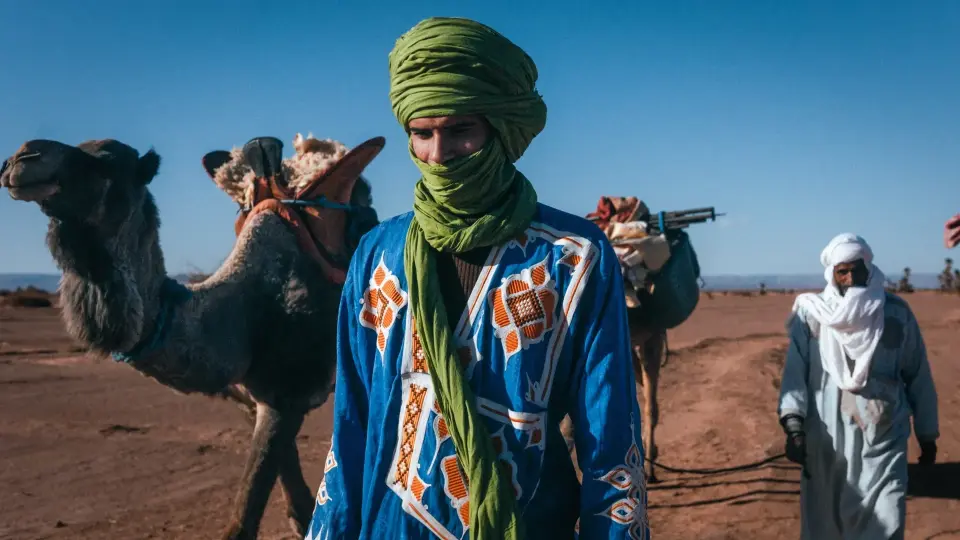
Two walking stages to Erg Zahar, a 4×4 return and a final camp night before onward travel.
View itinerary →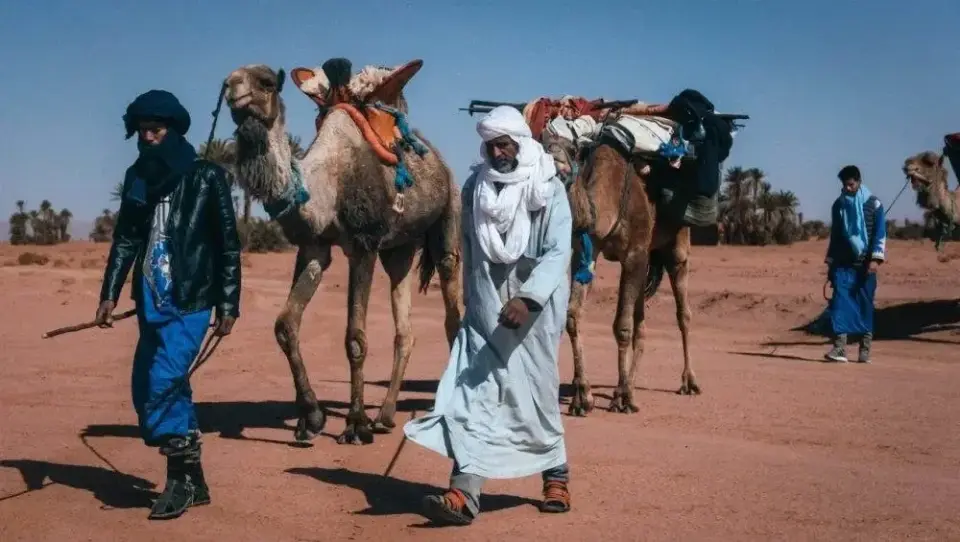
Walk through Lbour and Bougarn to Chegaga; return to camp before the next day’s Marrakech transfer.
View itinerary →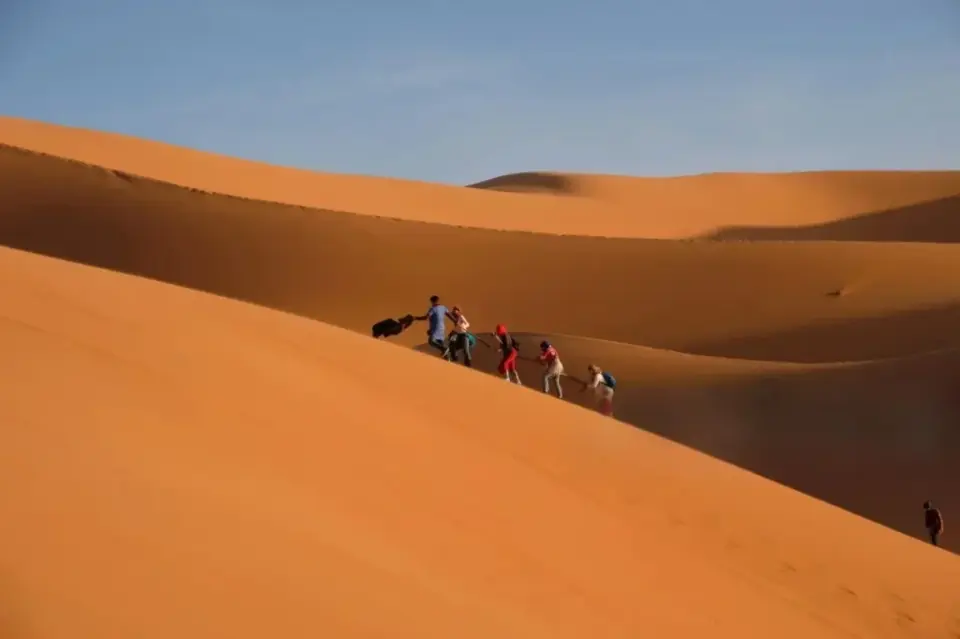
Four days walking towards Sidi Naji and Erg Zahar, with the last night at camp before returning to Marrakech.
View itinerary →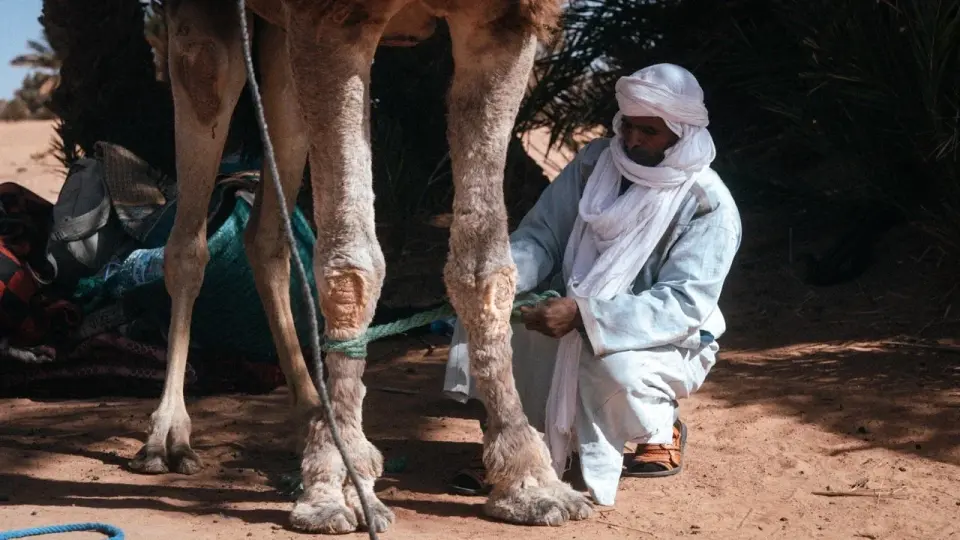
Six days on foot give this Sahara journey its purpose. From M’Hamid, the caravan follows Sidi Naji and Ait Ounir to Erg Zahar, then turns towards Zmila and Lanhiche before returning to the oasis. The route is a walking circuit with a mov...
View itinerary →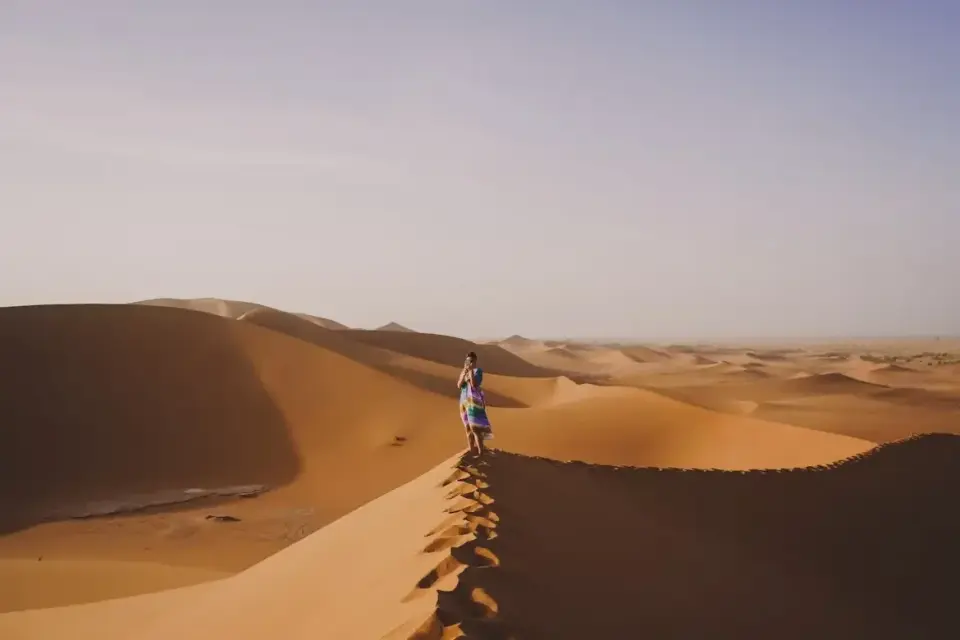
Nine desert days through Zahar, Smar and Sedra, followed by a camp night and next-day onward travel.
View itinerary →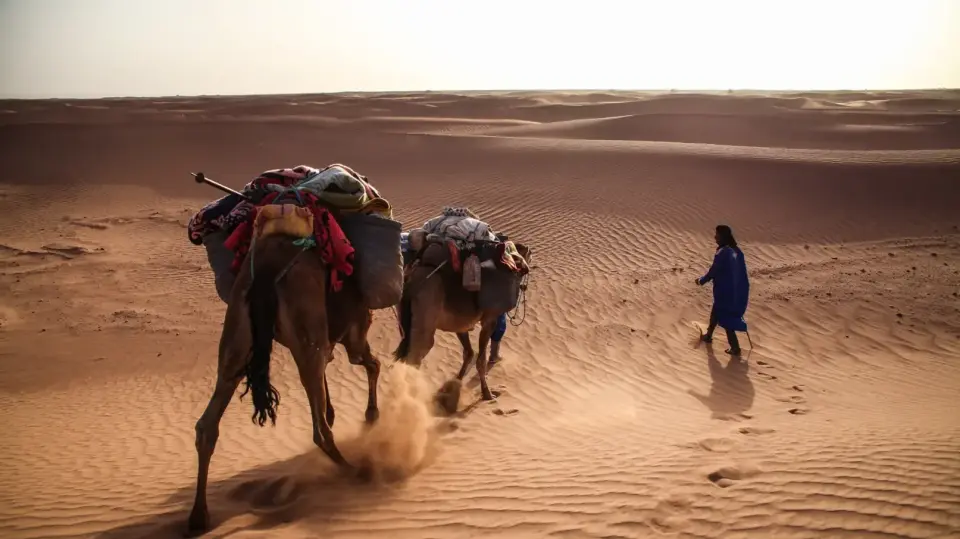
Twelve desert days linking two dune areas, with a walking return, a camp overnight and onward travel the next day.
View itinerary →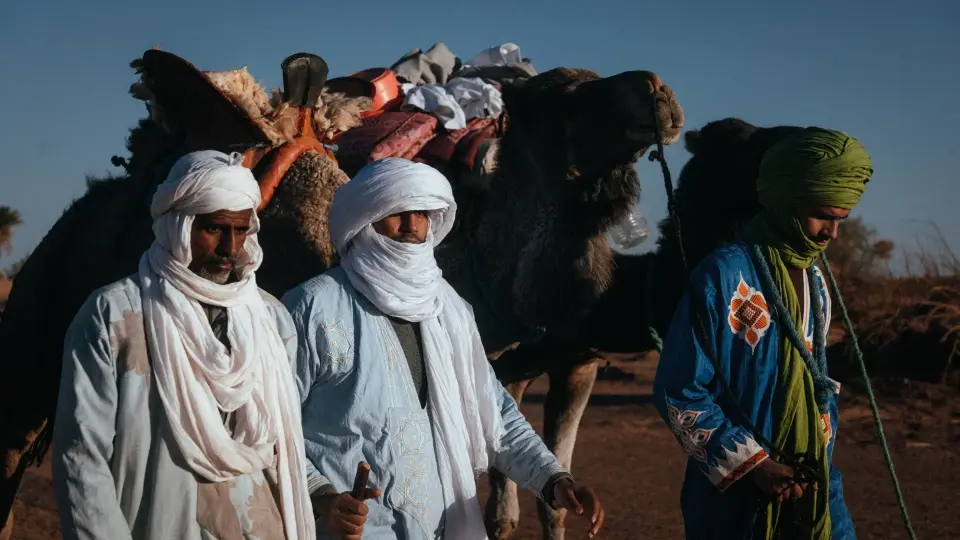
Fourteen days with the caravan and a walking return to M’Hamid, with a final camp night before onward travel.
View itinerary →No matching published itinerary is available here yet. Contact us for a route proposal.
DesertBrise is a family-run Moroccan travel company with roots in M’Hamid. Tell us what matters to you; we will explain the route and services before you commit.
Read independent traveler feedback ↗Count road transfers separately. A short trek introduces caravan life; more walking days allow a quieter route and fewer rushed stages.
Some routes suit first-time walkers, but sand and weather affect effort. Tell us your fitness and expectations before choosing a route.
Pack camels carry equipment on caravan routes. Riding is not automatically included throughout the trek; ask what is available on your itinerary.
We discuss ages, walking tolerance and camp expectations, then propose shorter stages or another desert experience if needed.
The itinerary-specific proposal sets out guides, camel support, camp equipment, meals, water and any transfers. Check it before confirming.
Yes. Share your dates, number of travelers and priorities so we can plan a private route and quote its actual services.
Send your dates, arrival city, group size and preferred walking hours. We will suggest a route that fits the journey you want.
Plan this journey →