
M’Hamid Is Not Just Another Desert Stop
Many travelers come to Morocco dreaming of the Sahara.
They search for dunes, camel rides, desert camps, stars, and sunset. But not all desert experiences in Morocco are the same. Some are built for quick photos. Some are built for comfort. Some are built for groups. Some are built around a famous dune. And some are built around something deeper.
M’Hamid belongs to the deeper kind of desert experience.
For me, M’Hamid is not only a place on a map. It is a doorway. It is one of those places where the road begins to lose its power and the desert begins to speak. When you reach M’Hamid, you feel that the city rhythm is already far behind. The landscape opens. The air changes. The silence becomes stronger. The journey becomes less about arrival and more about entering.
This is why a M’Hamid desert trek is different from a normal desert tour.
A normal tour may take you to a camp, give you a camel ride, show you sunset, and bring you back. That can be beautiful, but it is only one layer of the desert.
A trek from M’Hamid gives you another layer.
You walk. You slow down. You feel the ground. You see how the landscape changes. You understand that the Sahara is not empty. You begin to notice tracks, wind, plants, shade, silence, and the way local guides move through the land with calm knowledge.
A M’Hamid trek is not only about seeing the Sahara.
It is about learning how to feel it.
The Last Village Before the Deep Desert
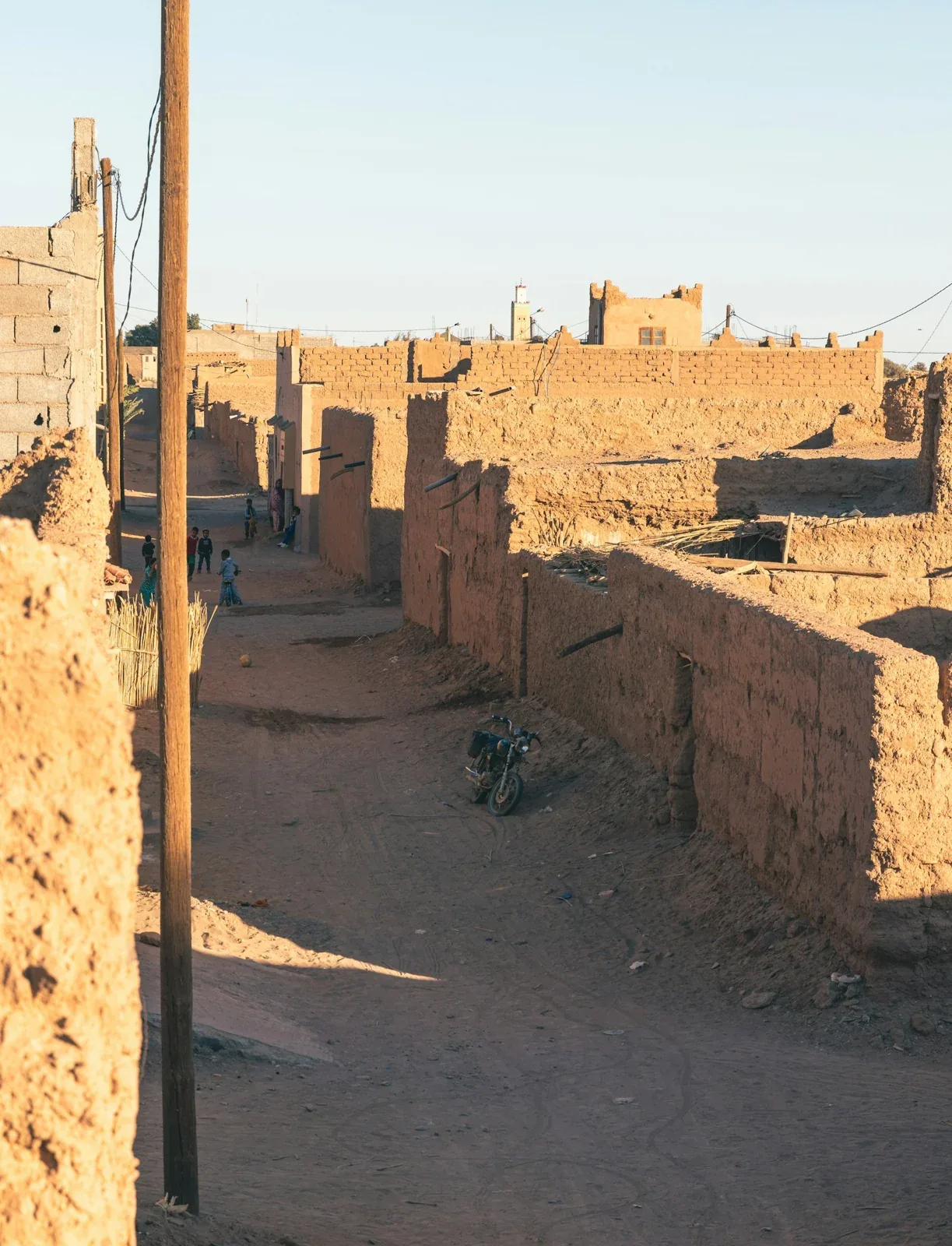
M’Hamid is often described as one of the last villages before the vast Sahara. This matters because the feeling of the place is different from more developed tourist areas.
There is a sense of edge.
Behind you are roads, villages, palm valleys, and the Draa region. In front of you is space, sand, stone, wind, silence, and old desert routes. This position gives M’Hamid its identity. It is not just a destination. It is a transition.
Travelers who arrive from Marrakech usually pass through the High Atlas Mountains, Ait Ben Haddou, Ouarzazate, the Draa Valley, Zagora, and then continue south toward M’Hamid. This route is already part of the experience. You do not jump suddenly into the desert. You descend slowly from city to mountain, from mountain to valley, from valley to palm groves, and finally toward the Sahara.
By the time you reach M’Hamid, your body has already started to understand that Morocco is changing.
This is important.
A good desert journey should prepare you before you arrive. The road should not be only transport. It should be part of the story.
M’Hamid gives travelers that feeling of crossing a threshold.
The road ends, but the journey begins.
Why M’Hamid Feels More Authentic
Authenticity is a word many travel companies use too much.
For me, authenticity is not decoration. It is not only a tent, a camel, traditional music, or a beautiful photo. Authenticity means the experience is connected to real people, real land, real rhythm, and honest local knowledge.
M’Hamid feels authentic because it still carries a strong desert identity.
The region is connected to nomadic life, caravan memory, desert routes, and the daily reality of people who know the Sahara not as a product, but as home. When you trek from M’Hamid, the experience can still feel simple, human, and close to the land.
This does not mean every experience in M’Hamid is automatically authentic. Any place can become commercial if it is badly organized. But M’Hamid gives a better foundation for travelers who want depth.
The landscape is wider.
The rhythm is slower.
The routes can be quieter.
The trekking culture feels natural.
The guides understand the land from experience.
The desert does not feel like only a stage for tourists.
That is why M’Hamid is one of the best places for travelers who want a real Sahara trek in Morocco.
A Trek Is Different From a Tour
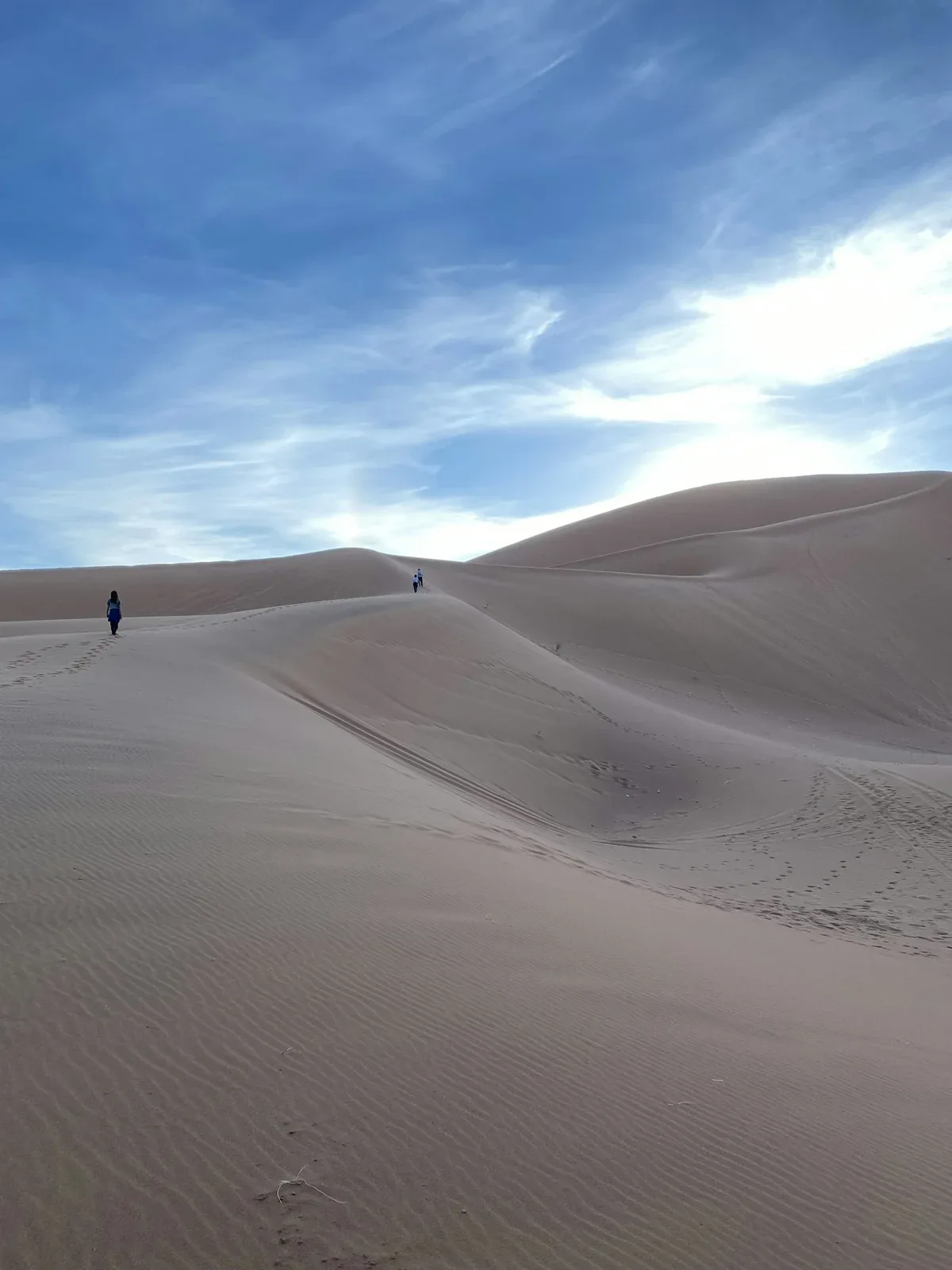
Before choosing M’Hamid, travelers should understand the difference between a desert trek and a desert tour.
A desert tour usually means traveling by vehicle, arriving near dunes or a camp, taking a camel ride, watching sunset, sleeping in a tent, and returning or continuing the next day.
A desert trek means walking through the Sahara.
This changes everything.
When you walk, time becomes slower. The desert becomes bigger. Small details become visible. The guide’s knowledge becomes more important. The silence becomes part of the experience. You stop being only a visitor looking at the landscape. You become part of the rhythm for a few days.
A trek from M’Hamid may include walking through dunes, dry riverbeds, tamarisk areas, stone desert, open plains, and quiet camp places. It can be short and gentle, or longer and deeper depending on the traveler.
The point is not to make the trip difficult.
The point is to make it real.
Walking brings the Sahara closer.
The Sahara Is Not Only Dunes
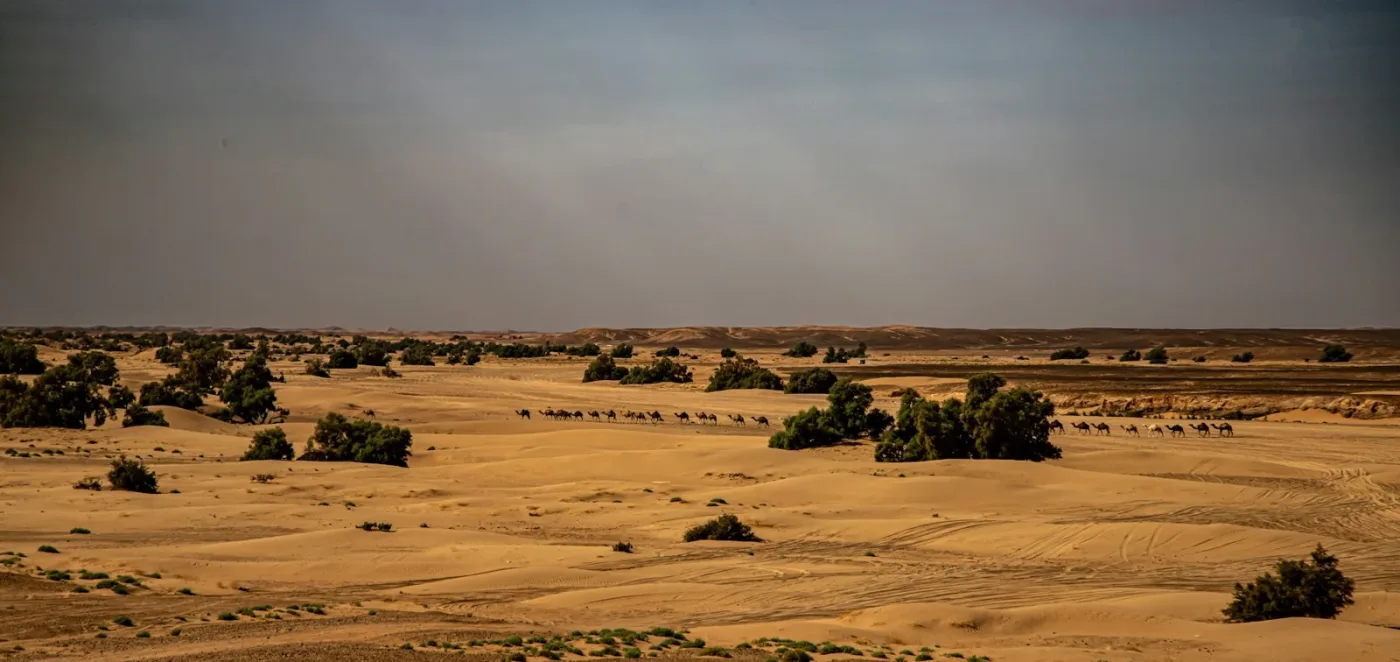
Many travelers imagine the Sahara as endless sand dunes.
Dunes are beautiful, and Morocco has powerful dune areas. But the desert is more than dunes.
Around M’Hamid, travelers can experience different desert landscapes. Some areas are sandy and soft. Some are stony and open. Some pass through dry riverbeds. Some have tamarisk trees. Some are wide flat spaces where the horizon feels endless. Some routes lead toward Erg Chigaga, one of Morocco’s most powerful dune areas.
This variety makes trekking from M’Hamid special.
When travelers only visit one dune area, they may think the desert is simple. But when they walk, they begin to understand that the Sahara has many faces.
There is the desert of morning light.
The desert of strong midday sun.
The desert of tea under shade.
The desert of wind.
The desert of sunset.
The desert of fire.
The desert of cold stars.
The desert of silence before sunrise.
Each moment changes the same land.
This is why a trek is richer than a quick stop.
Walking Changes the Mind
One of the most powerful parts of a M’Hamid desert trek is what walking does to the mind.
At the beginning, many travelers are still connected to normal life. They think about time, phones, messages, work, plans, and photos. They want to know what comes next. This is normal.
But after walking for some time, something changes.
The body begins to follow the pace of the steps. The mind becomes quieter. The traveler starts to notice the sound of wind, the shape of the land, the movement of camels, the taste of tea, the softness of evening light.
This is not something forced.
The desert does it naturally.
Many people arrive looking for an adventure and leave with something deeper. They remember the silence more than the activity. They remember the fire more than the schedule. They remember the feeling of walking more than the photo.
This is why trekking from M’Hamid is powerful.
It gives travelers enough time to change rhythm.
And when the rhythm changes, the Sahara becomes more than a place.
It becomes an experience inside the body.
Local Guides Make the Desert Readable
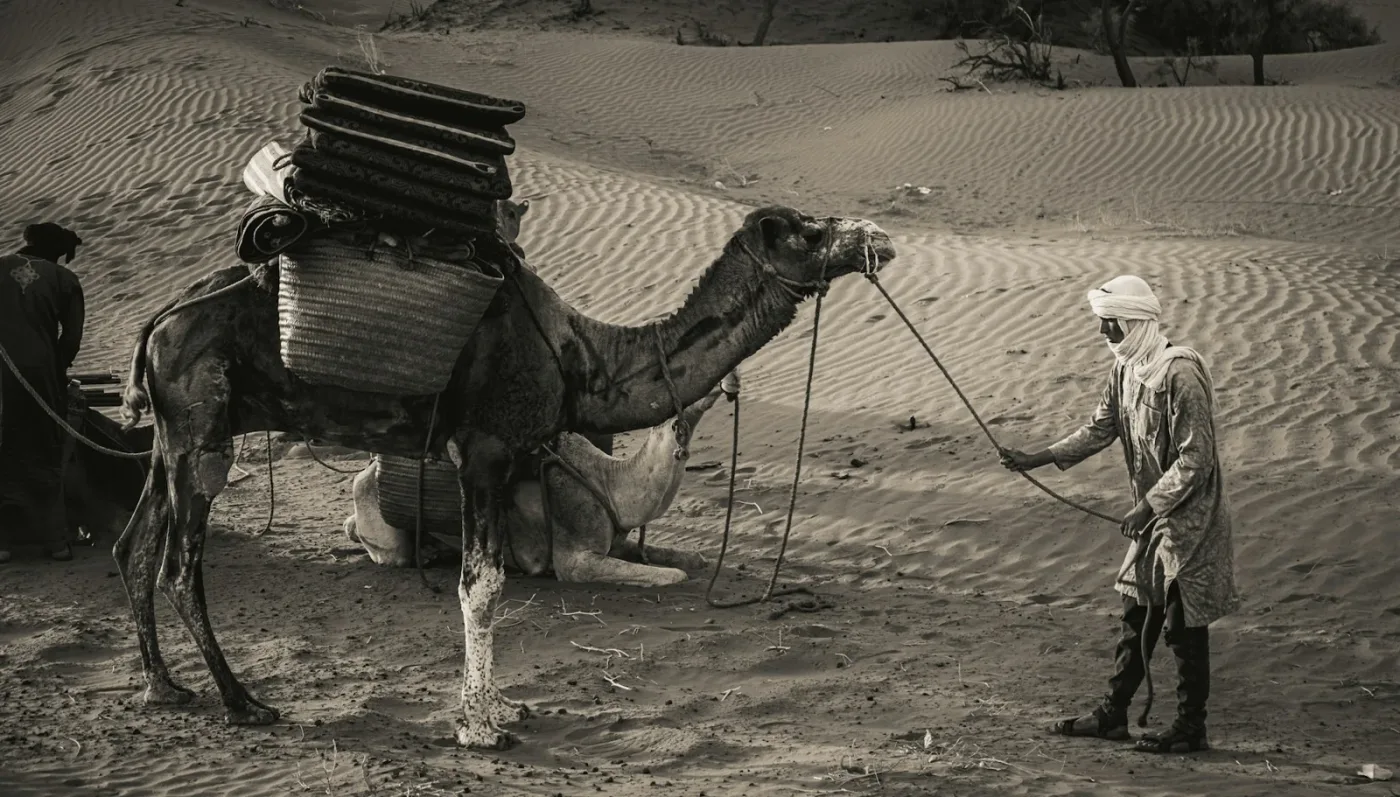
A good desert guide is not only someone who walks in front.
A local guide helps travelers understand what they are seeing.
To a visitor, the desert can look empty. To a guide, it is full of signs. He sees tracks. He understands wind. He knows where shade may be found. He knows which areas are better for camp. He understands the walking rhythm. He knows how to prepare tea, manage the pace, and keep the journey safe and comfortable.
This knowledge does not come from books.
It comes from living, walking, observing, and learning the land through experience.
This is one of the reasons we believe local guides are the heart of a real M’Hamid trek. The guide creates the bridge between traveler and desert.
Without explanation, the Sahara may look beautiful but silent.
With the right guide, the silence begins to speak.
The Role of Tea, Fire, and Camp Life
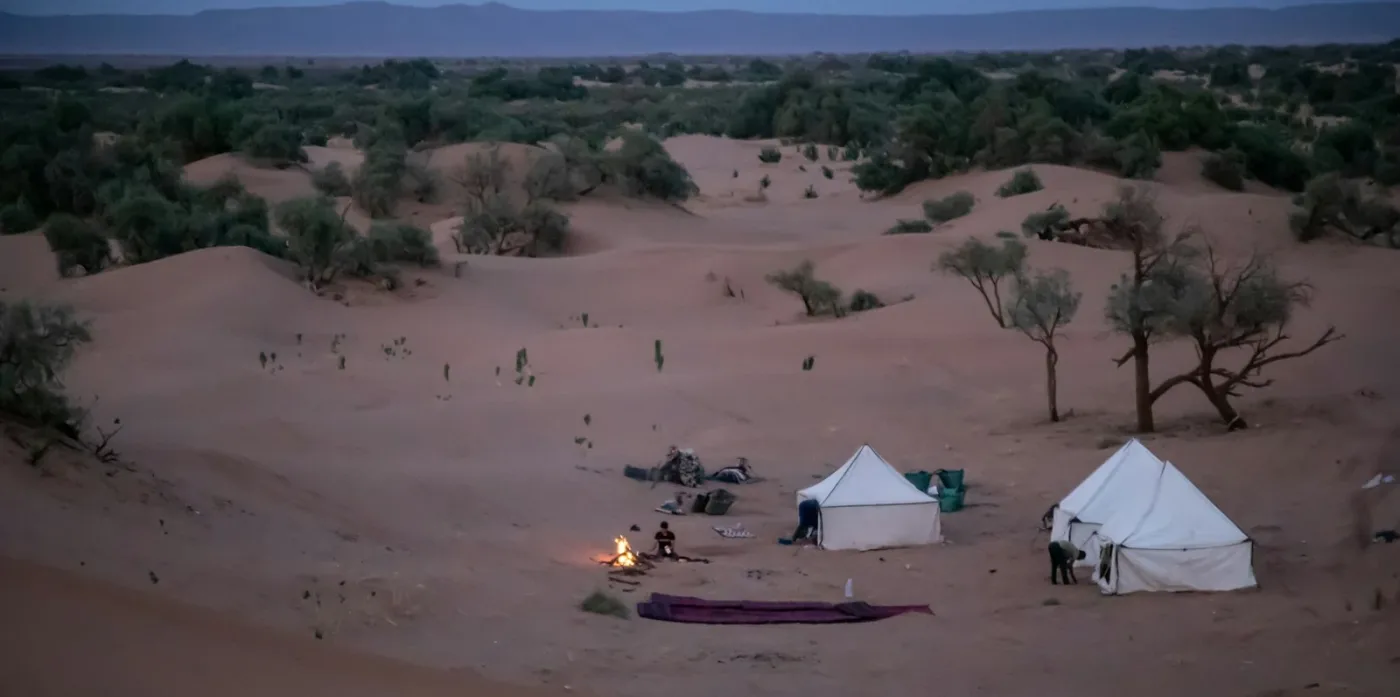
A desert trek is not only walking.
The stops are part of the journey.
Tea in the Sahara is not only a drink. It is a pause. It is hospitality. It is a way to gather. It slows the day. It gives the group time to rest, talk, and feel the place.
Fire at night also has a special meaning. Around the fire, the desert becomes human. Stories come naturally. The sky opens above. The cold night becomes warmer. Travelers begin to feel the simplicity of desert life.
Camp life can be simple or comfortable depending on the trek, but the most important thing is atmosphere.
A good camp does not need to be fake luxury. It needs to feel safe, clean, warm, and connected to the desert. A simple bivouac can be unforgettable when the rhythm is right.
Many travelers think they will remember the dunes most.
Often, they remember the tea and fire.
That is the human side of the Sahara.
M’Hamid and Erg Chigaga
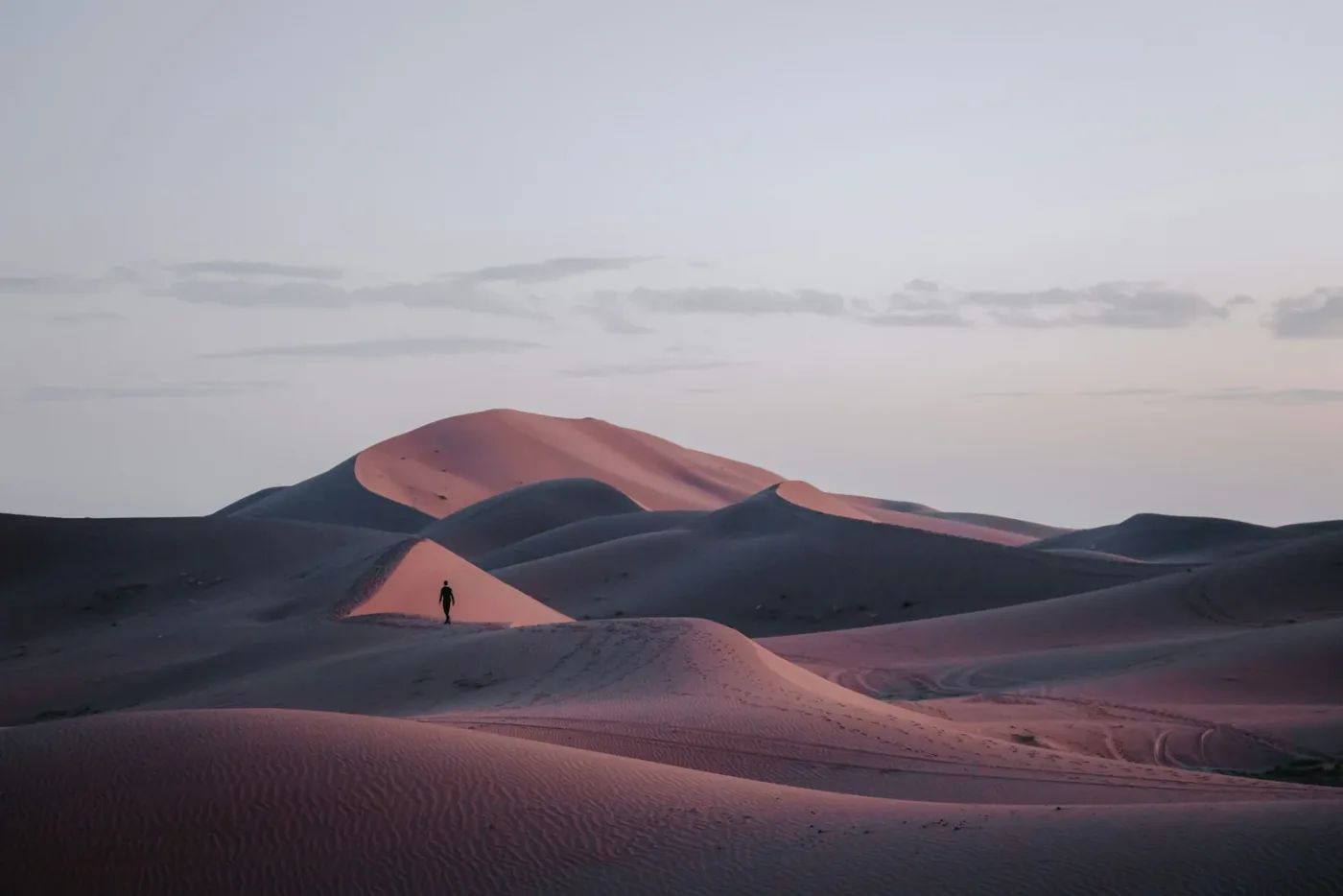
M’Hamid is also important because it connects travelers to Erg Chigaga.
Erg Chigaga is one of Morocco’s most powerful desert areas for travelers who want space and a wilder Sahara feeling. It is not as instantly accessible as some other dune areas, and that is part of its strength.
The journey toward Erg Chigaga can be done by 4x4, by trek, or through a combination of both. For travelers who want comfort, a private 4x4 route can be beautiful. For travelers who want deeper immersion, walking routes from M’Hamid toward the wider desert can create a much stronger feeling.
Erg Chigaga should not be rushed.
It deserves time, planning, and respect.
This is why we often recommend M’Hamid and Erg Chigaga for travelers who want a desert experience beyond the standard tour. The route gives more space, more silence, and more feeling of entering the Sahara.
It is not only about reaching a destination.
It is about how the journey opens.
Best Time for a M’Hamid Desert Trek
The best time for a M’Hamid desert trek is usually from October to April.
These months are more comfortable for walking. The days are usually better for trekking, and the evenings can be pleasant or cold depending on the season.
November, December, January, February, and March are especially good for walking. Winter nights can be cold, so travelers should bring warm layers. March and April can be beautiful for those who prefer warmer weather, but the daily rhythm still needs good planning.
Summer is usually not the best time for serious multi-day trekking because the heat can be too strong.
For M’Hamid treks, season matters because walking is part of the experience. A good local operator should adapt the route, timing, and daily rhythm depending on weather.
The Sahara is always powerful, but not every month gives the same comfort.
Choosing the right season protects the quality of the journey.
How Many Days Do You Need?
The right number of days depends on the depth you want.
A short trek can give a first taste of the Sahara.
A 2-day trek can introduce the walking rhythm if you are already near M’Hamid.
A 3-day trek gives more time to settle.
A 4-day trek begins to feel immersive.
A 5-day trek can become a deep Sahara experience.
If you are starting from Marrakech, remember that the road to M’Hamid takes time. A real desert trek from Marrakech should include enough days for the journey to the desert, the trek itself, and the return or onward route.
For serious travelers, I often recommend 4 or 5 days when possible.
Not because more days always means better travel, but because the desert needs time.
The first day introduces you.
The second day slows you.
The third day begins to change your rhythm.
The fourth and fifth days allow you to feel the desert more deeply.
This is why rushed desert travel often misses the point.
Who Should Choose a M’Hamid Desert Trek?
A M’Hamid desert trek is ideal for travelers who want more than a quick camp night.
It is especially good for:
-
travelers seeking authenticity
-
couples wanting silence and privacy
-
families who want a private adapted desert experience
-
photographers looking for real atmosphere
-
small groups wanting a deeper journey
-
yoga and retreat groups
-
travelers interested in nomadic culture
-
people who want less commercial routes
-
travelers who enjoy walking
-
anyone who wants to feel the Sahara slowly
It may not be the best choice for someone who wants only the fastest, easiest, or most luxury-focused desert experience. For those travelers, a private desert tour or a classic camp experience may fit better.
The right choice depends on the traveler.
But if your dream is silence, walking, and real desert atmosphere, M’Hamid is one of the strongest choices in Morocco.
M’Hamid for Couples
For couples, M’Hamid can be very powerful.
The desert gives privacy in a natural way. There is space, quiet, sunset, stars, fire, and time without distraction. A private trek or private camp experience can feel intimate without needing artificial luxury.
Some couples want a romantic desert camp with comfort. Others want walking, simplicity, and real connection. M’Hamid can offer both when the trip is designed carefully.
For honeymoons, anniversaries, or private journeys, the most important thing is rhythm. Too much driving, too many stops, or a crowded camp can weaken the feeling. A well-planned M’Hamid trek gives the couple space to experience the Sahara at their own pace.
The desert is romantic when it is not rushed.
M’Hamid for Families
Families can also enjoy M’Hamid, especially when the experience is private and adapted.
Children often love the desert: sand, camels, stars, campfire, open space, and simple adventure. But the trek should match their age, energy, and comfort.
A family M’Hamid experience can include short walks, camel support, flexible timing, comfortable camp, storytelling, and enough rest. It does not need to be extreme.
Private planning is important for families because children do not always follow fixed schedules. They may need breaks, snacks, shade, or shorter walking distances.
With the right plan, the desert can become one of the strongest family memories in Morocco.
It teaches simplicity in a way children understand naturally.
M’Hamid for Photography
For photographers, M’Hamid offers more than postcard dunes.
It offers real desert storytelling.
You can photograph walking routes, guides, camels, camp preparation, tea moments, fire, wide horizons, textures of sand and stone, sunrise, sunset, and nomadic atmosphere.
Erg Chigaga can add dramatic dune landscapes, while the routes from M’Hamid create the human and documentary feeling around the journey.
Photographers should avoid rushed trips if possible. The desert needs time for light and atmosphere. One sunset may be beautiful, but several days give more chances for real images.
The best desert photo is not always the biggest dune.
Sometimes it is a guide pouring tea in silence.
Sometimes it is footprints in morning light.
Sometimes it is a camel line disappearing into space.
M’Hamid gives those moments.
M’Hamid for Yoga and Retreats
M’Hamid is one of the best desert regions for yoga retreats, meditation, coaching journeys, and deep rest.
The reason is simple: silence.
A retreat needs space. It needs privacy. It needs a natural rhythm. It needs mornings, evenings, walking, stillness, and a camp environment that supports the group.
M’Hamid and Erg Chigaga can offer this beautifully when planned with care.
A desert retreat can include sunrise yoga, walking meditation, tea rituals, quiet afternoons, fire circles, stargazing, and cultural exchange with local guides. The desert becomes part of the practice, not only a background.
This is important.
A retreat should not use the Sahara only as decoration. It should respect the land and allow the environment to shape the experience.
When this is done well, the desert becomes a place of reset.
What to Pack for a M’Hamid Trek
Packing for a M’Hamid trek should be light and practical.
Important items include:
-
comfortable walking shoes
-
breathable daytime clothes
-
warm layers for evening and winter nights
-
scarf or cheche
-
hat
-
sunglasses
-
sunscreen
-
lip balm
-
refillable water bottle
-
small day backpack
-
personal medication
-
headlamp
-
basic toiletries
-
camera or phone protection from sand
Winter treks need warmer clothing because desert nights can be cold. Spring and autumn need flexible layers. Summer is usually not recommended for serious trekking.
Do not bring heavy suitcases into the desert if possible. Soft bags are easier for camps and camel support.
Good packing helps you enjoy the trek without distraction.
The desert asks for simplicity.
Why M’Hamid Should Not Be Rushed
M’Hamid is not a place to rush.
A very short visit can show you the edge of the desert, but it will not give the full feeling. The beauty of M’Hamid appears slowly — in the walk, in the silence, in the evening light, in the camp rhythm, in the way the land opens beyond the village.
If you arrive late and leave early, you miss the strongest part.
This is why we recommend giving the desert enough time when possible. A 4-day or 5-day journey from Marrakech, or a multi-day trek starting from M’Hamid, gives much more depth than a rushed overnight.
The Sahara does not reveal itself to speed.
It reveals itself to attention.
My Recommendation and How We Design M’Hamid Treks
My Honest Recommendation
Here is my honest advice as a local Morocco travel manager:
Choose M’Hamid if you want a real Sahara trek, quiet atmosphere, walking routes, nomadic feeling, and a deeper desert experience.
Choose a private trek if you want flexibility, privacy, and a rhythm adapted to you.
Choose Erg Chigaga from M’Hamid if you want more space, wild beauty, and a less commercial desert feeling.
Choose October to April for the best trekking conditions.
Choose at least 3 days if you want a stronger taste, and 4 or 5 days if you want real immersion.
Do not choose M’Hamid only because it is a name online.
Choose it because you want the Sahara to become more than a photo.
M’Hamid is for travelers who want to enter the desert slowly.
How We Design M’Hamid Desert Treks
At DesertBrise Travel and Trek Desert Maroc, we design M’Hamid treks around the traveler and the season.
We look at your starting city, number of days, comfort level, walking ability, group type, and the kind of experience you want.
Some travelers need a private 3-day trek.
Some need a 5-day Sahara immersion.
Some need Erg Chigaga by 4x4 and walking.
Some need a family-friendly desert experience.
Some need a romantic private camp.
Some need a yoga retreat.
Some need a full Morocco tour that includes Marrakech, Atlas Mountains, kasbahs, M’Hamid, Erg Chigaga, Fes, or the coast.
We do not believe every traveler should receive the same desert trip.
The route should match the person.
And the desert should be experienced with honesty.
Final Thoughts: M’Hamid Is Where the Desert Begins to Speak
M’Hamid is one of Morocco’s most meaningful desert gateways.
It is not only a place to reach. It is a place to begin.
From there, travelers can enter the Sahara slowly, walk with local guides, experience silence, drink tea in the desert, sleep under stars, and understand that the desert is not empty. It is full of signs, stories, rhythm, and human connection.
A M’Hamid desert trek is not for travelers who want only the fastest option.
It is for travelers who want something real.
The kind of experience where the road ends, the walking begins, and the Sahara starts to speak in its own quiet way.
DesertBrise Travel and Trek Desert Maroc design private M’Hamid desert treks, Erg Chigaga journeys, Sahara walking routes, family desert trips, couples experiences, yoga retreats, and custom Morocco itineraries guided by real local knowledge and honest planning.