Start with the right question: best time for what?
The most useful answer is not a single month. It is a match between season and the experience you want. A traveler planning two nights in a comfortable camp has different needs from someone walking five days between M’Hamid and Erg Chigaga. A photographer may care about light and clear horizons; a family may care more about daytime heat, warm bedding and road rhythm. That is why a responsible Sahara calendar has to separate camping, trekking, driving and wider Morocco planning.
The Moroccan National Tourist Office describes spring and autumn as the strongest seasons for venturing into the Sahara. That is a good national-level starting point, and you can read its official climate and seasons guidance. Locally, we widen that answer: October through April is generally the most useful working window for desert journeys, but winter nights can be cold, March and April can bring windy or dusty periods, and the edges of the season require more attention to midday heat.
Do not choose a date from an average temperature chart alone. Ask how many hours you expect to walk, whether you will sleep in a fixed camp or move between wild bivouacs, how sensitive you are to heat and cold, and whether your route crosses the Atlas. The best time is the period that lets the itinerary keep a natural rhythm without fighting the weather all day.
January and February: excellent walking, cold nights
Winter is one of the most misunderstood desert seasons. People see Morocco on a map and imagine permanent heat, then arrive with light clothing and discover that dry desert air loses warmth quickly after sunset. January and February can be very good for walking because the sun is easier to live with during the active part of the day. The trade-off is simple: you need to take the night seriously.
For a camp-based visit, check what bedding is actually provided and whether your tent is designed for winter use. For a trek, pack in layers so you can start the morning warm, remove clothing as the sun rises, and put layers back on during breaks or after dark. A sleeping bag rating matters more on a moving trek than the decorative appearance of the tent.
These months also suit travelers who want a slower desert day. There is less reason to hide from midday heat, so walking, tea stops and photography can fit naturally into daylight. The limitation is that short winter days leave less spare light if a road transfer is delayed. Good planning protects the arrival window rather than assuming sunset will wait.
March and April: one of the strongest trekking windows
March and April are often excellent for travelers whose priority is walking. The days have more light than midwinter, while the heat has not usually reached the level that defines early summer. On a multi-day trek, that extra balance matters: you can cover ground without making every decision around avoiding the middle of the day.
Spring is not perfectly predictable. Wind is part of desert life, and individual days can bring dust or reduced visibility. That is why we do not promise a fixed “sandstorm season” or guarantee crystal-clear sunsets. A local guide may adjust the walking line, move a break, protect camp setup or change timing according to conditions. Flexibility is a sign of good operation, not a failure of the itinerary.
April is also practical when the Sahara is part of a wider southern Morocco trip. A route can connect Marrakech, Aït Ben Haddou, Ouarzazate, the Draa Valley and the desert without the heavy summer heat controlling every stop. If the Atlas is included, remember that mountain conditions and desert conditions are not the same; pack for both rather than treating Morocco as one climate zone.
May and September: good transition months if the day is designed well
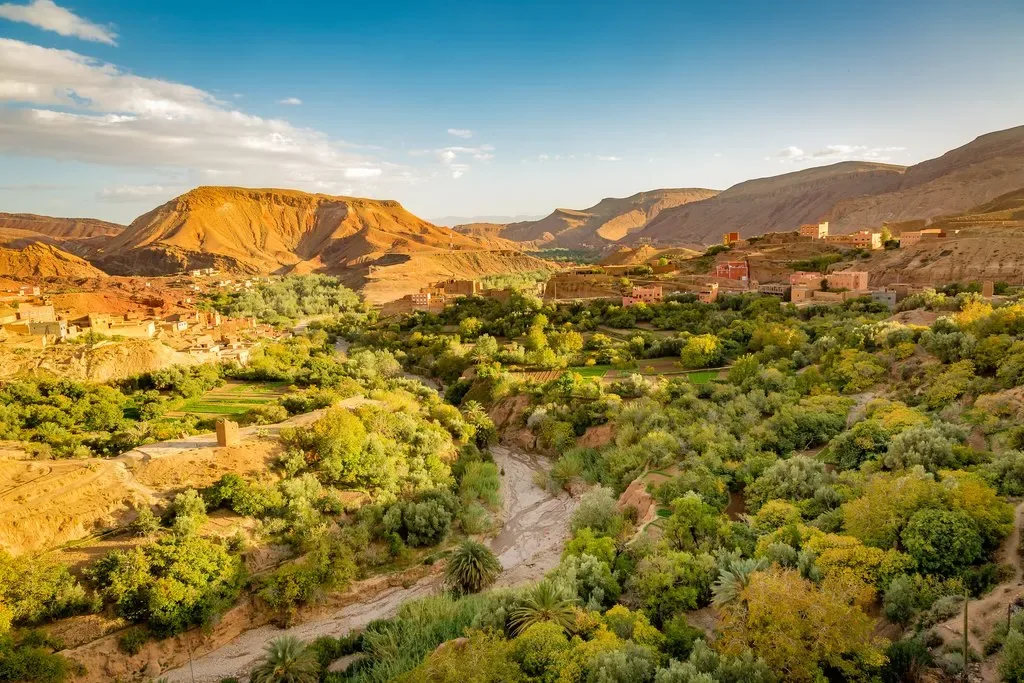
May and September sit between the easiest trekking seasons and the heat of summer. They can be very rewarding, especially for private travelers who can adjust departure times, but they are less forgiving of a rigid schedule. The central question becomes the daily heat curve. Walking early, taking a real midday pause and using late afternoon intelligently often matters more than adding another attraction.
September deserves a little nuance. The calendar says autumn is approaching, but the first part of the month can still behave like summer in the south. Later September often gives more comfortable windows, yet no date deserves a weather guarantee. May works in the opposite direction: the beginning can feel manageable, while later dates may require a more conservative walking plan.
For a camp stay with limited walking, both months can work well. For a serious trek, ask how the operator changes route length, water planning and rest time when a hot day arrives. The answer tells you more than a brochure that simply labels the month “good.”
June, July and August: possible, but not the season for a standard long trek
Summer is where honest advice matters most. The Sahara does not close, and local life continues, but long exposed walking becomes a very different proposition. Copying a November trekking schedule into July is not good planning. Heat should determine the itinerary: very early starts, reduced distances, long protected rests, strong hydration discipline and a willingness to remove activities.
If your Morocco holiday is fixed in summer, decide whether the Sahara is essential. A short, carefully timed desert experience may still fit, especially if you understand that the day will be built around heat rather than sightseeing quantity. If the desert is optional, spending more time on the Atlantic coast or at altitude can create a better overall trip, with the Sahara saved for a cooler visit.
This is particularly important for children, older travelers, people with limited heat tolerance and anyone imagining a demanding walking trek. The right response to summer is not bravado. It is adaptation. A good local operator should be comfortable saying that a route needs to be shortened or moved to another season.
October and November: the easiest all-round choice for many travelers
If a traveler asks us for the simplest answer, October and November are difficult to argue with. They usually offer a practical balance between daytime activity, camp evenings and road travel, which is why autumn is one of the periods highlighted in Morocco’s official climate guidance. These months work for first-time camp visitors, photographers, private circuits and serious trekkers.
The advantage is not only temperature. A balanced day gives you choices. You can walk without starting before dawn, stop for tea without immediately worrying about rising heat, arrive at camp with time to settle, and still enjoy sunset as part of the day rather than as a deadline. That breathing room is valuable on routes around M’Hamid and Erg Chigaga, where the landscape deserves more than a quick arrival.
Popularity creates one trade-off: good guides, well-run camps and private vehicles can be in demand. Book the important operational pieces early, especially around school holidays or busy travel weeks, but avoid fabricated urgency. Availability is date-specific; the reason to plan ahead is simply to protect the quality and rhythm you want.
December: good desert days, but plan the night before you book
December can be an excellent Sahara month for travelers who enjoy crisp mornings and do not expect a warm night under canvas. Walking conditions during the day can be comfortable, and the lower winter sun can be pleasant for photography. The mistake is packing for the afternoon and forgetting the hours after sunset.
Ask practical questions: what bedding is included, whether extra blankets are available, how the dining space is set up, and what kind of sleeping arrangement is used if you are trekking rather than staying in a permanent camp. A simple bivouac can be a strong experience, but simplicity works only when the traveler knows what to expect.
If you travel over late-December holiday dates, confirm availability early and keep transfer days realistic. The desert itself is not a holiday theme park; the operational pressure comes from more people moving through popular routes at the same time. A calm itinerary still needs enough room for the road from Marrakech or Fes.
Month by month: a practical Sahara planning calendar
January
One of the clearest months for travelers who prefer cool walking conditions. Daylight can feel comfortable, but once the sun drops the desert can become genuinely cold. A warm layer, hat and insulated sleep system matter far more than most first-time visitors expect. January suits camp stays and moderate trekking if you are prepared for cold mornings and nights.
February
Still winter, with the same large day-to-night contrast, but the feel of the month can begin to soften toward its end. It is a good period for travelers who dislike heat and want long walks. Keep winter layers in the luggage and do not assume a sunny afternoon means a mild night.
March
A strong trekking month. Days are generally easier for walking than in late spring or summer, while daylight gives useful time for multi-day routes. Wind can change conditions quickly in open desert, so a flexible guide and realistic daily plan are more valuable than a schedule built around fixed photo times.
April
Often one of the most balanced months for Sahara travel, especially for people combining desert walking with the Atlas or southern kasbah routes. Midday warmth becomes more noticeable, so longer treks work better when walking hours are divided intelligently. Spring wind or dust can still affect visibility on individual days.
May
A transition month. The desert can still be rewarding, but the comfortable walking window becomes narrower as heat builds. Early starts, longer midday rests and shorter afternoon stages become more important. Camp travelers may be comfortable; serious trekkers should discuss route length and heat strategy with the operator.
June
Summer conditions begin to dominate. The Sahara is still there, but a classic long walking program becomes much harder to justify. If travel dates are fixed, design the desert portion around very early and late activity, shade and conservative distances rather than trying to copy an October itinerary.
July
Usually one of the least suitable months for a multi-day walking trek because of intense daytime heat. A short camp visit may still be organized by experienced local operators with adapted timing, but travelers should choose the itinerary for the season rather than forcing the season to fit the itinerary.
August
Similar to July: heat controls the day. Families, older travelers and anyone sensitive to heat should be particularly cautious about long exposed activities. If the Sahara is not the main reason for the trip, this can be a month to prioritize Atlantic or mountain time and keep any desert segment short and carefully paced.
September
A transition back toward more comfortable desert travel. Early September can still feel very hot, while later dates may offer better walking windows. It is a useful month for travelers who can keep daily timings flexible and who want to combine the desert with other regions before peak autumn demand builds.
October
One of the strongest all-round choices. Walking, camp evenings and road travel are usually easier to balance than in summer, and the month works well for both Erg Chebbi and M’Hamid/Erg Chigaga itineraries. It is popular for a reason, so good camps, guides and private drivers are worth arranging early.
November
Another excellent practical month for desert travel. Daytime activity is usually easier to plan, nights become cooler, and multi-day trekking becomes more comfortable than in the hot season. Pack layers rather than one heavy outfit, because the difference between sun, shade and night can be substantial.
December
A good month for visitors who accept winter nights. Daylight can be pleasant for walking, but evenings and early mornings call for proper warm clothing. Holiday periods can increase demand, so availability may matter more than average weather statistics. Build the trip around comfort at camp, not only dune photos.
As a quick decision rule, prioritize March, April, October and November for longer treks; add December through February if you are comfortable with cold nights. Treat May and September as flexible shoulder months. Treat June through August as a different travel product: shorter, heat-led and less physically ambitious. This is deliberately conservative because a calendar should help you avoid poor planning, not prove that a trip can technically be done.
Always remember that a month is an average, not a contract. A cool October week and a hot October week can both occur. The advantage of choosing a broadly suitable season is that normal variability is easier to absorb without breaking the itinerary.
Merzouga or M’Hamid and Erg Chigaga: season is only half the decision
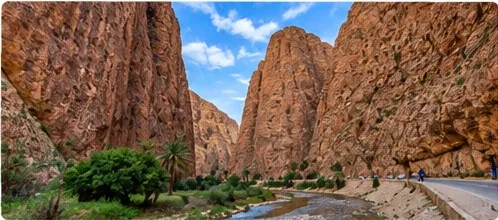
The best month also depends on which Sahara experience you choose. Morocco’s official Merzouga page describes Merzouga as a gateway to the Sahara and Erg Chebbi as a landscape of dunes, palm groves, tracks and hikes. It is the easier fit for travelers who want the classic high-dune image, a fixed camp and a route that can connect naturally with Fes or the eastern side of Morocco.
M’Hamid and Erg Chigaga work differently. They reward travelers who want a more gradual entry into the desert, longer stretches away from paved roads and the possibility of multi-day walking. That makes seasonal comfort even more important. A hot month that is manageable for one night in a fixed camp can be a poor choice for several exposed walking days.
Neither area is automatically “better.” Think in terms of travel style. Erg Chebbi suits a classic dune-and-camp experience and fits certain north–south itineraries very well. M’Hamid and Erg Chigaga suit people who prioritize silence, route depth and trekking. Our related guide comparing M’Hamid and Merzouga explains the difference in more detail; the season should then refine that choice, not replace it.
A camp night and a multi-day trek need different weather windows
A common planning mistake is to treat every “desert tour” as the same product. A one-night camp stay may involve a vehicle transfer, a short camel ride or walk, dinner, sleep and sunrise. A trek asks your body to spend many more hours outside, day after day. That difference changes the seasonal threshold.
For a camp-focused traveler, a wider range of dates can work because the hottest hours can be avoided and the exposure is shorter. For a walker, October through April is the more useful general window, with March–April and October–November especially attractive for balance. Winter can be excellent too if you are comfortable with cold nights and carry the right equipment.
The route also matters. Deep-desert trekking requires water planning, shade strategy, camp logistics and a guide who reads the terrain. Do not choose a five-day trek because a photograph of dunes looks comfortable. Ask how many hours you will walk, what happens during the middle of the day, how luggage is handled, and what the plan is if wind or heat changes the expected stage.
The Atlas and the road are part of the seasonal decision
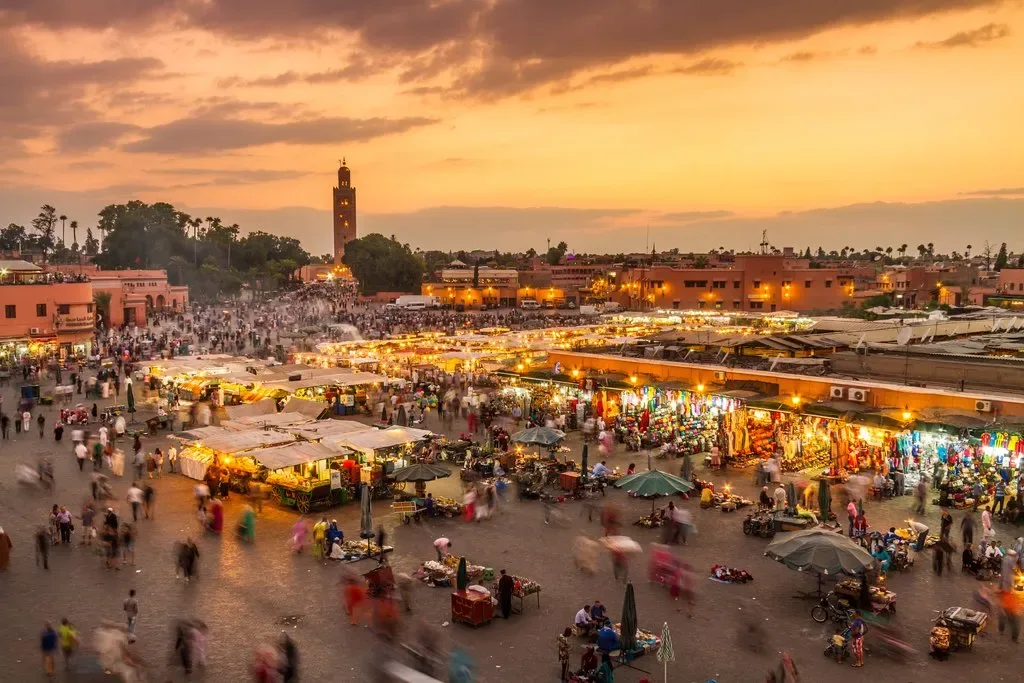
Many Sahara journeys begin in Marrakech or Fes, so the desert weather is only one part of the trip. From Marrakech, the road crosses the High Atlas before continuing through southern kasbah country and valleys. From Fes toward Merzouga, the journey crosses very different elevations and landscapes. A day that feels mild in the dunes can be cold, wet or simply very different higher in the mountains.
That is why we plan the route as one system. In winter, allow extra flexibility around mountain travel and carry clothing that works beyond the desert. In spring and autumn, the same principle applies even when the conditions are easier: the jacket you rarely need at midday in the Sahara may be useful on an early mountain stop.
Aït Ben Haddou, Todra, the Draa Valley and other southern landscapes are not filler between Marrakech and the dunes. They explain the transition from mountain to arid country. The official Morocco tourism desert itinerary is useful background for understanding how southern destinations connect, but your actual road plan should still be adapted to your dates and overnight locations.
What to pack changes more by season than by Instagram image
For autumn and spring, build around layers: breathable daytime clothing, a light warm layer for evening, sun protection, closed walking shoes for trekking and a scarf or buff that can help with sun, dust and wind. Do not pack only for the warmest hour of the day. Even when the forecast looks pleasant, shade and night can feel very different in dry air.
For winter, add a genuinely warm outer layer, hat and warm sleep clothing. If you are trekking, ask about the sleeping bag rather than assuming the camp provides hotel-style bedding. For May and September, prioritize sun protection, water capacity and clothing that covers skin without trapping excessive heat. For summer, the itinerary itself is the most important piece of “equipment”: reduced exposure is safer than trying to solve extreme heat with gear.
Whatever the month, carry personal medication, lip balm, sunscreen, a refillable bottle, a small headlamp and a power bank if your camp has limited charging. Keep valuables and a warm layer in the small bag that stays with you rather than in luggage that may travel separately. Practical packing makes the desert feel simple; overpacking often creates more work than comfort.
Photography, families and comfort: the “best month” is personal
Photographers often prefer shoulder seasons because the day can be used more freely and the lower-angle light around sunrise and sunset is easier to reach without spending the entire day recovering from heat. Wind and dust can create atmosphere or destroy visibility, so photography trips need flexibility rather than promises of perfect skies.
Families should think about the weakest heat or cold tolerance in the group, not the strongest. A child who is happy for one hour on a camel may not enjoy an exposed afternoon walk. Older travelers may prefer a fixed camp, 4x4 access and shorter walks even during ideal trekking months. Those are not lesser experiences; they are better-matched experiences.
Comfort expectations also matter. A luxury fixed camp, a simple bivouac and a moving trek create different relationships with weather. Tell the operator what “comfortable” means to you. Hot shower, private bathroom, heated sleeping area, mattress thickness and walking distance are operational details, not embarrassing questions.
How to choose your dates without chasing perfect weather
Booking, health and pacing: practical details that change the trip
Crowds and booking: think in weeks, not just seasons
“High season” is too broad to be useful by itself. A quiet week in November and a holiday week in the same month can have different availability. The Sahara is spacious, but the number of reliable private drivers, experienced trekking teams and well-run camps is not unlimited. If your dates are fixed around a school break, festival period or international holiday, secure the operational pieces first and leave cosmetic choices for later.
Booking early does not mean paying for every optional activity months in advance. Confirm the route, vehicle, guide or trekking team, overnight standard and key transfers. Then refine details such as a short camel ride, photography stops or meal preferences. This keeps the trip flexible without gambling on the parts that are hard to replace.
If you travel in a quieter week, flexibility can work in your favor. We still recommend planning the Sahara before the final city nights because desert logistics shape the whole route. A camp is not a hotel in central Marrakech where another similar property is always five minutes away.
Health, hydration and pacing: simple decisions matter more than toughness
Dry air can disguise how much fluid you are losing, especially when wind makes the day feel cooler. Drink regularly rather than waiting until you feel very thirsty. On a trek, tell the guide early if you have a headache, unusual fatigue, stomach trouble or dizziness. The goal is not to prove endurance; it is to keep the whole group moving comfortably and safely.
People who take regular medication should carry enough for the trip plus a small margin and keep it in their day bag. If a medical condition is affected by heat, cold, exertion or dehydration, discuss the travel plan with an appropriate health professional before departure. A local travel team can explain logistics and walking demands, but it does not replace individual medical advice.
Pacing is also mental. The best desert days contain empty time: a long tea, a quiet hour at camp, a slower morning after a cold night. If every hour is scheduled, the itinerary loses the very quality that makes the Sahara different from a city break.
Choose the experience first, then the month. For a real trek, start with October–April and narrow according to your tolerance for winter cold or spring warmth. For a classic Erg Chebbi camp, you have a wider calendar, but autumn and spring remain easy choices. If summer dates are fixed, reduce ambition and design around heat. If December or January suits your flights, prepare properly for cold nights rather than rejecting winter automatically.
Next, look at the whole Morocco route. A traveler combining Chefchaouen, Fes, Merzouga and Marrakech has different logistics from someone who wants M’Hamid, Erg Chigaga and several days on foot. Protect enough days for the road. Our Marrakech-to-Sahara planning guide explains why very short itineraries often turn the desert into a driving exercise.
Finally, check a short-range forecast close to departure and let the local team adjust small details. Seasonal averages help you choose a month; they do not tell you exactly what the wind will do on your third afternoon in the dunes. Good travel planning uses both: climate for the big decision, current conditions for the final one.