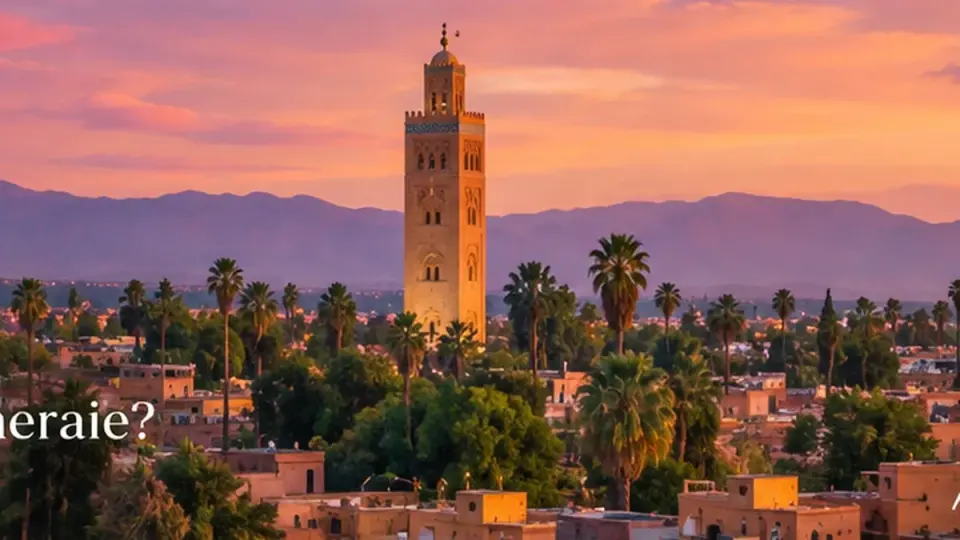
The Best Area in Marrakech Depends on the Trip You Want
Marrakech is one city, but staying in the Medina, Gueliz, Hivernage or the Palmeraie can make the same trip feel completely different. The Medina gives you narrow lanes, riads, souks and the strongest old-city atmosphere. Gueliz feels easier and more modern, with wider streets, cafés, shops and simpler taxi access. Hivernage is polished and hotel-oriented, while the Palmeraie is spacious, quiet and resort-like. None of these areas is automatically better than the others. The right choice depends on how you want your mornings, evenings and daily movement to feel.
For first-time visitors, accommodation should be chosen as part of the itinerary rather than as a separate booking. A beautiful hotel can still be the wrong hotel if it creates extra transfers every day. A romantic riad can be perfect for a couple but tiring for a family with a stroller and several suitcases. A resort in the Palmeraie can be wonderful for rest, but inconvenient if you plan to spend every evening walking around Jemaa el-Fna. Location changes how much energy you spend simply moving.
My advice is to choose the area first, then choose the property. Think about why you are coming to Marrakech, how many days you have, whether you are continuing to the Sahara or Atlas Mountains, how much walking you enjoy, and whether you want to be inside the action or return to quiet at the end of the day. Once those questions are clear, the accommodation decision becomes much easier.
Medina: Best for Atmosphere, Riads and Walking Into the Old City

If your dream of Marrakech includes riads, wooden doors, tiled courtyards, souks, rooftop breakfasts and walking to historic sights, the Medina is usually the strongest choice. Staying inside the old city means Marrakech begins as soon as you step outside your door. You can walk toward Jemaa el-Fna, Koutoubia, Bahia Palace, the souks and many traditional neighborhoods without starting every outing with a taxi.
The advantage is atmosphere. The disadvantage is that the Medina is not designed for modern vehicles. Some riads can be reached only on foot from a gate or drop-off point. Lanes may be narrow, maps may be confusing, and the character of one lane can be very different from another only a few minutes away. Noise also changes by location. A riad close to Jemaa el-Fna can be exciting but louder, while a property deeper in a residential lane may feel calm but require more navigation.
For a first visit, I like the Medina when travelers want to feel Marrakech rather than simply visit it. But I recommend checking the exact access before booking. Ask how far you must walk from the nearest vehicle point, whether staff can meet you with luggage, how late the reception operates and whether the rooftop or nearby streets become noisy at night. The Medina is magical when the practical details are handled before arrival.
Where Inside the Medina Should You Stay?
The word “Medina” covers a large area, so booking somewhere “in the Medina” does not tell you enough. A riad close to Jemaa el-Fna is convenient for first-time sightseeing and evenings in the square, but the surroundings can be busier. The Mouassine and Dar el Bacha side can feel central while still offering beautiful lanes, cafés and riads. Areas toward the Kasbah and Mellah give a different atmosphere and can work well for Bahia Palace, Saadian Tombs and the southern side of the old city.
The most important question is not whether a property is five hundred meters closer to a famous attraction. It is whether the route from the nearest taxi point to the door feels practical for your travel style. Travelers arriving with one backpack experience the Medina differently from a family carrying several cases. People who like wandering may enjoy a deeper lane; visitors who dislike getting lost may prefer an easier landmark-based location.
Also think about evenings. If you want to walk home after dinner, a central location has real value. If you want silence and early sleep before a desert departure, staying directly beside the busiest nightlife is less useful. Marrakech works best when the accommodation supports your rhythm instead of forcing you to adapt every day.
A Riad or a Hotel? The Experience Is More Different Than the Name Suggests
A riad is not simply a smaller Moroccan hotel. At its best, it changes the feeling of Marrakech. You enter from a busy lane and suddenly arrive in a courtyard with plants, tiles, a fountain, soft light and a quieter atmosphere. Breakfast may be served in the courtyard or on the rooftop. Staff often know the neighborhood personally. For couples and travelers seeking character, this can become one of the strongest memories of the city.
But riads are also traditional buildings, and that brings practical differences. Some have steep stairs, no lift, small plunge pools rather than full swimming pools, limited vehicle access and rooms arranged around a central courtyard where sound can travel. These are not problems when you know what you are booking. They are only problems when a guest expects a conventional resort.
Hotels are usually easier for elevators, large pools, gyms, parking, vehicle access and standardized services. This can be better for families, older travelers, business travel or anyone who values convenience more than old-city atmosphere. The right choice is not “authentic versus touristy.” A good riad and a good hotel simply solve different needs. Choose the experience that fits your trip rather than the image that looks best online.
Gueliz: Best for Modern Marrakech, Easy Access and Everyday Convenience
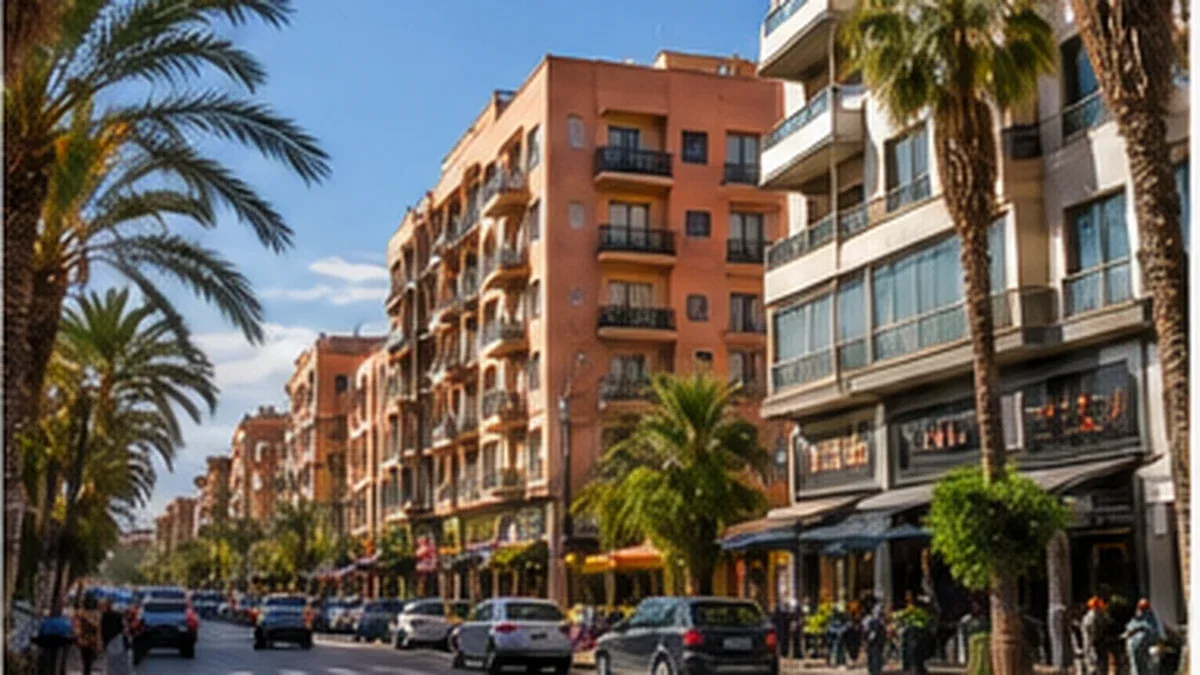
Gueliz is a strong choice for travelers who want Marrakech without living inside the intensity of the old Medina. Streets are wider, taxis can reach accommodation more easily, and the area has cafés, restaurants, shops, galleries and modern services. The train station is also convenient from this side of the city, which can matter if you arrive from Casablanca or continue by rail.
The trade-off is atmosphere. You can still see the red colors and Marrakech character, but you do not step directly into the historic souks when you leave your hotel. Reaching Jemaa el-Fna and the deeper Medina normally involves a taxi or a longer walk depending on exactly where you stay. For some travelers, this is a disadvantage. For others, it is the reason they prefer Gueliz: they can enter the Medina when they want and leave it when they have had enough.
Gueliz works especially well for repeat visitors, solo travelers who want straightforward movement, people staying for several days, digital workers, and guests who enjoy having modern cafés and services nearby. It can also be a smart first-night choice after a late flight because arrival is simple. If you want a practical base rather than a full-time old-city immersion, Gueliz deserves serious consideration.
Hivernage: Best for Full-Service Hotels, Comfort and a Polished Base
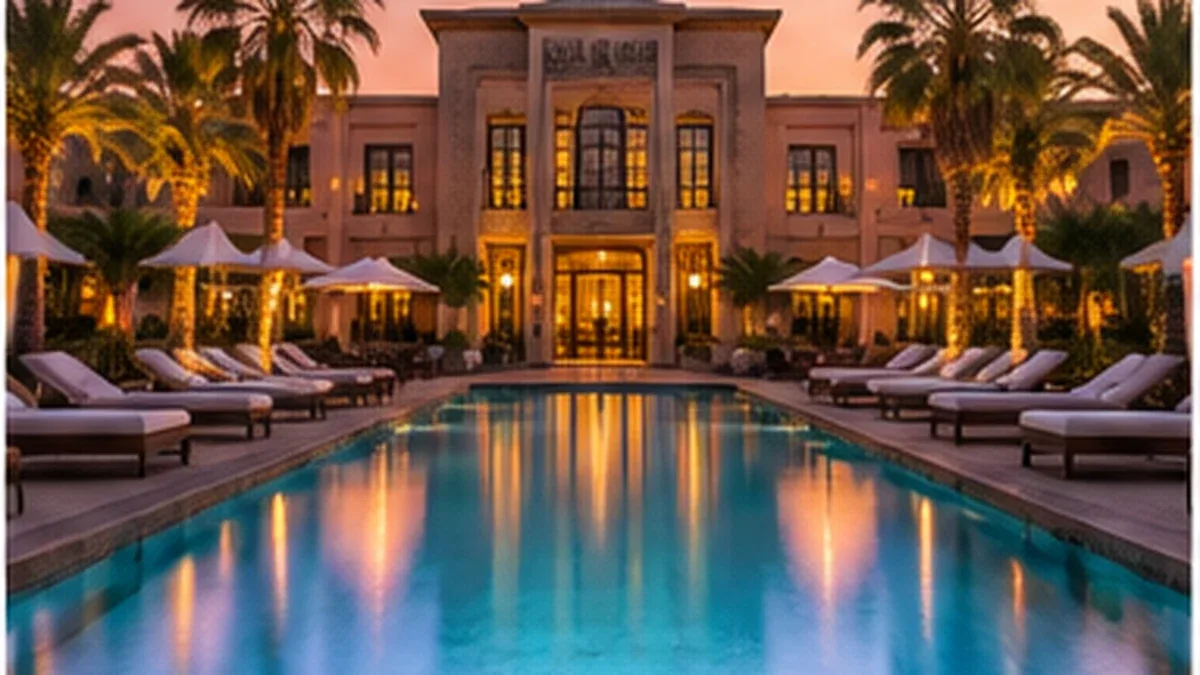
Hivernage has a different personality again. It is known for larger hotels, broad avenues, restaurants, nightlife and a more polished resort-city feeling while remaining relatively close to central Marrakech. Travelers who want strong hotel facilities, swimming pools, spas, easy vehicle access and a calmer transition after a long journey often like this area.
The main advantage is convenience without being extremely far from the old city. You can use taxis easily, return to a quiet hotel after the Medina, and enjoy facilities that many small riads do not have. This is useful for families, honeymooners who want comfort, travelers combining sightseeing with relaxation, and people who do not want to carry luggage through narrow lanes.
The limitation is that Hivernage can feel less intimate than a riad district. If the reason you came to Marrakech is to wake inside old walls and walk directly into souks, a large hotel here may feel separated from that experience. But if your Marrakech stay is part of a longer Morocco journey and you want comfort before or after mountains and desert, Hivernage can be exactly the right balance.
Palmeraie: Best for Space, Pools, Resorts and Quiet

The Palmeraie is for a different kind of Marrakech stay. It is spread out, greener in places and associated with villas, large gardens, resorts, swimming pools and a sense of escape from the center. For travelers who want to rest, spend time by a pool, enjoy spa facilities or keep children in a spacious property, the area can be very attractive.
The price of that space is distance. You should assume that many outings into the Medina will require a driver, hotel shuttle or taxi. Walking from a Palmeraie resort to Jemaa el-Fna is not the normal way to experience the city. This is why the Palmeraie can be perfect for one traveler and frustrating for another. If your plan is to explore the Medina morning and night, repeated transfers become part of every day. If your plan is to relax and make only selected city visits, the distance matters much less.
I usually recommend the Palmeraie for travelers who consciously want a resort rhythm rather than for first-time visitors who have only two days and want to understand historic Marrakech. It can also work very well at the end of an active Morocco itinerary when rest is more important than being in the center.
Best Area for First-Time Visitors, Couples, Families and Solo Travelers
For a first-time visitor with two or three days, the Medina is usually my first recommendation if the traveler enjoys walking and wants the strongest sense of place. For a couple, a carefully chosen riad can make Marrakech feel intimate and memorable. A rooftop breakfast, quiet courtyard and evening walk home can become part of the experience rather than only accommodation.
Families need to think more practically. A Medina riad can be beautiful with older children, but families with a stroller, large luggage or children who need a swimming pool may prefer Hivernage or a well-located hotel in Gueliz. The Palmeraie can be excellent when the priority is space and resort facilities, especially during warmer months, but parents should include transfer time in the plan.
Solo travelers often enjoy the Medina for atmosphere or Gueliz for simplicity. Luxury travelers should not assume luxury exists only outside the old city: Marrakech has exceptional riads as well as full-service hotels. Budget travelers should compare total cost, not just room price. A cheaper property far away can create daily taxi expenses, while a central room can save both time and transport. The best area is the one that reduces friction for the kind of traveler you actually are.
Your Desert or Atlas Plans Should Influence Where You Stay
Accommodation in Marrakech should also make sense for what happens after Marrakech. If you are leaving early for the High Atlas, Ait Ben Haddou, Ouarzazate, M’Hamid, Erg Chigaga or Merzouga, ask exactly where your driver will collect you. A riad deep in the Medina may require a short walk to a vehicle point. That is easy when it is planned, but annoying when nobody explains it until six in the morning.
If you arrive from Casablanca by train, Gueliz can make the first night simple because the station is nearby. If you return from a long desert route and want one final night of comfort, Hivernage or a resort property may be more relaxing than navigating luggage through the Medina again. If Marrakech is the emotional center of the trip rather than only a transport hub, staying inside the Medina makes more sense.
This is how we plan at DesertBrise Travel: we do not choose a hotel in isolation. We look at the day before, the day after, departure time, vehicle access and the traveler’s energy. A good location saves invisible time. It removes unnecessary transfers, protects mornings and allows the whole Morocco itinerary to flow better.
What to Check Before Booking Any Marrakech Accommodation
Before booking, check the exact map location rather than trusting only the neighborhood name. Ask about vehicle access, the nearest drop-off point, airport transfer arrangements and whether staff can help with luggage. If you are booking a riad, check stairs, lift access, room location, rooftop hours and whether breakfast is included. In summer, reliable air-conditioning matters. In cooler months, room heating can matter more than travelers expect.
Noise is another detail that photographs do not show. A rooftop bar next door, a busy lane or a room beside the reception can change sleep quality. Read recent reviews for patterns rather than isolated complaints. Also look at pool size. In Marrakech, the word “pool” may mean anything from a decorative plunge pool in a courtyard to a full outdoor swimming pool in a resort.
Finally, think about what you will actually use. Paying more for a huge resort is wasted if you leave at eight every morning and return at midnight. Paying for a beautiful remote villa is unnecessary if your priority is walking to the souks. The best-value stay is the property whose location and facilities match your days, not the property with the longest list of amenities.
How Many Nights Should You Stay in Marrakech?
For most first-time visitors, two to three nights in Marrakech works well. Two nights can cover the essential Medina atmosphere, major sights and a good evening experience if your wider Morocco itinerary is busy. Three nights gives more breathing room for gardens, hammam, food, shopping and slower exploration. Four nights can be excellent for travelers who genuinely love city breaks or want a day trip, but it should not come at the cost of rushing the Sahara or Atlas Mountains.
Your accommodation style can change the answer. Staying in a beautiful riad encourages slow mornings and rooftop evenings, so an extra night may feel worthwhile. Staying in a resort can also justify more time if relaxation is part of the holiday. On the other hand, travelers whose main dream is a desert trek may prefer one or two Marrakech nights and protect more time for the journey south.
The goal is balance. Marrakech should feel complete without swallowing the rest of Morocco. When we design private itineraries, we look at the entire route first and then decide how much time belongs to Marrakech. That prevents a common mistake: spending too many nights in the arrival city, then trying to compress mountains, kasbahs and desert into an unrealistic schedule.
My Local Recommendation: Choose Rhythm Before Luxury
If I had to reduce the decision to one rule, it would be this: choose the area that gives you the rhythm you want. Choose the Medina when you want immersion, riads and walking. Choose Gueliz when you want easier movement, modern services and a practical base. Choose Hivernage when you want full-service hotel comfort close to the center. Choose the Palmeraie when space, pools and quiet matter more than walking to historic sights.
Do not let social media choose for you. A hidden riad doorway can look romantic but be inconvenient for someone with mobility needs. A large resort can look luxurious but feel disconnected for a traveler who came to wander old streets. The right accommodation is personal. It should make the parts of Marrakech you care about easier to experience.
At DesertBrise Travel, we use accommodation as part of route design. We consider airport arrival, luggage, city visits, family needs, early departures, private drivers and the next stage of the journey. Marrakech is not only where you sleep. It is the first or final rhythm of many Morocco trips. When the area is right, the city feels easier, and the journey beyond it starts better.