Is October a good time to visit Morocco?
October is one of the easiest months for building a Morocco itinerary that crosses several regions. The strongest reason is not that the whole country suddenly has one perfect temperature. Morocco never works that way. The Atlantic coast, inland cities, High Atlas, Rif and Sahara can feel very different on the same day. What October usually gives you is a more workable balance: the intense summer heat is easing inland, autumn is a recommended season for the Sahara, and the coast remains mild enough to include without designing the entire trip around escaping heat.
For a first journey, that balance matters. A route can begin with warm afternoons in Marrakech, cross cooler mountain country, continue through the south and finish with a breezier Atlantic stay. You still need layers, and you should never treat a monthly average as a forecast for your exact dates, but October generally allows a wider range of activities than midsummer. Walking through a medina at midday is usually easier. Longer road journeys toward the desert feel less punishing. Trekking can be more comfortable when the route and altitude are chosen carefully.
The main trade-off is variation. Travelers sometimes read “Morocco in October” and pack for one climate. That is the wrong mental model. Think in regions and in time of day. Marrakech can remain warm in the afternoon while a High Atlas morning feels distinctly cool. A Sahara day may be sunny and dry, then the temperature can drop sharply after sunset. Fes can move from warm early-month afternoons toward more autumnal conditions later in October. Coastal Essaouira tends to stay milder, but wind changes how the temperature feels.
This 2026 guide therefore uses long-term climate patterns rather than pretending to know the weather months in advance. Check the current forecast for each stop shortly before travel, especially if your plans include mountain walking, remote desert travel or long outdoor days.
Morocco weather in October: read the country by region
The most useful way to understand October weather in Morocco is to compare regions instead of searching for one national temperature. In Marrakech, long-term October averages show daytime highs easing from roughly 30°C at the beginning of the month toward about 26°C near the end, while typical nighttime lows move from around 18°C toward 14°C. Fes cools more noticeably: average highs fall from about 28°C to 23–24°C, with lows moving from around 16°C toward 13°C. Essaouira is steadier on the Atlantic, with typical highs around 24°C early in the month and 23°C later, and nights commonly around 18°C to 16°C.
Those numbers are planning references, not promises. A warm spell can push afternoons higher. A cloudy or windy day can feel much cooler. Rain becomes more possible in the north and interior as autumn develops, although one traveler can have a completely dry week while another meets a shower on the same route a few days later. Pack to handle a range, not an average.
Altitude creates an even bigger difference. A temperature quoted for Marrakech tells you very little about an early morning in Imlil or a high pass. Mountain weather can change quickly and becomes colder with elevation. For serious hiking, ask about the exact route, highest point, expected trail conditions and local forecast. The same caution applies to the desert. Autumn is a strong season for Sahara travel, but “desert” does not mean permanently hot. Sun exposure remains important during the day, while evenings and pre-dawn hours can require a fleece or light insulated layer.
When we build October routes at DesertBrise, we plan the clothing and pacing around transitions: city to mountain, mountain to south, south to dunes, or inland to coast. The traveler who understands those transitions usually enjoys October much more than the traveler who expects one suitcase to feel equally comfortable everywhere.
Marrakech in October: warm days without midsummer intensity
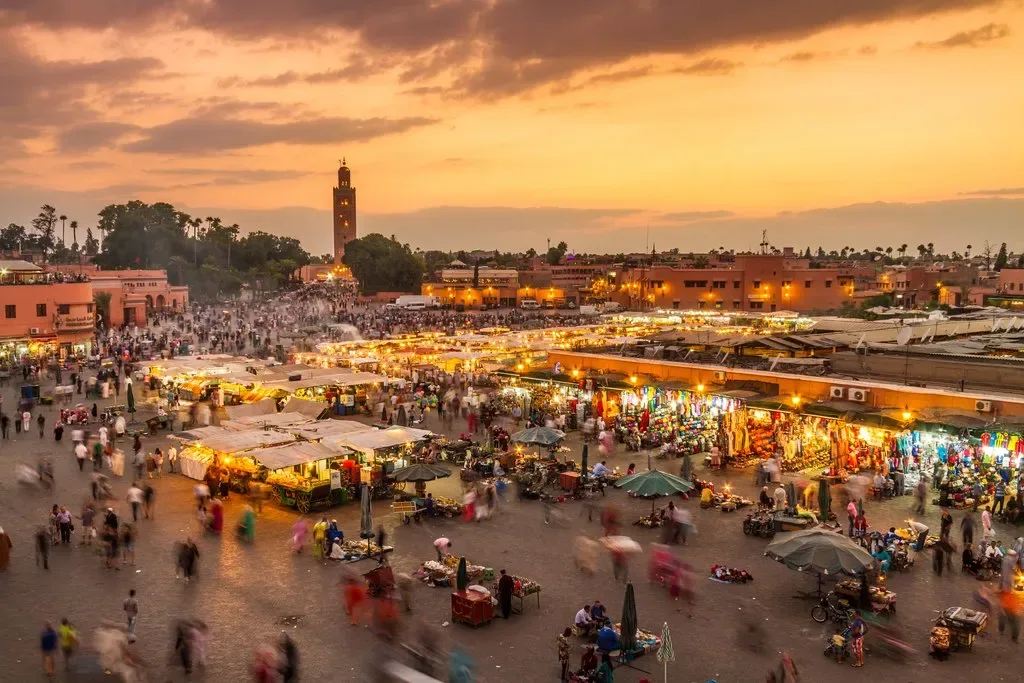
Marrakech is often the point where an October trip begins, and the month suits the city well for travelers who want to spend real time outside. Afternoons can still be warm, especially in the first half of October, but the heat is generally less severe than July or August. That changes how you can use the day. Instead of disappearing indoors for a long hot middle period, many visitors can combine the medina, gardens, architectural sites and rooftop time with fewer compromises.
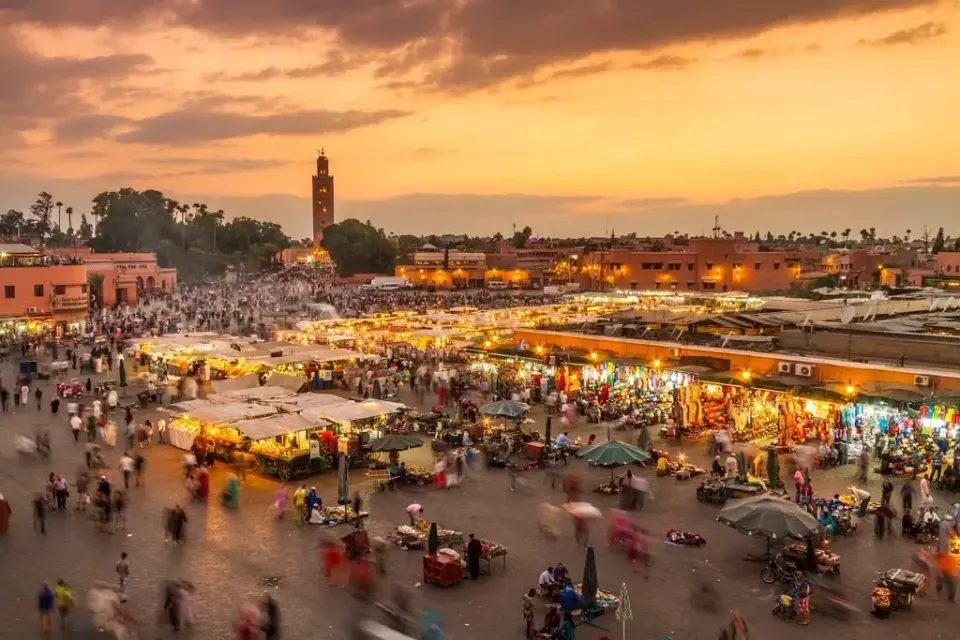
I still would not schedule Marrakech as an eight-hour walking marathon. The medina is more enjoyable when you divide the day into smaller pieces. Start with a focused morning, stop for lunch, rest or return to the riad, then go out again when the light softens. Jemaa el-Fna is especially useful as an evening anchor because its atmosphere develops as the day cools. A light layer can be welcome later at night, particularly toward the end of the month or on a breezier rooftop.
Accommodation choice also matters more than people expect. If you stay in the Medina, you gain walkability and can return to your riad between outings. Gueliz simplifies taxi access and gives a more modern base. Hivernage suits travelers who want larger hotels and pools, while the Palmeraie gives space but normally adds transfers. For a short October visit, I would choose the area according to how you intend to spend the day, not simply according to hotel photographs.
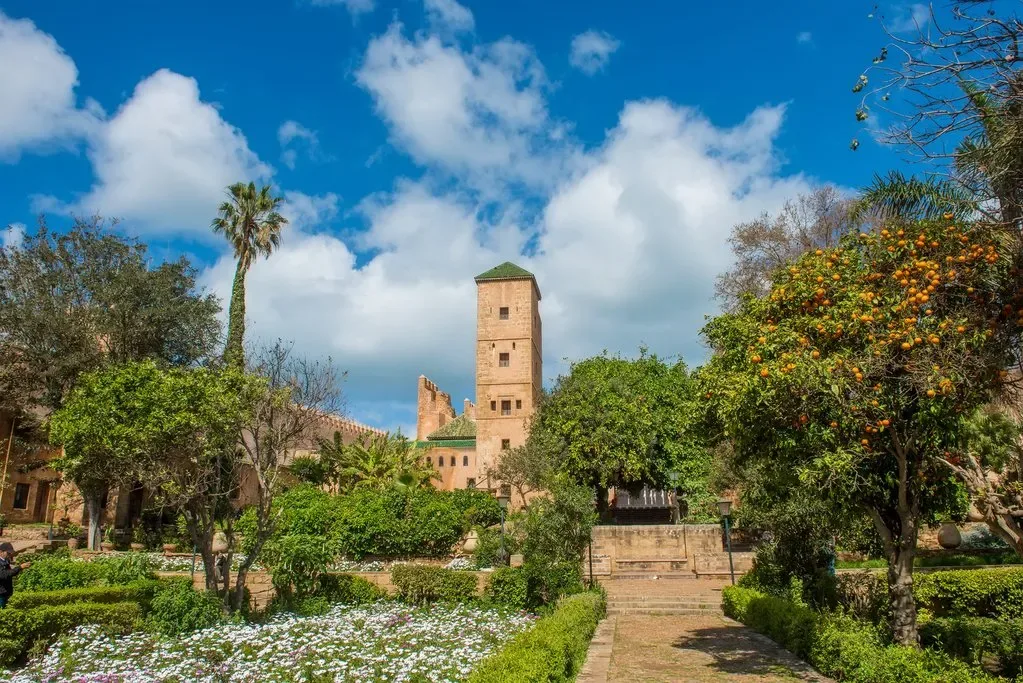
October is also a practical month to connect Marrakech with the High Atlas or Agafay. Agafay is a rocky desert plateau, not the Sahara, and it should be described honestly. The Atlas introduces a genuine change in elevation and climate. If your wider itinerary already includes the southern Sahara, I would not add every possible excursion from Marrakech. Keep enough time for the main journey instead of turning the first city into a checklist.
The High Atlas in October: excellent potential, but altitude decides the day
October can be a rewarding time for the High Atlas because walking conditions at moderate elevations are often more comfortable than in the hottest months. It is also the season when you need to stop thinking of “Morocco weather” as one thing. A warm morning departure from Marrakech can become a cool mountain afternoon, and a village night can feel cold compared with the city you left only a few hours earlier.
For a simple day around Imlil or Ourika, layers are the practical answer. Carry a breathable base, a warmer mid-layer and protection from wind or a passing shower. Footwear should match the walking you actually plan to do; fashion trainers are fine for a café stop but a poor choice for uneven mountain paths. If your route is a real trek rather than a short village walk, the guide should confirm elevation, duration, water, trail conditions and whether early-season cold or changing weather affects the plan.
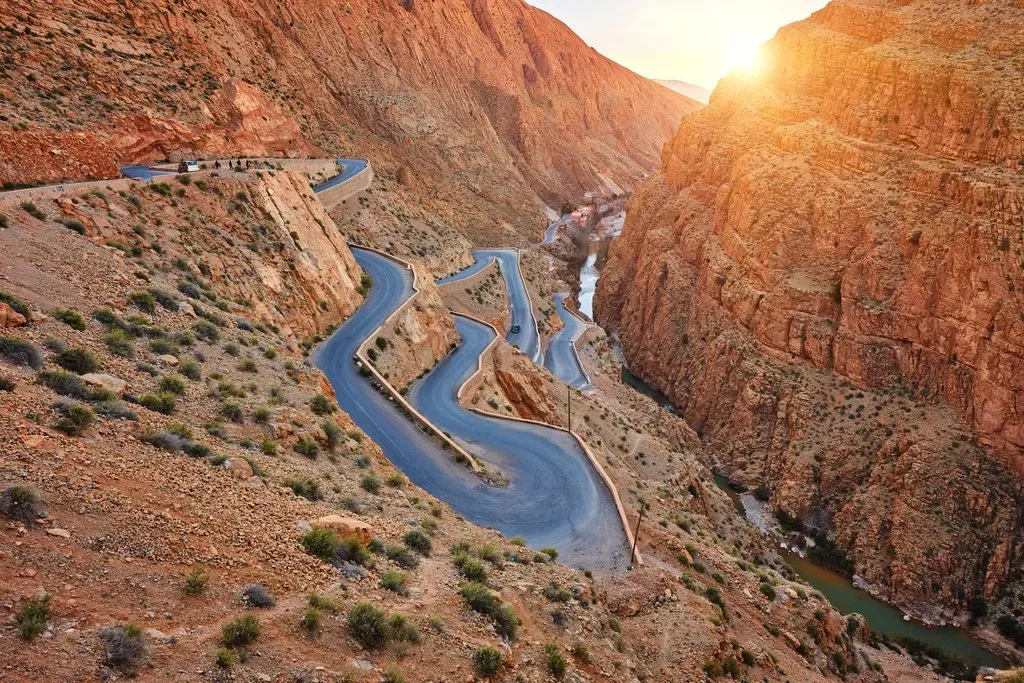
The Atlas should not be treated as a backdrop between Marrakech and the desert. Mountain roads take time, viewpoints invite stops, and village access can be slower than the map suggests. October light can make the landscape especially clear after cooler mornings, but photography should never push the driver or guide into an unsafe stop. Build the day around realistic places to pull over and enough daylight to reach the overnight point comfortably.
Travelers with a tight schedule sometimes try to combine a major mountain hike with a long transfer south on the same day. That usually weakens both experiences. If walking matters, give it a day. If the goal is the Sahara, use the mountain crossing as part of the road journey and save the long hike for another itinerary. October gives you good options; it does not remove distance.
The Sahara in October: one of the strongest reasons to travel now
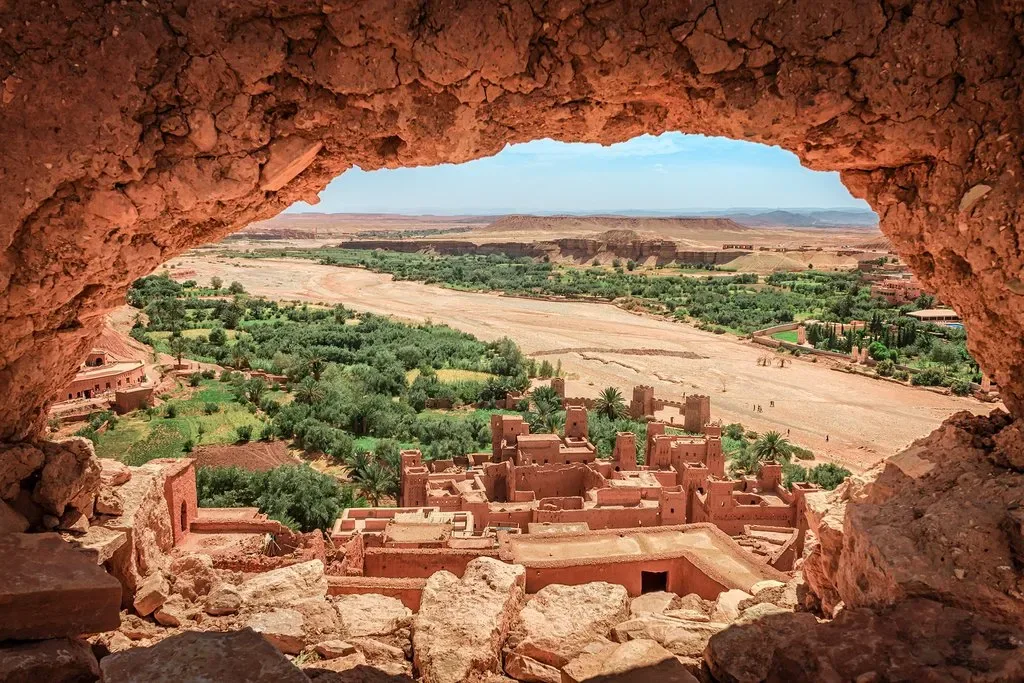
Morocco’s national tourism office specifically identifies spring and autumn as the better seasons for venturing into the Sahara. October therefore sits in a much more comfortable planning window than midsummer for travelers interested in M’Hamid, Erg Chigaga, Merzouga, camel journeys, desert camps or walking. The exact experience, however, depends on which desert gateway you choose and how much time you allow.
M’Hamid and Erg Chigaga suit travelers who want the southern route through the Draa Valley and a sense of moving beyond the paved road into wider desert country. Merzouga offers direct access to the Erg Chebbi dunes and fits naturally into routes linking the Todra area and eastern side of the Sahara. Neither is a quick day trip from Marrakech. The road is long, and the journey becomes worthwhile when you treat the valleys, kasbah country and desert approach as part of the trip rather than an obstacle between hotel and dunes.
October reduces heat pressure but does not remove desert exposure. Use sun protection, drink consistently, and avoid assuming that a cooler morning means the midday sun is weak. Then prepare for the opposite after sunset. Camp evenings, dawn departures and pre-sunrise viewpoints can feel cool, particularly later in the month. A warm layer and closed shoes are useful even when the daytime forecast looks hot.
If your priority is trekking, October is also when multi-day walking becomes more realistic again. The pace should still be adjusted to the group, and an experienced local team should decide water, camp locations and daily distance. Desert trekking is not simply a longer camel excursion. It is a slower way of moving through different terrain—dunes, plateaus, dry river areas and vegetation zones—and it deserves enough days to settle into that rhythm.
Fes and northern Morocco: expect a more obvious autumn feeling
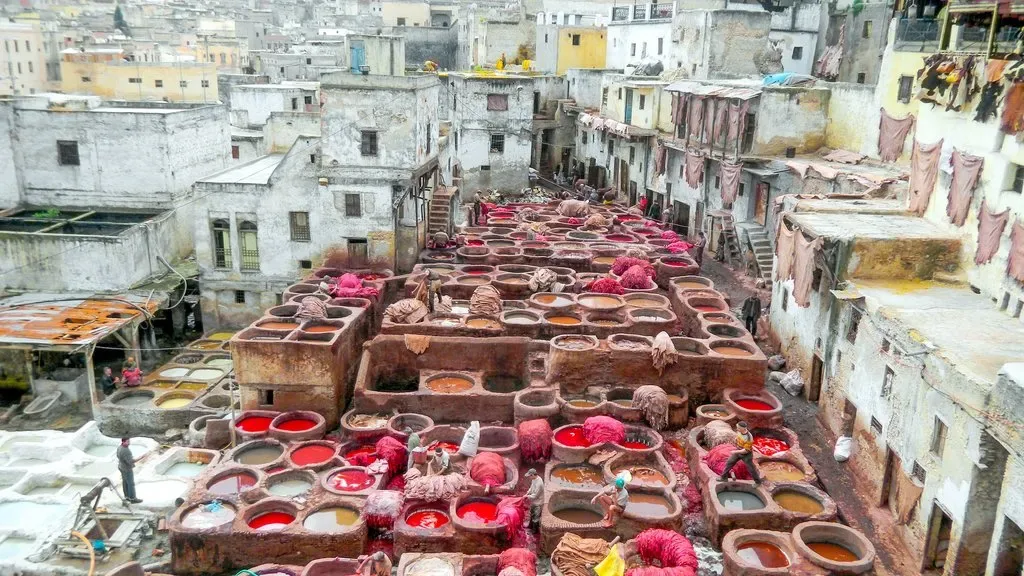
Fes is often warmer than European visitors expect in early October, but the month changes more noticeably here than on the Atlantic coast. Long-term averages show daytime highs moving from roughly 28°C at the start toward around 23–24°C by month’s end, while nights become cooler. That makes the medina comfortable for long walks on many days, but it also means a light jacket starts earning its place in the suitcase.
Fes rewards a slower schedule in any season because the old city is dense. In October, a guide can be especially useful on the first half-day if you want historical context without wasting time repeatedly finding the same gate. The tanneries, madrasas, craft areas and residential lanes all sit within a living medina; the goal should be understanding the city rather than collecting viewpoints. If rain is forecast, choose footwear with decent grip because polished stone and steep lanes can become slippery.
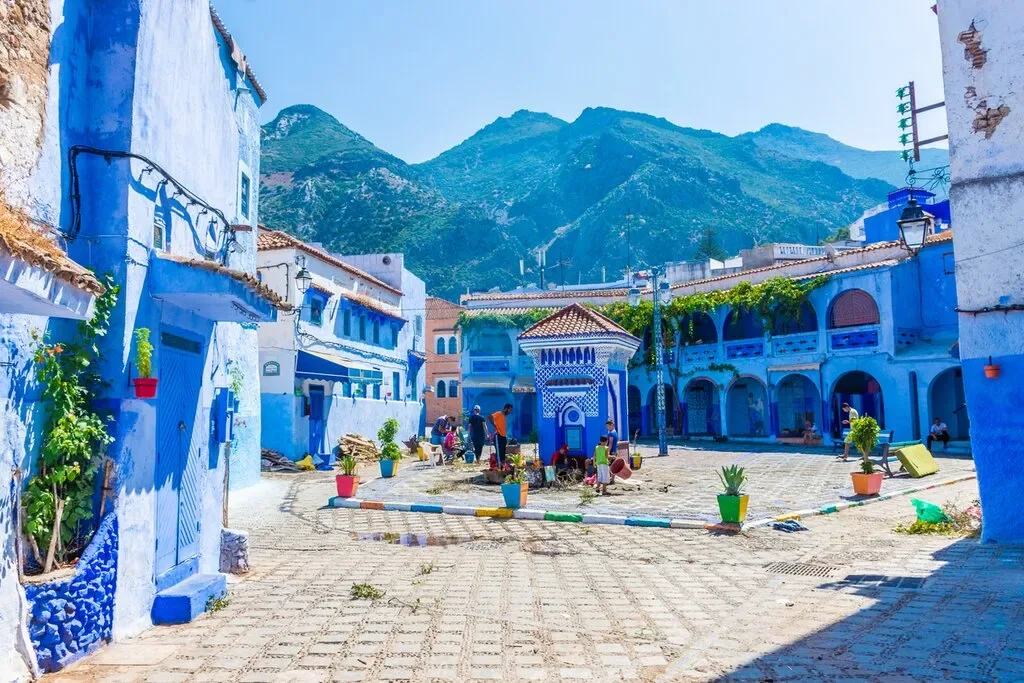
Chefchaouen and the Rif introduce another climate. Blue streets photograph beautifully on bright days, but the surrounding mountains can bring cooler or wetter conditions than Marrakech. Pack something waterproof if northern Morocco forms a major part of your route. The same advice applies to Tangier, where Atlantic and Mediterranean influences meet and wind can make a mild number on the forecast feel cooler.
October is therefore excellent for combining north and south if you have enough days, but do not pack only for the warmest destination. A Casablanca–Rabat–Chefchaouen–Fes route followed by the Sahara crosses several weather zones. The smartest suitcase is built around repeatable layers, not around one heavy winter coat and one set of summer clothes.
Essaouira and the Atlantic coast: milder temperatures, more wind
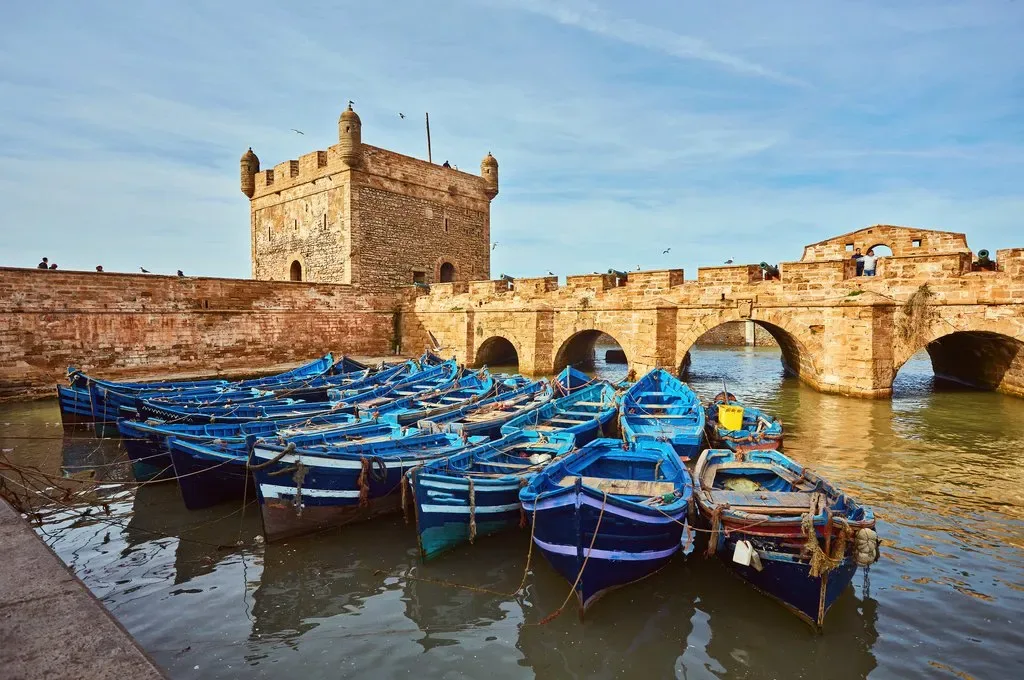
Essaouira behaves differently from Marrakech in October. Long-term climate averages keep daytime highs close to the low-to-mid 20s Celsius through the month, with much smaller temperature swings than inland cities. That sounds simple until the wind arrives. A sunny 23°C afternoon beside the Atlantic can feel cooler than a similar number in a sheltered inland courtyard, especially near the ramparts or on the beach.
This makes Essaouira a useful final stop after a warmer inland journey. The medina is compact, the port gives the city a working maritime character, and you can slow the pace without needing a full sightseeing schedule. Bring a wind-resistant layer and something warmer for dinner outside. If swimming is central to your plan, check current sea and wind conditions rather than assuming that sunny weather equals warm water.
Agadir usually offers a different coastal experience: broader resort infrastructure, beaches and an easier base for travelers who prioritize sea time. October can remain very pleasant there, but the coast should not be added simply because the itinerary still has an empty day. Think about travel direction. Marrakech–Essaouira works naturally as an out-and-back or continuation to the Atlantic. Agadir can fit better with southern coastal routes or a trip ending with resort time.
For photographers, autumn coastal light can be excellent, but this is also where our image rule matters. Essaouira should look like Essaouira: Atlantic ramparts, port, medina or shoreline. A generic beach from another country tells the traveler nothing. The same principle applies to the itinerary itself—every stop should have a reason to be there.
What to pack for Morocco in October
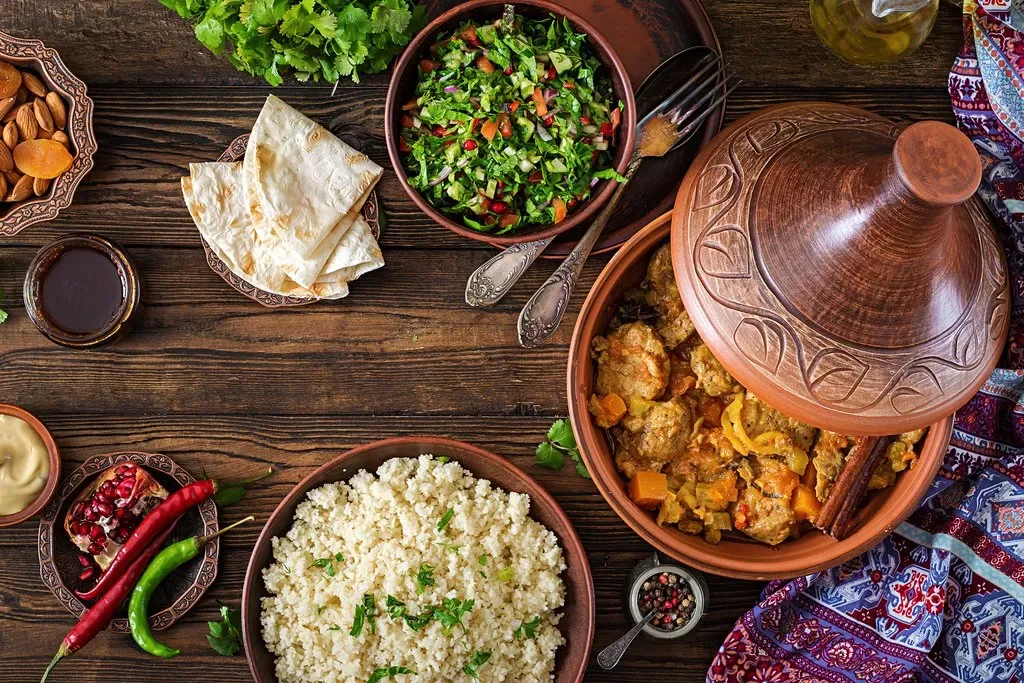
Pack for change rather than for a single temperature. For most mixed October itineraries, the useful core is lightweight daytime clothing, a breathable long-sleeve layer, one warmer mid-layer, a light wind or rain shell, comfortable closed walking shoes, a sun hat, sunglasses and sun protection. Add a scarf or light shawl if you like having an easy layer for wind, cool evenings or more conservative settings.
For Marrakech and southern valleys, you may still use short sleeves in the afternoon. For Fes and the north, long trousers and a light jacket become more useful as the month progresses. For the High Atlas, bring a proper warm layer even if you leave Marrakech in sunshine. For a desert camp, have something warm enough for the evening and early morning. Sandals are useful around accommodation, but closed shoes are better around camp at night and for longer walking.
Do not overpack “desert gear.” A Sahara trip is not an expedition unless you have specifically booked one. For a normal private tour with one or two camp nights, comfort comes from good layers, sun protection, a small day bag, reusable water bottle and sensible footwear. For a trek, follow the operator’s route-specific equipment list because sleeping arrangements, daily walking time and support logistics change what you need.
One practical detail is laundry. On a 10- or 12-day itinerary, repeating layers is easier than carrying separate outfits for every climate. Choose pieces that dry reasonably quickly and work together. October rewards a compact wardrobe that can move from city to mountain to desert without forcing you to open a second suitcase every morning.
Crowds, booking and daily rhythm in October
October is popular precisely because the weather works for many kinds of trips. That does not mean every hotel or camp is full, but it is not a month when I would leave important accommodation to the last minute if you care about a particular riad, desert camp category or small mountain property. Private drivers and specialist guides also have finite availability. Book the elements that shape the route first, then leave smaller meals and casual activities flexible.
There is another reason to avoid overbooking: October days feel comfortable enough that travelers are tempted to add more. A sunrise, guided medina, long lunch, hammam, rooftop dinner and evening food tour may all be possible individually, but putting them in one day makes the experience mechanical. Keep one or two anchors and allow the rest to move around weather and energy.
Road timing matters as well. A map estimate does not include photo pauses, mountain traffic, lunch, village stops or simply the fact that Moroccan roads change character. If your route crosses Tizi n’Tichka, follows the Draa Valley or winds through gorge country, build a margin before sunset. In October the daylight window is shortening compared with summer. You do not need to rush, but you should not design every transfer around the final possible minute.
For popular monuments, gardens and heritage sites, opening times and ticket systems can change. Check official information close to the date instead of copying hours from an old blog. Seasonal travel planning is strongest when permanent facts and changeable facts are kept separate.
Three realistic October itinerary styles
Seven days: Marrakech, Atlas and Atlantic. Spend two or three nights in Marrakech, include a meaningful High Atlas day or overnight, then finish in Essaouira. This route limits long transfers and works well for travelers who want city, mountain and coast without trying to reach the Sahara in a week. Agafay can replace or complement a mountain night if you want a nearby open landscape, but remember that it is not the Sahara.
Ten days: Marrakech to the Sahara with a measured return. Begin in Marrakech, cross the High Atlas, include Ait Benhaddou or Ouarzazate as part of the southern route, continue through the valleys toward a Sahara gateway, spend enough time for a real desert experience, then return without compressing every road day. Depending on whether you choose M’Hamid/Erg Chigaga or Merzouga, the exact route changes. The important rule is to give the desert more than a rushed overnight.
Twelve to fourteen days: north plus Sahara. With nearly two weeks, Casablanca or Rabat, Chefchaouen, Fes, the Sahara and Marrakech can become one coherent journey. October is especially useful for this because you can handle cooler northern evenings and warmer southern days with layers. Still, the route contains substantial distances. A good itinerary should include rest, not just more destinations because the calendar has space.
These are route shapes, not fixed packages. Flight cities, interests and mobility should change them. A traveler focused on food and architecture needs different time in Fes and Marrakech from someone whose priority is trekking. A family may choose shorter driving days. A photographer may want dawn and late-afternoon flexibility. October gives us room to tailor; the itinerary should use that advantage.
Who October suits best — and when another month may be better
October is particularly strong for first-time visitors who want to combine cities with either the Sahara or the Atlas, for couples who prefer active days without peak-summer heat, for photographers who want several landscape types, and for travelers building a longer private circuit. It is also attractive for desert trekking because autumn brings a more realistic walking season to the south.
It is not automatically the best month for every goal. If your priority is swimming and guaranteed hot beach weather, you may prefer a warmer coastal period and should research sea conditions separately. If you dream of high-altitude winter landscapes, October is too early to plan around snow. If you want the quietest possible tourism season, another month may bring fewer visitors, although weather trade-offs increase. And if you are tied to exact cultural events or festivals, the calendar rather than climate should lead the decision.
Travelers with heat sensitivity should still treat early October afternoons seriously in Marrakech and the south. Travelers who dislike cool evenings should not underestimate the desert or mountains. Anyone with limited mobility should discuss medina access, mountain walking and camp surfaces before booking; comfortable weather does not remove physical terrain.
The best October trip is therefore not “Morocco’s highlights in ten days.” It is the route that makes sense for your priorities and for the geography. Leave some places for another trip. Morocco is large enough that trying to include Marrakech, Chefchaouen, Fes, Merzouga, M’Hamid, Essaouira and Agadir in a short holiday usually means seeing the country through a windscreen.
Our local planning rule for October: protect the transitions
The part of an October itinerary most likely to be underestimated is the transition between climates. Travelers think in destinations: Marrakech, Atlas, Sahara, Fes, coast. We think about the hours between them. What time do you leave? Where can you stop without creating a late arrival? When will the temperature drop? Is luggage accessible if you need a layer? Does the next hotel have vehicle access? Is the mountain walk realistic after a long drive?
Those questions sound small, but they decide whether a trip feels calm or constantly behind schedule. On a Marrakech-to-south route, for example, the High Atlas crossing is not empty time. Ait Benhaddou is not useful if the schedule gives you fifteen rushed minutes there. The Draa Valley is not improved by adding five roadside stops. The desert arrival should leave enough daylight to settle in rather than turning sunset into a race.
The same thinking works in the north. Fes to Chefchaouen is not simply a number of kilometres. Arrival time influences whether you enter the blue medina in relaxed daylight or drag luggage through unfamiliar lanes after dark. Essaouira needs enough time to feel like a coastal stay, not a lunch stop between Marrakech drives.
October helps because the weather often supports longer days outdoors, but it should not become an excuse to overfill the route. Use the season to create better pacing. That is what makes the month valuable: not just lower temperatures, but the possibility of experiencing more of Morocco comfortably when each region is given the time it deserves.