Day 1
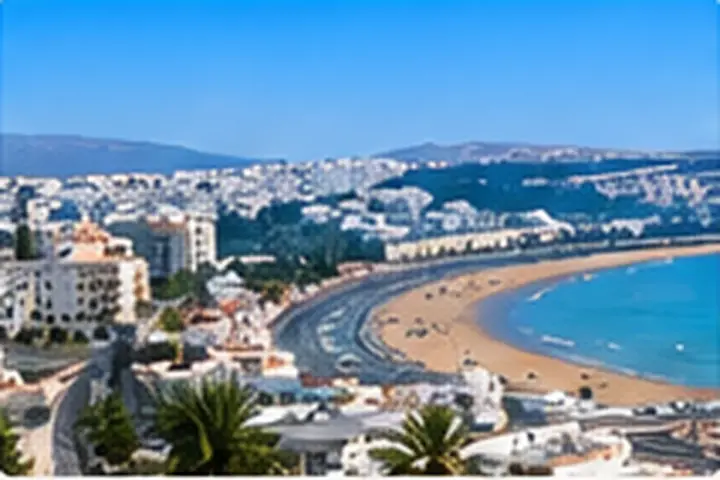
Tangier — Arrival and First Impressions
The trip begins gently in Tangier. After arrival, the priority is simply to get oriented and start absorbing the atmosphere at a comfortable pace.
Tangier sits at the meeting point of the Mediterranean and Atlantic, with a long history shaped by movement between Africa and Europe. The gentle start makes sense with Tangier waiting on the next stage.
Day 2
Tangier — A guided visit
Rather than changing cities again, you remain in Tangier and give the day to a guided visit.
Tangier sits at the meeting point of the Mediterranean and Atlantic, with a long history shaped by movement between Africa and Europe. Without a hotel change, the day keeps useful breathing room around a guided visit and avoids unnecessary rushing. With Tangier behind you and Chefchaouen still ahead, the day has room to belong to this place on its own terms.
Day 3
Tangier to Chefchaouen — Time on foot
Leaving Tangier, the landscape changes on the way to Chefchaouen, with time on foot as the day’s central experience.
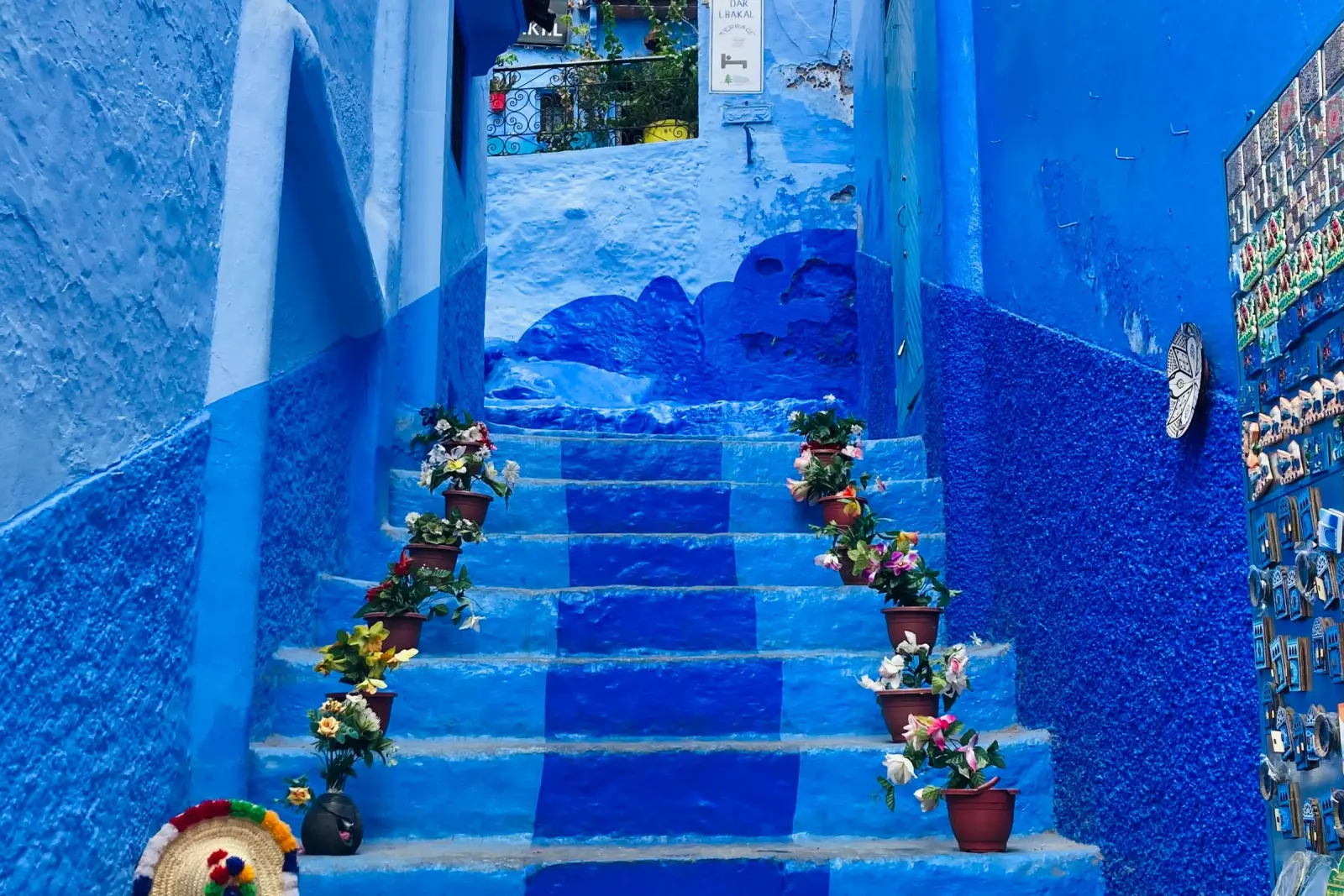
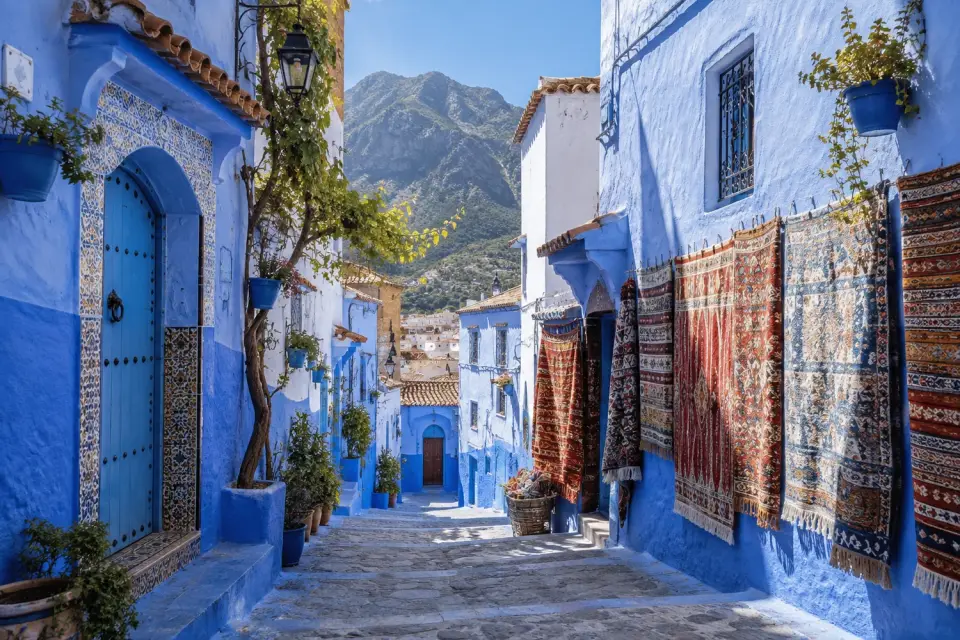
Arriving from Tangier, Chefchaouen rises into the Rif foothills, and its blue-painted lanes feel closely tied to the surrounding mountain landscape. There is no attempt to turn every viewpoint into a stop. The important pause is time on foot, with Chefchaouen reached at a sensible pace. Coming after Tangier and before Chefchaouen, this setting gives the day a clear place in the wider journey.
Day 4
Chefchaouen — A private photoshoot
With no long transfer today, the day stays in Chefchaouen and centres on a private photoshoot.
Chefchaouen rises into the Rif foothills, and its blue-painted lanes feel closely tied to the surrounding mountain landscape. With the night also in Chefchaouen, there is room to slow down between the main moments and keep some of the day unscripted. Coming after Chefchaouen and before Meknes, this setting gives the day a clear place in the wider journey.
Day 5
Chefchaouen to Meknes — The Roman site of Volubilis
Leaving Chefchaouen, the landscape changes on the way to Meknes, with the Roman site of Volubilis as the day’s central experience.
Arriving from Chefchaouen, Meknes has the scale of an imperial city but a calmer rhythm than Fes or Marrakech. There is no attempt to turn every viewpoint into a stop. The important pause is the Roman site of Volubilis, with Meknes reached at a sensible pace. The change from Chefchaouen toward Meknes makes this stop feel connected to the route rather than isolated.
Day 6
Meknes — Wine tasting
Rather than changing cities again, you remain in Meknes and give the day to wine tasting.
Meknes has the scale of an imperial city but a calmer rhythm than Fes or Marrakech. The pace is intentionally loose around wine tasting; the point is to experience Meknes, not to fill every hour. Placed between Meknes and Fes, the day helps the landscape and culture change in a way you can actually feel.
Day 7
Meknes to Fes — Time to explore at your own pace
Today links Meknes with Fes; along the way, time to explore at your own pace gives the route a clear purpose.
Arriving from Meknes, Fes is one of Morocco’s great historic cities, with a dense medina where craft, trade and daily life remain closely interwoven. The distance is real, and the schedule respects it: there is time to explore at your own pace without pretending the drive is short. Coming after Meknes and before Fes, this setting gives the day a clear place in the wider journey.
Day 8
Fes — A hammam pause
Rather than changing cities again, you remain in Fes and give the day to a hammam pause.
Fes is one of Morocco’s great historic cities, with a dense medina where craft, trade and daily life remain closely interwoven. This is one of the days when less structure works better, allowing a hammam pause and everyday life in Fes to sit naturally together. Coming after Fes and before Rabat, this setting gives the day a clear place in the wider journey.
Day 9
Fes to Rabat — A henna workshop
Today links Fes with Rabat; along the way, a henna workshop gives the route a clear purpose.
Arriving from Fes, Rabat combines a calm Atlantic setting with the measured rhythm of a national capital. The day feels full but not crowded; a henna workshop is given space, and unnecessary detours are left out. The change from Fes toward Rabat makes this stop feel connected to the route rather than isolated.
Day 10
Rabat — A Quiet Final Morning
The trip closes quietly in Rabat. The morning remains open around the onward journey, keeping the last hours practical rather than over-programmed.
Rabat combines a calm Atlantic setting with the measured rhythm of a national capital. The final morning feels more natural after arriving here from Rabat rather than adding another excursion.