Day 1
Casablanca → Rabat: Arriving Without Rushing
Meals: None unless otherwise confirmed
Included: Private air-conditioned transport and professional driver
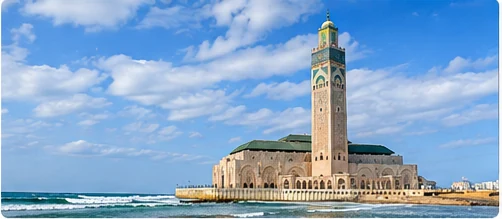
Morocco begins quietly. After landing in Casablanca, meet your driver and continue to Rabat rather than trying to turn the first afternoon into a sightseeing marathon. The priority is to arrive well, check in and let the journey start at a natural pace.
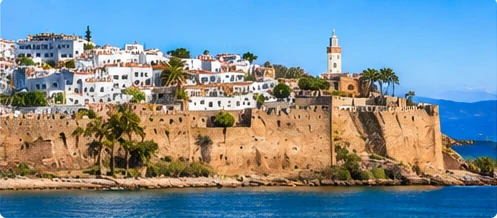
Rabat feels more measured than Casablanca. The Bou Regreg, the Atlantic air and the old walls give the capital a calm first impression before the denser medinas and longer road days ahead. If your flight lands early, a short walk can introduce the city; if it lands late, rest is the better choice.
There are thirteen days still to come. Nothing important is lost by starting gently.
Day 2
Rabat → Chefchaouen: From the Capital into the Rif
Meals: Breakfast
Included: Private air-conditioned transport and professional driver
The morning belongs to Rabat. Walk through the Kasbah of the Udayas, see Hassan Tower and the royal mausoleum, and take time to notice how the capital sits beside the Bou Regreg instead of treating these places as quick photo stops.
After lunch, the route turns north. The drive to Chefchaouen is substantial enough to feel the geography changing: plains give way to the Rif, roads begin to climb and the blue town eventually appears against the mountain slopes.
Arrive without trying to explore everything at once. Chefchaouen is at its best when there is still something left for tomorrow morning.
Day 3
Chefchaouen → Fes: Beyond the Blue Walls
Meals: Breakfast
Included: Private air-conditioned transport and professional driver
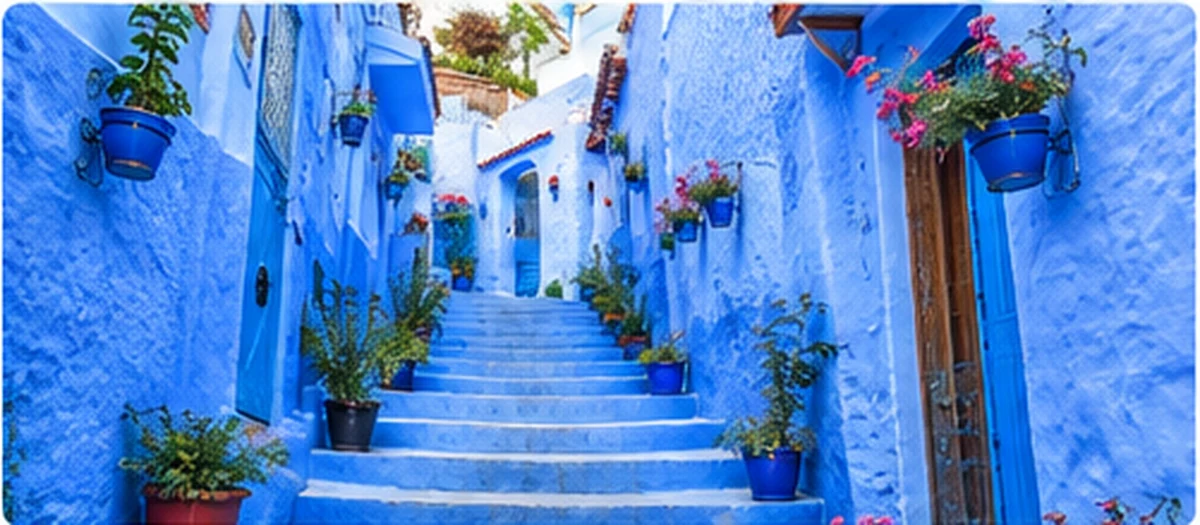
Chefchaouen is famous for its color, but the morning is more interesting when you move beyond the most photographed lanes. Walk through the medina, cross small squares, look into workshops and climb toward quieter streets where the town feels less like an image and more like a lived-in mountain place.
By late morning or early afternoon, leave the Rif and head toward Fes. The contrast is sharp: Chefchaouen is compact and open; Fes is dense, layered and much harder to read at first glance.
Settle into the riad and keep the evening simple. Tomorrow is the day to enter the old medina properly.
Day 4
Fes: A Medina That Needs Time
Meals: Breakfast
Included: Private air-conditioned transport and professional driver
Fes rewards context. With a local guide, enter the old medina through streets where cars do not pass and where workshops, neighborhood fountains, food stalls, religious buildings and homes sit almost on top of one another.
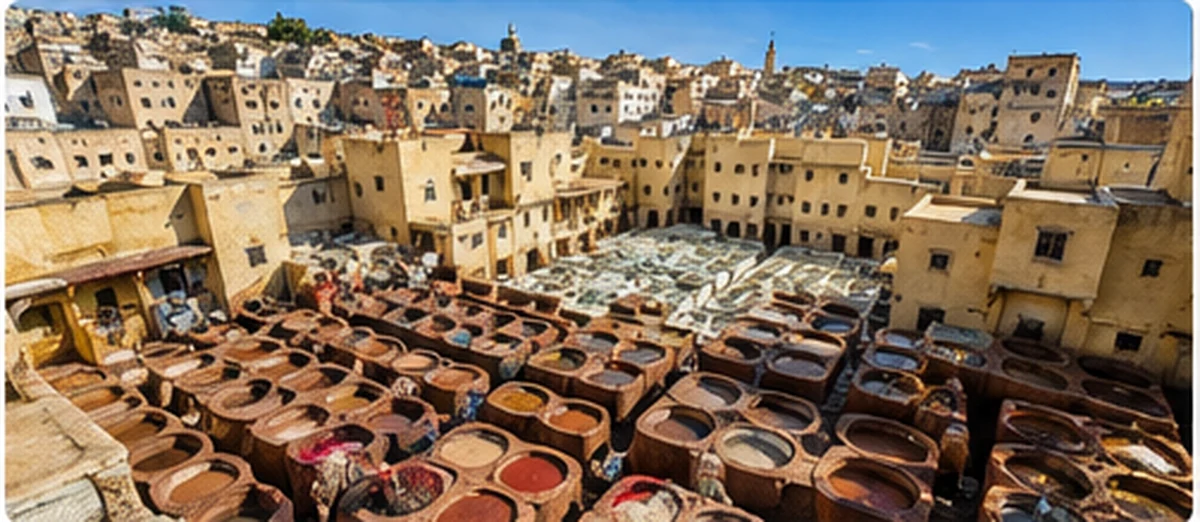
The historic madrasas, the area around Al Quaraouiyine and the tanneries each reveal a different part of the city. Yet the strongest memories often come between monuments: a craftsman shaping metal, cedar stacked in a doorway, fresh bread moving through a lane, or a quiet courtyard hidden behind an unremarkable entrance.
Do not try to finish Fes. By late afternoon, slow down. The city becomes easier to appreciate once it stops feeling like a puzzle you are expected to solve.
Day 5
Fes → Merzouga: The Country Opens
Meals: Breakfast
Included: Private air-conditioned transport and professional driver
Today is one of the longest road days of the trip, and it should feel honest. Leaving Fes, the route crosses higher country before descending toward the Tafilalet and the desert edge. Forested sections, plateau towns and dry open spaces replace one another over several hours.
Midelt makes a useful break in the journey, while Erfoud signals that you are entering oasis country. Stops are made when they improve the day — for coffee, lunch, a view or a short walk — rather than because every town on the road needs to become an attraction.
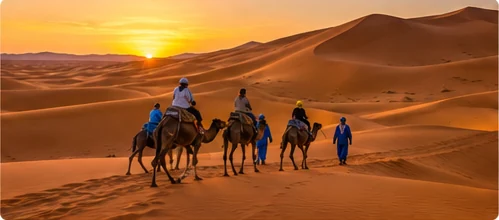
Near Merzouga, the horizon changes again. Erg Chebbi rises from the flatter landscape, and by evening the city rhythm of Fes feels very far away.
Day 6
Merzouga → Dadès: From Dunes to Canyon Country
Meals: Breakfast
Included: Private air-conditioned transport and professional driver
Wake early if you want to see the first light move across Erg Chebbi. The dunes change slowly in the morning, and there is no reason to leave immediately after breakfast. A short walk, sandboarding or simply sitting with the view can be more valuable than another scheduled activity.
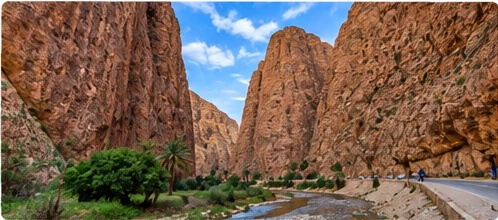
Later, travel through Rissani and the Tafilalet before heading toward Todra. The canyon is worth entering on foot; standing beneath the high walls gives a completely different sense of scale from stopping beside the road.
Continue into the Dadès region by evening. In one day, the journey moves from open desert to cultivated valleys, villages and sculpted rock formations — a reminder that southern Morocco is inhabited landscape, not empty space between attractions.
Day 7
Dadès → Aït Ben Haddou: Rose Country and Earthen Villages
Meals: Breakfast
Included: Private air-conditioned transport and professional driver
The road west passes through a softer southern landscape. Around the Valley of Roses, fields and villages break up the dry terrain. Flowering depends on the season, but the agricultural character of the valley remains part of the experience even when the roses are not at their peak.
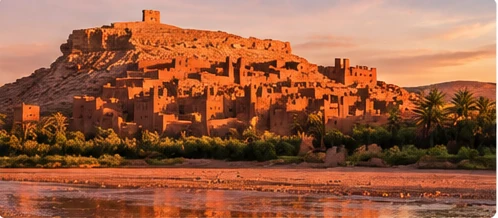
Continue through Ouarzazate, a practical center for the kasbah landscapes and film locations of the region, before reaching Aït Ben Haddou. The ksar deserves more than a roadside photograph. Walk inside, climb through the earthen passages and look back across the river plain.
Staying nearby changes the experience. As day visitors leave, the place becomes quieter and its position on an old route through southern Morocco is easier to imagine.
Day 8
Aït Ben Haddou → Marrakech: Crossing the High Atlas
Meals: Breakfast
Included: Private air-conditioned transport and professional driver
Leave the earthen architecture of the south behind and climb toward the High Atlas. The road bends through mountain valleys and passes where distance on the map can be misleading; this is a day when the journey itself matters.
There is time to stop when the view deserves it, but the aim is not to turn every bend into a photo stop. As the route descends on the western side of the mountains, traffic increases and the landscape becomes greener and more densely settled.
Marrakech arrives almost suddenly after days of desert and valleys. Check in, slow down and resist the temptation to attack the medina immediately. The city has two full days ahead.
Day 9
Marrakech: Reading the Red City in Layers
Meals: Breakfast
Included: Private air-conditioned transport and professional driver
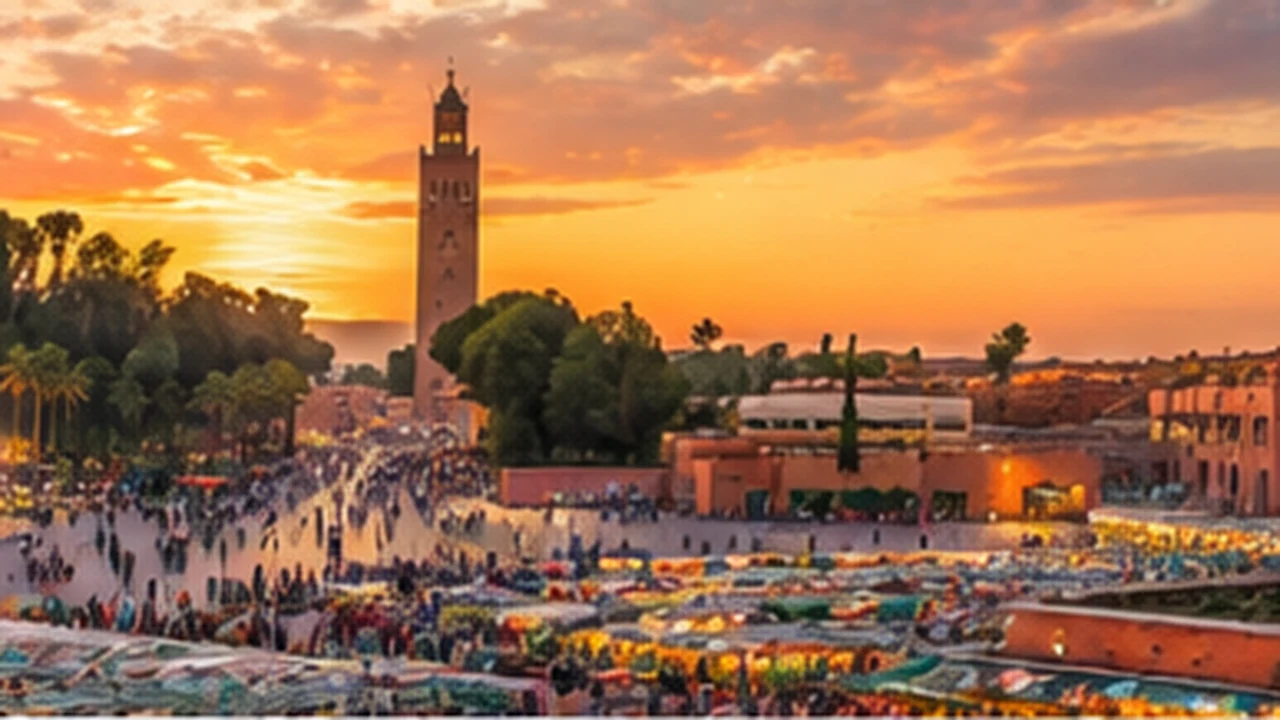
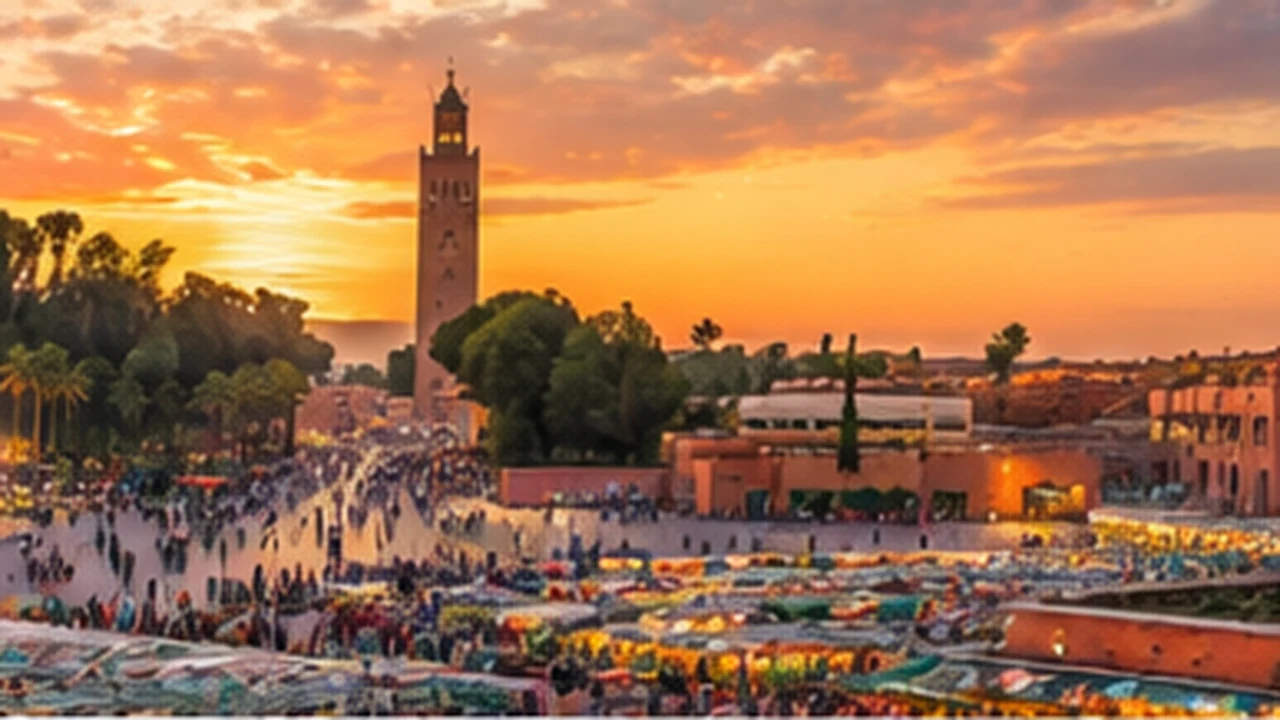
Marrakech works best in layers rather than as one long checklist. Begin with the historic city: the Koutoubia as a visual anchor, Bahia Palace for its courtyards and craftsmanship, and the old quarters where the story of the city becomes more complex than the main square alone.
Then let the souks take over. Metalwork, leather, textiles, spices and small workshops sit in overlapping sections, and no single route through them is the correct one. A guide helps with context without removing the pleasure of getting slightly lost.
Later, return toward Jemaa el-Fna as the atmosphere changes. Food stalls appear, grills light up and the square becomes a different place from the one you crossed earlier in the day.
Day 10
Marrakech: Gardens, Design and Moroccan Cooking
Meals: Breakfast
Included: Private air-conditioned transport and professional driver
After yesterday’s medina, allow Marrakech to show another side. Start more slowly and visit Majorelle Garden, where shade, planting and color create a very different mood from the old city. Nearby, the Yves Saint Laurent Museum adds a modern design story to a destination usually introduced only through palaces and souks.
Later, turn toward food. A cooking experience makes Moroccan cuisine practical: ingredients, spice balance, preparation, bread and tea become something you understand with your hands rather than simply order from a menu.
Keep part of the afternoon open. A hammam, a café, another garden or simple free time may be exactly what the trip needs before tomorrow’s mountain day.
Day 11
Marrakech & Imlil: Walking into the High Atlas
Meals: Breakfast
Included: Private air-conditioned transport and professional driver
Leave Marrakech in the morning for Imlil. In roughly ninety minutes, the city gives way to foothills, narrower roads and mountain villages. The change is immediate enough to make the High Atlas feel much farther from Marrakech than it really is.
Meet a mountain guide and continue on foot. The walk can be adjusted to weather and fitness; the aim is not to chase a summit but to experience village paths, cultivated terraces and the scale of the surrounding peaks at walking pace.
Lunch in the area breaks the hike naturally before the return toward Imlil and the drive back to Marrakech. You sleep in the same city as last night, yet the middle of the day belongs to a completely different Morocco.
Day 12
Marrakech → Essaouira: The Atlantic Changes the Rhythm
Meals: Breakfast
Included: Private air-conditioned transport and professional driver
Head west from Marrakech and watch the landscape flatten toward the Atlantic. Argan trees become part of the scenery, and a well-chosen cooperative visit can explain the work behind argan oil without turning the stop into a shopping obligation.
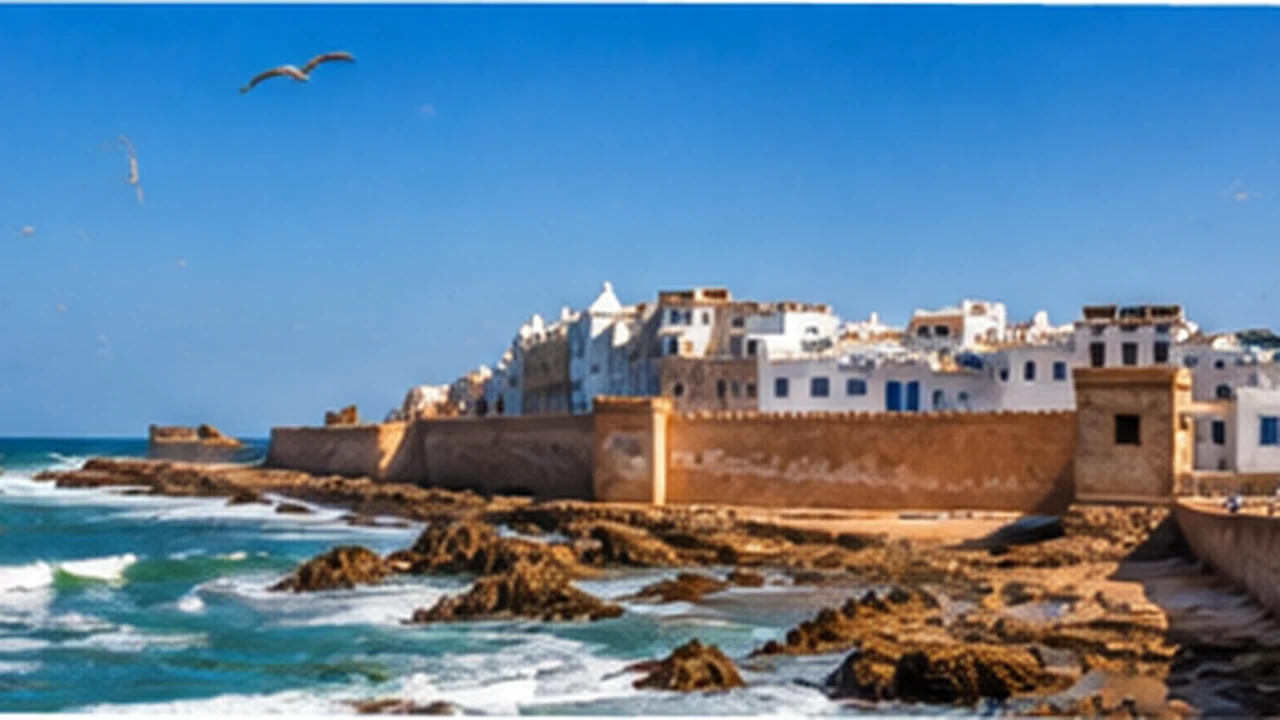
As the coast approaches, the air changes before the ocean is visible. Essaouira feels lighter and less hurried than Marrakech: white walls, blue details, a working fishing port and wind moving through the streets.
Arrive with enough afternoon left for a first walk along the ramparts or through the medina. There is no need to cover the town today. The slower pace is part of why Essaouira belongs near the end of the journey.
Day 13
Essaouira: A Day That Does Not Need Filling
Meals: Breakfast
Included: Private air-conditioned transport and professional driver
After almost two weeks of moving through Morocco, today can remain intentionally loose. Walk the medina without much strategy, follow the ramparts toward the sea and continue to the fishing port, where boats, nets and the day’s catch keep the town connected to real coastal work.
Lunch can be simple seafood near the harbor. After that, choose according to the weather and your mood: browse thuya-wood workshops, visit galleries, walk the beach, sit in a café or try a water activity if conditions are suitable.
The value of the day is the lack of pressure. Essaouira gives the trip somewhere to breathe before the long final transfer tomorrow.
Day 14
Essaouira → Marrakech Airport: The Road Home
Meals: Breakfast
Included: Private departure transfer
The final morning begins beside the Atlantic. Depending on the flight time, there may be space for breakfast and one last walk before leaving Essaouira. Then the route turns inland for the transfer to Marrakech Airport.
The drive is not another sightseeing day; it is the practical close to the journey. Over two weeks, the route has moved through capital streets, Rif mountains, the Fes medina, Sahara dunes, southern valleys, kasbah country, Marrakech, the High Atlas and the Atlantic.
By the time you reach the airport, those places no longer feel like a list. They form one continuous crossing of Morocco, with the final road giving the journey time to settle before departure.