Day 1
Casablanca to Rabat: Spring Arrival on the Atlantic
Meals: Breakfast unless otherwise confirmed
Included: Private transport and route coordination
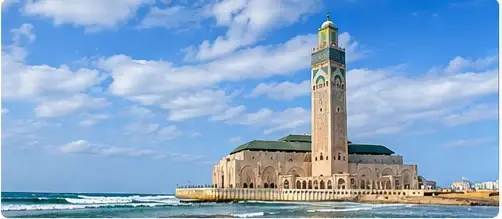
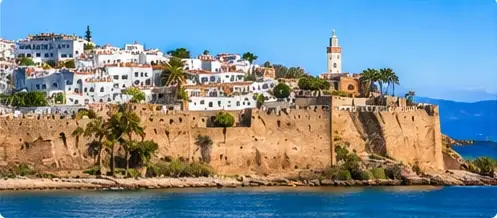
Meet your driver in Casablanca and, if timing permits, begin at the Hassan II Mosque on the oceanfront. Continue to Rabat, where spring temperatures are often comfortable for walking. Visit Hassan Tower and the Mausoleum of Mohammed V, then enter the Kasbah of the Udayas above the Bou Regreg. Gardens and whitewashed lanes make an easy introduction after a flight, and the capital rarely feels as intense as Morocco’s larger tourism centers. Check in early enough for a relaxed dinner. The itinerary is designed around seasonal landscapes farther south, but starting gently on the Atlantic keeps the first day practical and preserves energy for the Rif Mountains tomorrow.
Day 2
Rabat to Chefchaouen: Green Plains and the Rif in Spring
Meals: Breakfast unless otherwise confirmed
Included: Private transport and route coordination
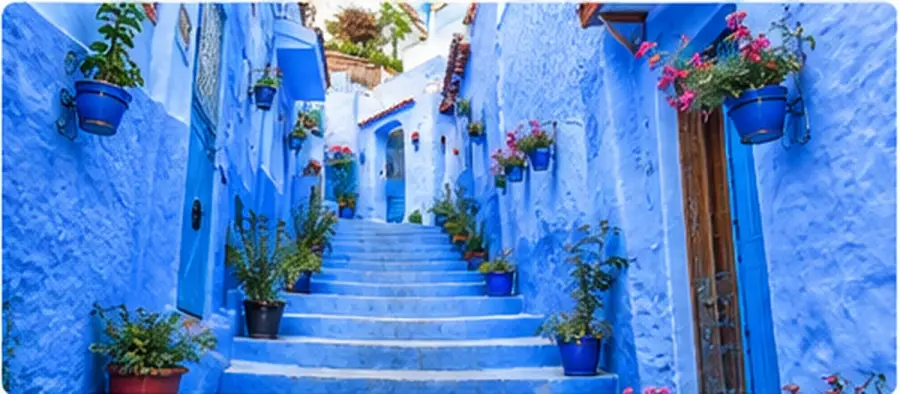
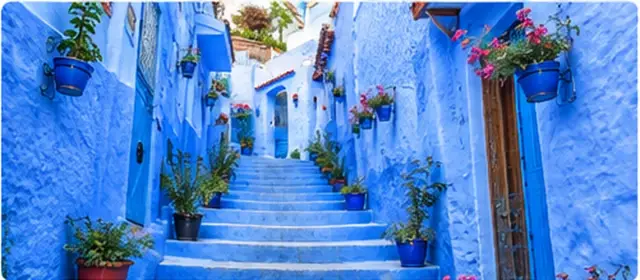
Leave Rabat and drive north as the agricultural plains become greener and the Rif rises ahead. Spring is one of the best times to approach Chefchaouen because hillsides can still hold fresh vegetation while daytime temperatures remain comfortable. Arrive in the afternoon, check into your riad and begin around Plaza Uta el-Hammam. Wander toward Ras El Ma and continue uphill if you want a sunset view from the Spanish Mosque. The evening is deliberately unscheduled. Tomorrow gives you a full day for the medina and surrounding paths, so there is no reason to rush through every blue lane immediately after the drive.
Day 3
Chefchaouen: Blue Medina, Wildflowers and Optional Akchour
Meals: Breakfast unless otherwise confirmed
Included: Private transport where useful and planned local guiding
Spend the morning exploring Chefchaouen on foot, taking quieter upper lanes before the center becomes busy. Spring often brings greener slopes around the town, so the contrast between blue walls and the Rif is especially strong. After the kasbah and a relaxed lunch, choose between more time in the medina, the walk toward the Spanish Mosque, or an excursion toward Akchour when water levels, weather and trail conditions are suitable. An Akchour day should be treated as real walking time rather than squeezed between city stops. Return to Chefchaouen for a second evening, when the main square settles and the town feels less like a day-trip destination.
Day 4
Chefchaouen to Fes via Volubilis: Rif Hills to the Imperial Plains
Meals: Breakfast unless otherwise confirmed
Included: Private transport and route coordination
Descend from Chefchaouen toward Volubilis, where spring greenery can be particularly striking around the Roman ruins. Walk among mosaics, columns and the basilica with a guide who can explain how the city related to the surrounding agricultural region. Continue through Meknes for a short imperial-city stop if timing is good, then drive on to Fes. Check into your riad before evening and leave the dense medina for tomorrow. The day is intentionally historical and scenic: mountain roads give way to open plains, Roman archaeology and finally one of Morocco’s great medieval cities.
Day 5
Fes: Medina, Workshops and a Spring Afternoon in the Gardens
Meals: Breakfast unless otherwise confirmed
Included: Private transport where useful and planned local guiding
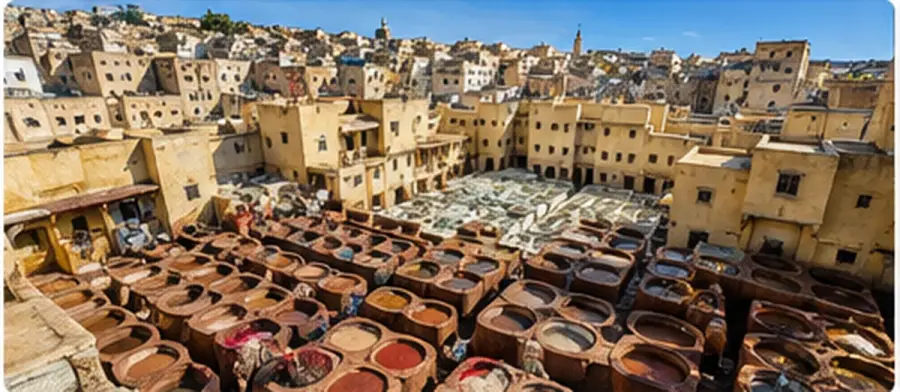
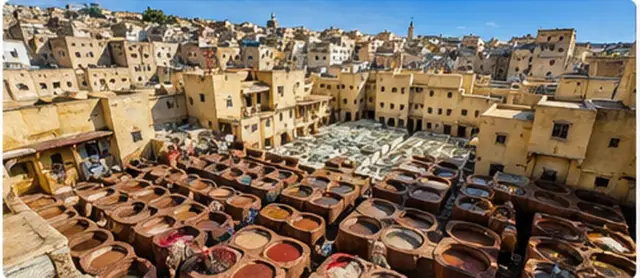
Explore Fes el-Bali with a local guide, visiting a madrasa when open, the Nejjarine quarter, food markets, metalworkers and a tannery viewpoint. Take time to observe how workshops operate rather than moving continuously from monument to monument. After lunch, continue into a different part of the medina or visit the mellah. If the weather is pleasant, finish in Jnan Sbil gardens, where spring greenery offers a quiet contrast to the enclosed streets of the old city. This is your only full Fes day, so the route balances essential historical context with enough pauses to keep the medina enjoyable rather than exhausting.
Day 6
Fes to Merzouga: Middle Atlas, Ziz Palms and Desert Sunset
Meals: Breakfast unless otherwise confirmed
Included: Private transport and route coordination
Cross the Middle Atlas through Ifrane and cedar country, where spring weather can still be cool compared with the Sahara. Continue through Midelt and descend toward the Ziz Valley, stopping above the palm-filled gorge for a broad landscape view. From Erfoud and Rissani, the terrain opens into the pre-Sahara until Erg Chebbi appears outside Merzouga. It is a long drive, but the change in climate is part of the experience: fresh mountain air in the morning and warm desert light by evening. Check in near the dunes and keep activities minimal today. Tomorrow is reserved for the full desert circuit and camp night.
Day 7
Erg Chebbi: Desert Day and Overnight Camp
Meals: Breakfast unless otherwise confirmed
Included: Private transport, desert logistics and the confirmed Sahara activity
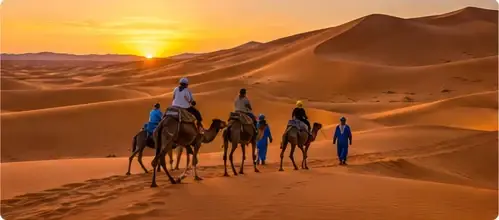
Spend the day around Erg Chebbi by 4x4, visiting Khamlia for Gnawa music and crossing the black-desert terrain that surrounds the dune field. Depending on local conditions, add a seasonal lake, fossil site or respectful tea stop with a nomadic family. Spring temperatures can make daytime exploration more comfortable than midsummer, though the strongest sun is still avoided around midday. Return to Merzouga, then enter the dunes later by camel or 4x4. Watch sunset from a ridge away from the main camp path, have dinner and stay overnight in the desert. Camp level is chosen in advance, while the landscape remains the same.
Day 8
Merzouga to the Rose Valley via Todra and Dadès
Meals: Breakfast unless otherwise confirmed
Included: Private transport and route coordination
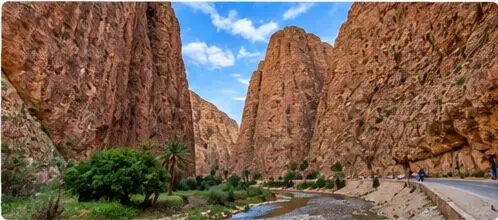
Leave the Sahara and drive west toward Tinghir and Todra Gorge. Walk beneath the limestone walls, then continue through the Dadès region toward Kelaat M’Gouna. In April and May, rose fields and roadside distilleries can become the focus of the final part of the day; outside peak bloom, the valley still offers irrigated gardens, kasbah villages and mountain views. Because this is a long transfer, the itinerary avoids adding unrelated detours. Arrive in the Rose Valley by evening and settle into a guesthouse or kasbah-style property. Tomorrow stays in the region so the seasonal landscape can be explored without watching the clock.
Day 9
Rose Valley: Villages, Gardens and Seasonal Rose Culture
Meals: Breakfast unless otherwise confirmed
Included: Private transport where useful and planned local guiding
Today is dedicated to the valleys around Kelaat M’Gouna rather than another long road. During the rose harvest, visit a village or cooperative to see petals being collected and distilled into rosewater and cosmetic products; exact activities depend on the harvest calendar. At other times, focus on walks between cultivated fields, kasbah architecture and the less-visited side valleys that cut into the foothills. Lunch can be arranged in a local guesthouse, followed by a slow afternoon rather than a second driving circuit. This day is what makes the itinerary genuinely spring-oriented instead of simply using “rose season” as a title. Overnight in the same area.
Day 10
Rose Valley to Marrakech via Skoura and Aït Ben Haddou
Meals: Breakfast unless otherwise confirmed
Included: Private transport and route coordination
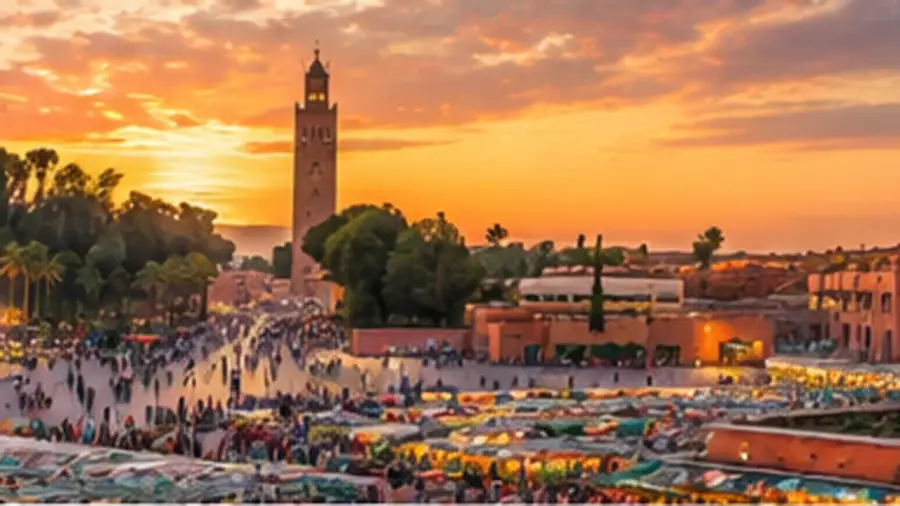
Travel west through Skoura’s palm groves, then continue toward Ouarzazate and Aït Ben Haddou. Explore the UNESCO-listed ksar on foot, climbing through its earthen towers and alleys before crossing the High Atlas toward Marrakech. The road can use the Ounila Valley and Telouet when conditions allow, or the main Tizi n’Tichka route when that is more practical. Arrive in Marrakech toward evening. After several days of desert and rural valleys, the city feels loud and colorful, so keep the first night easy. Dinner near the riad and a short look at Jemaa el-Fna are enough; the trip turns back to the mountains tomorrow.
Day 11
Marrakech to Imlil: From Medina Streets to the High Atlas
Meals: Breakfast unless otherwise confirmed
Included: Private transport and route coordination
Spend the morning seeing a compact selection of Marrakech—perhaps Bahia Palace, the Koutoubia surroundings and a walk through the souks—then leave the city after lunch for the High Atlas. The drive to Imlil climbs through the Moulay Brahim valley and small mountain settlements before reaching the trailhead village beneath the Toubkal massif. Check into a mountain lodge or guesthouse and take a short acclimatization walk through nearby paths if daylight and weather permit. Spring can bring green terraces, running water and snow still visible on higher peaks. This is a complete change of pace from the medina, and the next day is reserved for walking rather than driving.
Day 12
Imlil: A Full Day on High Atlas Village Trails
Meals: Breakfast unless otherwise confirmed
Included: Local mountain guide and route support for the confirmed walk
Meet a local mountain guide and choose a walk that suits the group’s fitness, weather and trail conditions. A common circuit links Imlil with nearby Amazigh villages such as Aremd, terraced fields and viewpoints toward the Toubkal massif without requiring a summit attempt. In early spring, snow can remain on upper paths, while lower valleys may already be green; the guide adjusts the route accordingly. Stop for tea or lunch in a village guesthouse when arranged, then return to Imlil in the afternoon. The aim is a real day on foot with local context, not an overambitious trek inserted into a road tour. Overnight in the mountains again.
Day 13
Imlil to Marrakech: Mountain Morning and Departure
Meals: Breakfast unless otherwise confirmed
Included: Private transport and route coordination
Enjoy breakfast in Imlil and a short final walk if your departure schedule allows. Then descend to Marrakech, normally reaching the city in around two hours depending on traffic and road conditions. Travelers with an evening flight can go directly to the airport after a relaxed mountain morning; those departing earlier leave Imlil promptly, while guests extending their stay are dropped at a hotel or riad. The itinerary ends after moving through four very different spring landscapes—the green Rif, the Sahara, the Rose Valley and the High Atlas. Keeping the final day simple protects the timing and lets the mountain section remain the last real experience rather than another transfer packed with sightseeing.