Day 1
Casablanca to Rabat: Atlantic Coast and a Gentle Start
Meals: Breakfast unless otherwise confirmed
Included: Private transport and route coordination
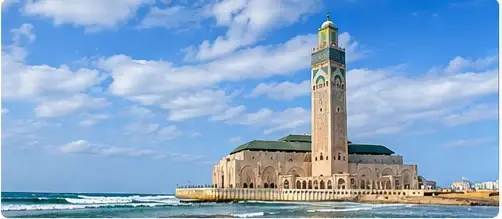
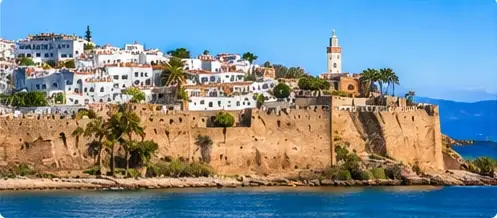
Meet your driver in Casablanca and, when timing allows, begin at the Hassan II Mosque for an exterior visit or scheduled interior tour. Continue north along the Atlantic to Rabat. The capital is an easy place to settle into Morocco: broad avenues connect the archaeological and royal districts, while the old kasbah remains compact and walkable. Visit Hassan Tower and the Mausoleum of Mohammed V, then enter the Kasbah of the Udayas for white-and-blue lanes above the Bou Regreg. If your flight arrives late, move some of this to the next morning rather than rushing. The first night is about arriving well before the route turns farther north toward Asilah and Tangier.
Day 2
Rabat to Tangier via Asilah: Ramparts, Murals and the Strait
Meals: Breakfast unless otherwise confirmed
Included: Private transport and route coordination
Leave Rabat for Asilah, a small Atlantic town whose white medina, Portuguese ramparts and changing street art make a relaxed stop on the journey north. Walk the walls, look into the galleries and have lunch near the old town before continuing to Tangier. Arrive in time for a first walk through the kasbah and medina or along the corniche, depending on light and weather. The city’s location on the Strait of Gibraltar explains much of its international history and gives the evening a distinctly maritime feel. Stay overnight rather than passing straight through; tomorrow’s route continues through Tétouan, so Tangier can be enjoyed as a destination in its own right.
Day 3
Tangier to Chefchaouen via Tétouan: Andalusian Medina to Rif Mountains
Meals: Breakfast unless otherwise confirmed
Included: Private transport and route coordination
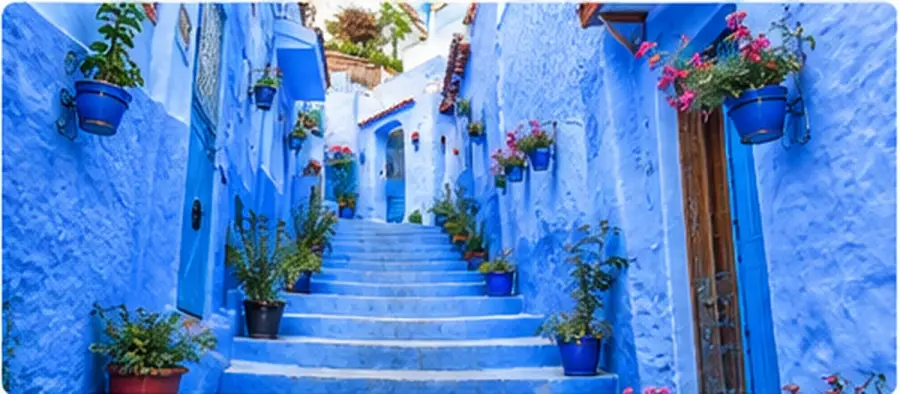
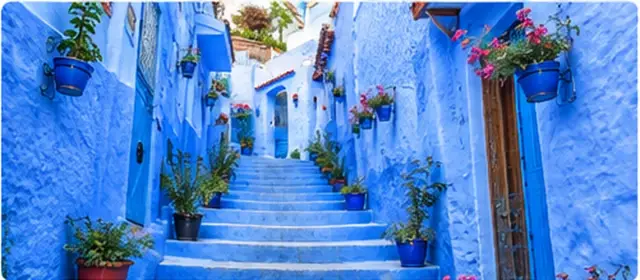
Begin with a final Tangier viewpoint or short medina walk, then drive to Tétouan. Its UNESCO-listed old city carries a strong Andalusian inheritance in white façades, carved doors, craft workshops and narrow market lanes. A local walk here gives you a northern city that feels more residential than Morocco’s famous imperial medinas. After lunch, continue into the Rif and climb to Chefchaouen. Check into your riad and use the evening for Plaza Uta el-Hammam, the kasbah surroundings and Ras El Ma. The blue lanes are especially atmospheric after the day-trippers leave, and tomorrow is intentionally free of transfers so you can explore them properly.
Day 4
Chefchaouen: Full Day in the Blue Medina and Rif Foothills
Meals: Breakfast unless otherwise confirmed
Included: Private transport where useful and planned local guiding
Spend the day on foot in Chefchaouen, starting high in the medina while the alleys are relatively quiet. Move through residential lanes, small textile and leather workshops, fountains and viewpoints that reveal how the town is built into the slope. Visit the kasbah if you want a concise history of the city, then take lunch without a fixed timetable. In the afternoon, walk toward the Spanish Mosque or arrange an outing to Akchour if weather, trail conditions and your interests support it. Keep enough time to return before dark. The second night means you can enjoy Chefchaouen as a mountain town rather than spending most of your visit checking in and out.
Day 5
Chefchaouen to Fes via Volubilis: Roman Countryside and the Road South
Meals: Breakfast unless otherwise confirmed
Included: Private transport and route coordination
Descend from the Rif and cross the plains toward Volubilis. Explore the Roman site with time to see mosaics still in place, the basilica, triumphal arch and the views over surrounding farms. Depending on pace, stop in Moulay Idriss or make a short visit to Meknes before continuing to Fes. The day marks a clear transition from northern mountain culture to imperial Morocco. Arrive in Fes by late afternoon, check into your riad and keep the evening close to your accommodation. The medina is much larger and more complex than Chefchaouen, so it is best entered tomorrow with a guide rather than after a travel day.
Day 6
Fes: Medieval Streets, Tanneries and Artisan Quarters
Meals: Breakfast unless otherwise confirmed
Included: Private transport where useful and planned local guiding
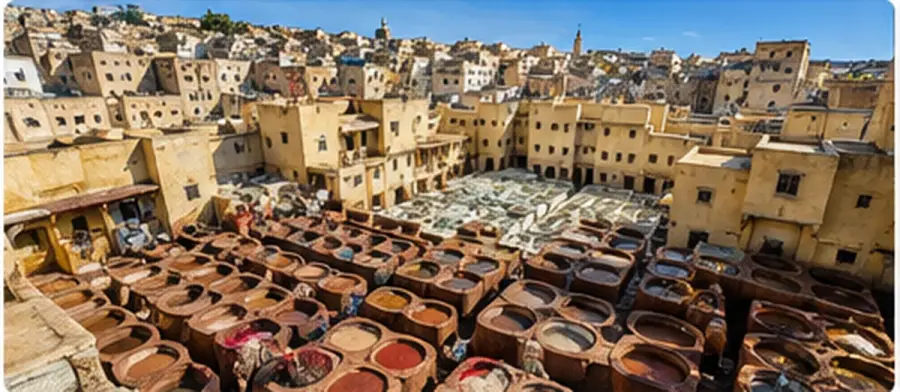
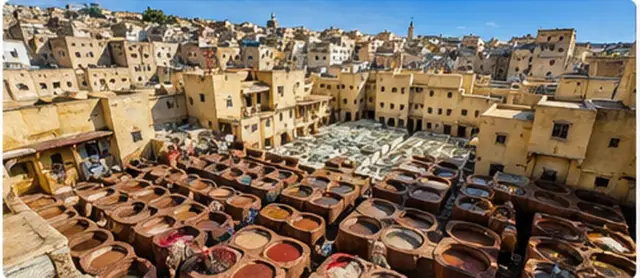
Meet a licensed guide for a full day in Fes el-Bali. The medina’s value lies in the connections between architecture and work: madrasas, mosques viewed from permitted areas, food markets, dyeing, metalwork, carpentry and leather production all occupy the same dense urban fabric. Visit the Nejjarine area and a tannery viewpoint, stop for lunch inside the old city, then continue into a quieter sector away from the busiest shopping lanes. If time permits, add the mellah or palace gates before finishing at a panoramic viewpoint. The day is paced for conversation and observation, not for collecting photographs at every turn.
Day 7
Fes to Merzouga: Middle Atlas to the Edge of Erg Chebbi
Meals: Breakfast unless otherwise confirmed
Included: Private transport and route coordination
Set out early across the Middle Atlas, passing Ifrane and the cedar forests near Azrou before reaching the high plateau around Midelt. After lunch, descend toward Errachidia and the Ziz Valley, where a deep ribbon of palms marks the approach to the desert. From the Tafilalt, follow the road through Erfoud and Rissani before reaching Merzouga. It is a long but rewarding overland day because the ecosystems change repeatedly: green uplands, bare mountain passes, date-palm valleys and finally the dunes of Erg Chebbi. Arrive before dark if road conditions allow, settle into your desert lodge and walk to the sand for sunset. Tomorrow is entirely devoted to the Sahara.
Day 8
Erg Chebbi: Black Desert, Khamlia and a Night in Camp
Meals: Breakfast unless otherwise confirmed
Included: Private transport, desert logistics and the confirmed Sahara activity
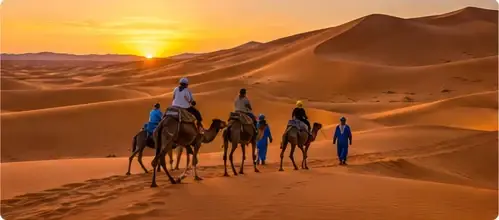
Travel around the dune field by 4x4, leaving the main road for black-stone desert, isolated viewpoints and communities that sit at the edge of Erg Chebbi. A stop in Khamlia can introduce Gnawa music and the history of families with roots in sub-Saharan trade routes. Other visits—nomadic tea, fossil areas or a seasonal lake—depend on the confirmed plan and current conditions. Return to Merzouga during the hottest part of the day, then take a camel or 4x4 transfer into camp in the late afternoon. Watch sunset from the dunes, eat dinner at camp and spend the night where the horizon is free of city lights.
Day 9
Merzouga to Dadès: Rissani, Todra Gorge and the Oasis of Tinghir
Meals: Breakfast unless otherwise confirmed
Included: Private transport and route coordination
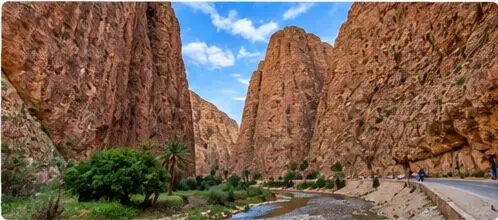
Leave Erg Chebbi and travel through Rissani, stopping at the traditional market if it is operating and fits the day. Continue toward Tinghir, where palms and cultivated gardens spread below dry mountain walls. Todra Gorge is the main walking stop: a short stroll through the narrow canyon is enough to appreciate the scale without turning a road day into a hike. From there, continue to the Dadès Valley through villages and rock formations that become increasingly dramatic near the gorge. Check in before evening. The route now feels far removed from the north—one of the reasons this tour works so well for travelers who want Morocco’s regional contrasts.
Day 10
Dadès to Aït Ben Haddou: Roses, Skoura and the UNESCO Ksar
Meals: Breakfast unless otherwise confirmed
Included: Private transport and route coordination
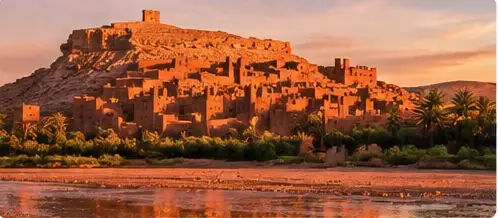
Follow the valley toward Kelaat M’Gouna, where rose cultivation shapes the landscape and local economy, particularly during the spring harvest. Continue through Skoura’s palm groves and earthen kasbah country, then pass Ouarzazate before reaching Aït Ben Haddou. Spend the afternoon walking through the fortified ksar, climbing above the lower houses for a view across the Ounila Valley. Film history is part of the site’s modern fame, but the architecture and old caravan-route setting are more interesting than a list of productions. Stay nearby overnight so you can enjoy the village after most day tours have left and avoid crossing the High Atlas late in the day.
Day 11
Aït Ben Haddou to Marrakech: Over the High Atlas
Meals: Breakfast unless otherwise confirmed
Included: Private transport and route coordination
Leave Aït Ben Haddou and turn north into the High Atlas. Depending on conditions, travel through the Ounila Valley and Telouet or join the main road toward Tizi n’Tichka. The route climbs through dry mountain villages and high passes before descending toward the plains around Marrakech. Stop at selected viewpoints where the road is safe, then continue into the city in the afternoon. After days of northern medinas, desert horizons and kasbah villages, Marrakech feels deliberately intense. Check into your riad and take only a short orientation walk this evening. A full guided day tomorrow gives the city the attention it deserves.
Day 12
Marrakech: Palaces, Madrasa and the Souks
Meals: Breakfast unless otherwise confirmed
Included: Private transport where useful and planned local guiding
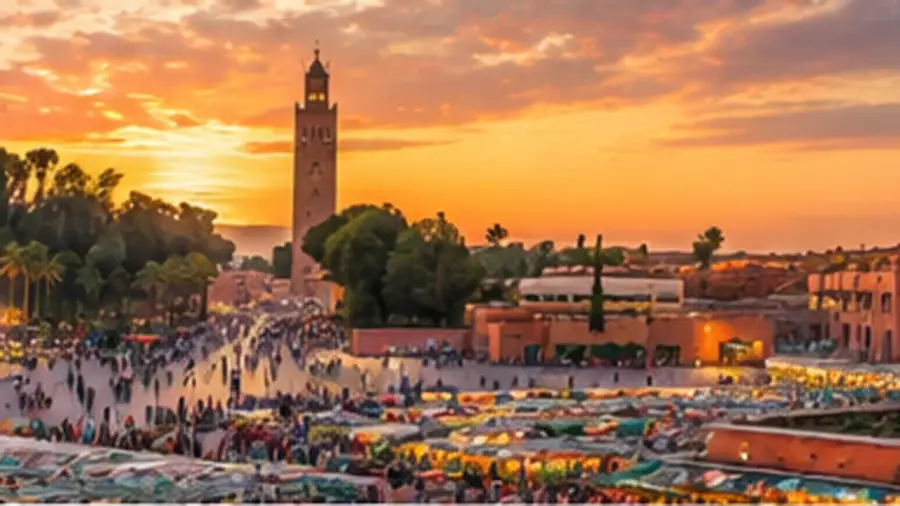
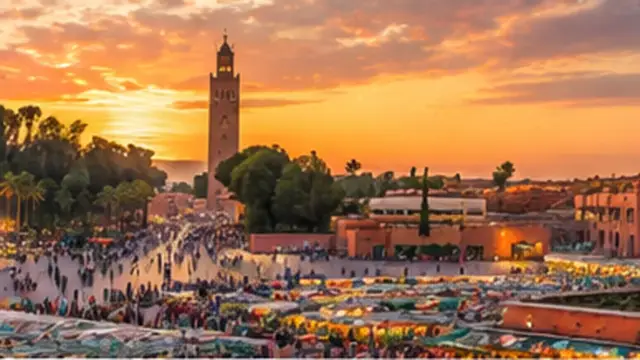
Explore Marrakech with a local guide, selecting monuments that complement what you have already seen elsewhere. Bahia Palace reveals a different kind of elite domestic architecture from Fes, while Ben Youssef Madrasa shows the city’s scholarly heritage. Continue through craft districts rather than simply crossing the main souk, then break for lunch in a quieter riad or rooftop restaurant. Use the afternoon for a garden or the Saadian Tombs depending on interests and opening times. As daylight fades, walk toward Jemaa el-Fna and watch the square fill with food stalls and performers. It is a fitting urban finale after the quieter southern valleys.
Day 13
Marrakech: Departure and the End of a North-to-South Journey
Meals: Breakfast unless otherwise confirmed
Included: Private transport and route coordination
Transfer to Marrakech airport or your onward hotel according to the confirmed departure time. If you have a late flight, keep the morning free for breakfast, a last coffee near the medina or one final purchase rather than scheduling another major attraction. Early flights require a prompt pick-up, especially from pedestrian areas where the vehicle meets you outside the riad lanes. The trip ends after crossing nearly the full length of Morocco—from Asilah and the Strait, through the Rif and Fes, to Erg Chebbi and the High Atlas. Leaving some breathing room on the last day helps that journey finish calmly rather than with a final rush.