Day 1
Tangier: Kasbah, Strait Views and the City Between Two Seas
Meals: Breakfast unless otherwise confirmed
Included: Private transport where useful and planned local guiding
Start in Tangier with enough time to see why the city feels different from the rest of Morocco. Walk through the kasbah and old medina, pause at cafés that look toward the Strait, and explore the transition between the historic core and the newer boulevards below it. If your arrival time allows, drive toward Cap Spartel where Atlantic and Mediterranean geography becomes visible in the landscape, with the Caves of Hercules as an optional nearby stop. Keep the evening loose. Tangier rewards observation more than a long monument checklist, and the first day should leave space for a seafood dinner, a walk on the corniche or simply settling into the rhythm of northern Morocco.
Day 2
Tangier to Chefchaouen via Tétouan: Andalusian North and Rif Roads
Meals: Breakfast unless otherwise confirmed
Included: Private transport and route coordination
Leave Tangier for Tétouan, whose UNESCO-listed medina preserves a strong Andalusian character in its white façades, craft streets and compact neighborhoods. A focused walk here gives the day more depth than driving straight to Chefchaouen. Continue into the Rif, where the road climbs through green valleys toward the blue-painted town. Check in, then use the late afternoon for Plaza Uta el-Hammam, the kasbah surroundings and the lower medina. Ras El Ma is a natural endpoint for the walk if daylight remains. Because tomorrow is reserved for Chefchaouen itself, there is no reason to chase every viewpoint on arrival day. Enjoy dinner on a terrace and let the mountain air do the rest.
Day 3
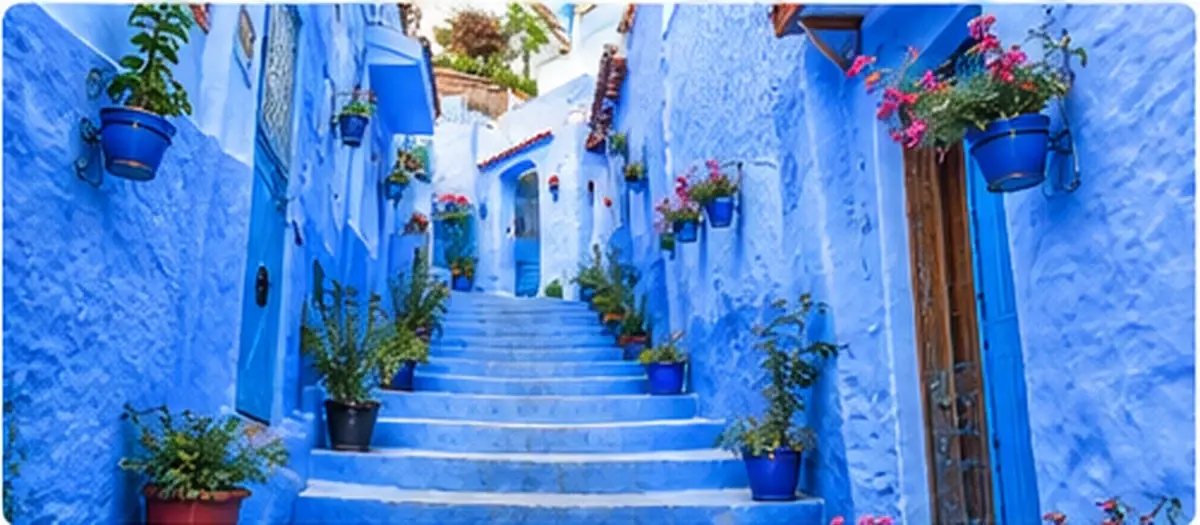
Chefchaouen: Blue Medina, Hillside Paths and an Unhurried Evening
Meals: Breakfast unless otherwise confirmed
Included: Private transport where useful and planned local guiding
Begin early in the upper medina, when delivery carts and residents are still moving through lanes that become much busier later. The famous blue walls are only part of the experience: look for communal ovens, small weaving shops, fountains and the changing views between steep stairways. Visit the kasbah for context, then take a long lunch rather than scheduling every hour. In the afternoon, walk toward the Spanish Mosque or stay in town for photography and cafés. An Akchour excursion can be arranged if hiking conditions are suitable, but it should replace—not crowd—the town time. Return before sunset and enjoy the rare luxury of a second night in the same small medina.
Day 4
Chefchaouen to Fes via Volubilis and Meknes: From Rif to Imperial Morocco
Meals: Breakfast unless otherwise confirmed
Included: Private transport and route coordination
Descend from Chefchaouen and cross the agricultural plains toward Volubilis. A short guided visit helps bring the Roman mosaics, basilica and triumphal arch into focus against the surrounding olive country. Continue to Meknes, where a compact circuit can include Bab Mansour, Place el Hedim and the imperial granary area depending on opening conditions. The final drive to Fes is short enough to arrive before evening. This day works because the stops are historically linked: Roman settlement, a seventeenth-century imperial capital, then Morocco’s oldest major medina. Check into your riad and leave the labyrinth of Fes el-Bali for a fresh start tomorrow.
Day 5
Fes: Scholars, Artisans and the Working Medina
Meals: Breakfast unless otherwise confirmed
Included: Private transport where useful and planned local guiding
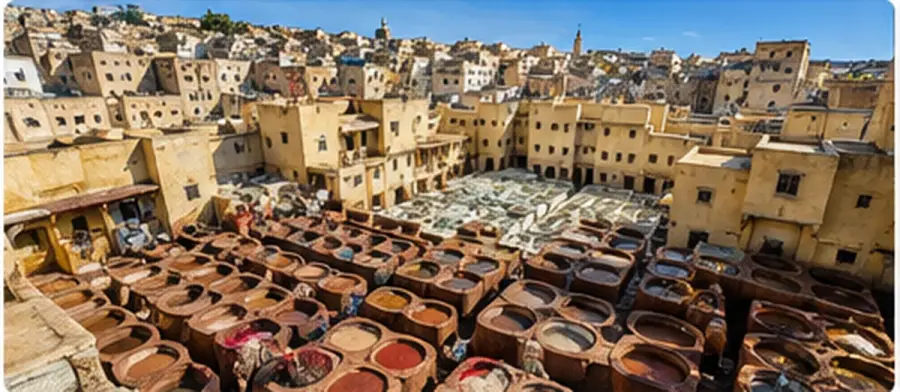
Spend the day with a licensed local guide inside Fes el-Bali. Rather than rushing between landmarks, follow the logic of the city: religious and educational buildings near the main routes, specialized souks, neighborhood fountains and workshops tucked into narrow side streets. Visit a madrasa when open, see the Nejjarine area and watch leather work from a tannery terrace without turning the stop into a shopping obligation. Pause for lunch inside the medina, then continue through metal, wood or textile quarters. If you still have energy, finish with the mellah or a viewpoint over the old city. The goal is to understand Fes as a living urban system, not a maze to be conquered.
Day 6
Fes to Merzouga: Middle Atlas Forests and the Long Descent to the Sahara
Meals: Breakfast unless otherwise confirmed
Included: Private transport and route coordination
Leave Fes early for the Middle Atlas. The first hours pass through cooler uplands around Ifrane and cedar country near Azrou before the road reaches Midelt beneath the eastern High Atlas. After lunch, descend through the dramatic corridor toward Errachidia and the Ziz Valley, where date palms run through a deep, dry landscape. Continue via Erfoud and Rissani to Merzouga. The drive is long, so stops are chosen for scenery and comfort rather than quantity. When Erg Chebbi finally appears, the scale of the orange dunes feels earned. Check in, walk to the edge of the sand and keep the major desert circuit for tomorrow.
Day 7
Erg Chebbi: Around the Dunes by 4x4 and Into Camp at Sunset
Meals: Breakfast unless otherwise confirmed
Included: Private transport, desert logistics and the confirmed Sahara activity
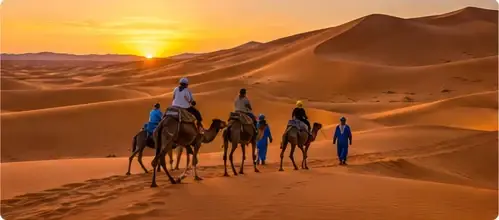
A full Sahara day lets you see what lies beyond the hotel strip. Travel around Erg Chebbi by 4x4 to reach wide black-desert plains, small communities and Khamlia, where a music visit can be included respectfully. Seasonal water, fossil areas or a tea stop with a nomadic family depend on local conditions and the confirmed arrangement. Return to Merzouga in the afternoon, then cross the dunes to camp by camel or 4x4. Walk a little away from the main camp line for sunset and watch the light move across the ridges. Dinner follows at camp, with the rest of the evening deliberately simple: stars, sand and quiet instead of another scheduled activity.
Day 8
Merzouga to Dadès Valley via Todra Gorge: From Dunes to Canyon Country
Meals: Breakfast unless otherwise confirmed
Included: Private transport and route coordination
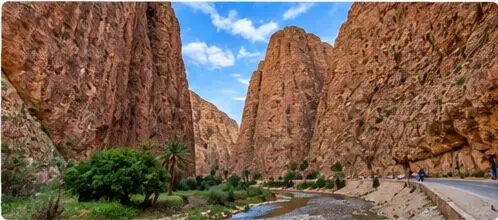
After breakfast, leave Erg Chebbi and travel west through the Tafilalt region. Stop in Rissani if the market is active and the timing is right, then continue toward Tinghir. The oasis around town forms a green ribbon beneath dry mountains, leading naturally to Todra Gorge. Walk into the narrowest section between high limestone walls before returning to the road. The last leg enters the Dadès Valley, where eroded rock forms, old kasbahs and cultivated plots create a very different landscape from the Sahara you left that morning. Check in while there is still light, then enjoy a slower evening in the valley.
Day 9
Dadès to Aït Ben Haddou: Rose Valley, Skoura and Earthen Architecture
Meals: Breakfast unless otherwise confirmed
Included: Private transport and route coordination
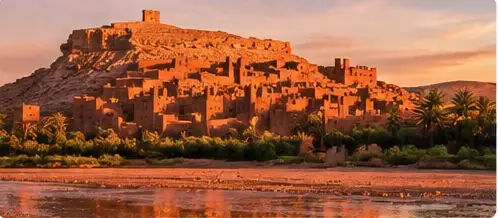
Follow the southern valleys toward Kelaat M’Gouna and the Rose Valley, especially vivid in spring when distillation cooperatives are active. Continue through the palm groves of Skoura, where surviving kasbahs show how wealthy families once built within oasis agriculture. Pass Ouarzazate and reach Aït Ben Haddou in the afternoon. Cross into the ksar and climb gradually through its alleys to understand the construction and defensive layout rather than treating it as a film-set backdrop. Overnight nearby. Staying here instead of driving straight to Marrakech gives you quieter light, a more relaxed visit and an easier start for the High Atlas crossing tomorrow.
Day 10
Aït Ben Haddou to Marrakech: High Atlas Passes and a Sudden Urban Return
Meals: Breakfast unless otherwise confirmed
Included: Private transport and route coordination
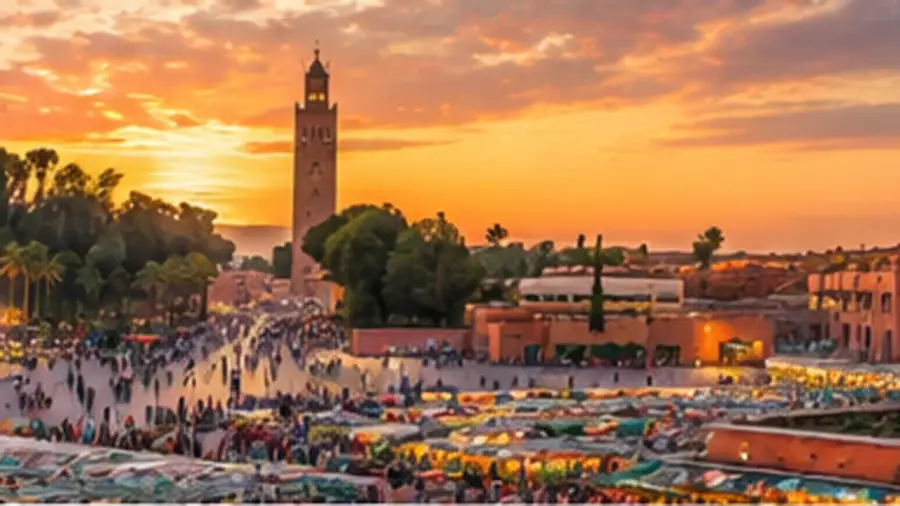
Leave Aït Ben Haddou after breakfast and head for the High Atlas. When conditions permit, the Ounila Valley and Telouet route adds remote villages and the weathered Glaoui kasbah; otherwise take the main road toward Tizi n’Tichka. Stop only where viewpoints are safe and worthwhile, then descend toward the broad Haouz plain. Marrakech appears suddenly after days of small valleys and desert settlements. Check into your riad and resist the urge to cover the medina immediately. A short orientation walk around the Koutoubia and Jemaa el-Fna is enough for the first evening, leaving the deeper city visit for tomorrow.
Day 11
Marrakech: Palaces, Ben Youssef and the Craft Quarters of the Souks
Meals: Breakfast unless otherwise confirmed
Included: Private transport where useful and planned local guiding
Explore Marrakech with a local guide, beginning with historic architecture before the souks grow crowded. Depending on opening schedules, combine Bahia Palace, Ben Youssef Madrasa or the Saadian Tombs, then walk into the specialized market lanes where leather, brass, lanterns, wood and textiles are made and sold. Take lunch in a quieter part of the medina and use the afternoon for a garden or more focused shopping rather than circling the same streets. Return toward Jemaa el-Fna near sunset, when food stalls and performers transform the square. This is the day for context; tomorrow is deliberately less structured.
Day 12
Marrakech: Gardens, Food, Hammam or a Day at Your Own Pace
Meals: Breakfast unless otherwise confirmed
Included: Private transport where useful and planned local guiding
After many road days, keep one full day in Marrakech flexible. You might reserve an early visit to Jardin Majorelle, join a cooking class that begins in a neighborhood market, book a traditional hammam, or spend time in Gueliz to see a more contemporary side of the city. Travelers who prefer another heritage day can visit museums and restored riads that did not fit yesterday’s route. Nothing here is compulsory. The point is to have space for personal interests before departure, whether that means photography, shopping, food or simply a long lunch on a rooftop. Meet the driver only if you have arranged an activity outside the medina.
Day 13
Marrakech: Departure or an Easy Final Morning
Meals: Breakfast unless otherwise confirmed
Included: Private transport and route coordination
Your final day stays intentionally simple. If the flight is later, enjoy breakfast without an alarm, make one last walk through the souks or sit near the Koutoubia gardens before checking out. For earlier departures, your driver collects you directly from the nearest accessible point to the riad and transfers you to Marrakech airport with suitable check-in margin. Travelers continuing elsewhere in Morocco can be dropped at the train station or another agreed point. No monument is added simply to fill time. After crossing the country from Tangier through the Rif, Fes, the Sahara and the High Atlas, the best ending is an organized departure rather than one more rushed stop.