Day 1
Marrakech: Arrival and a First Look at the Medina
Meals: Breakfast unless otherwise confirmed
Included: Private transport where useful and planned local guiding
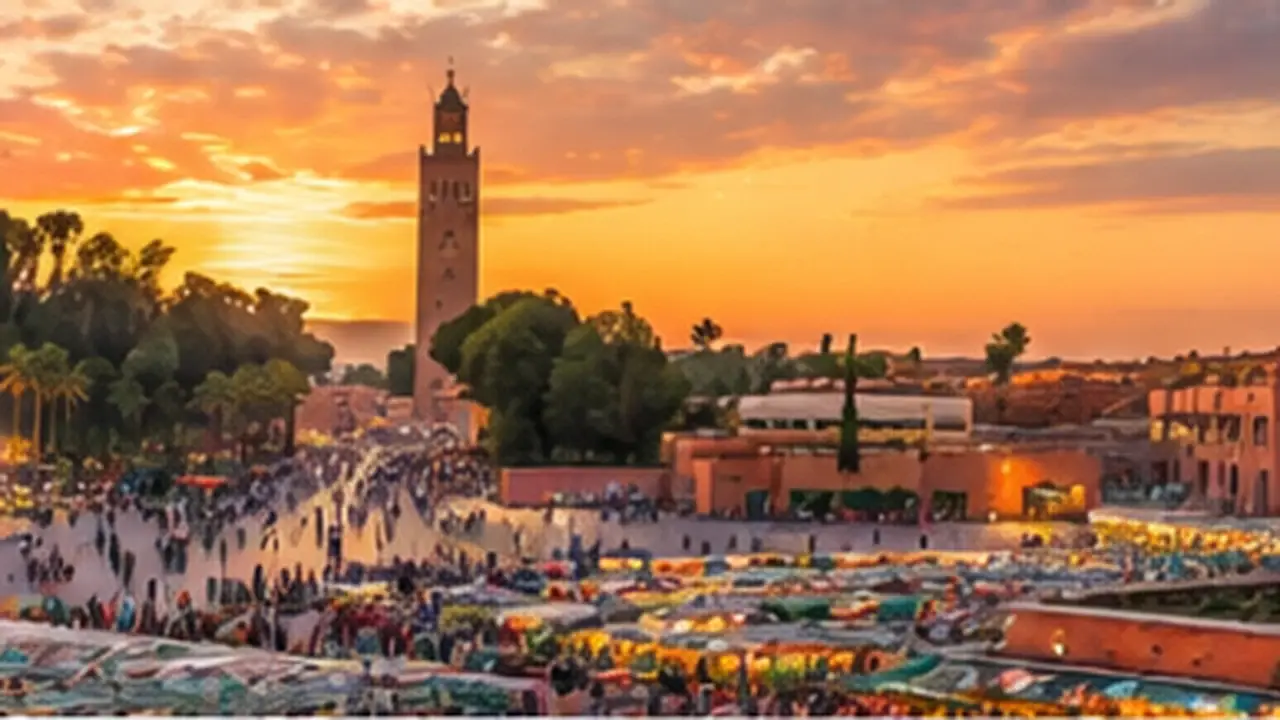
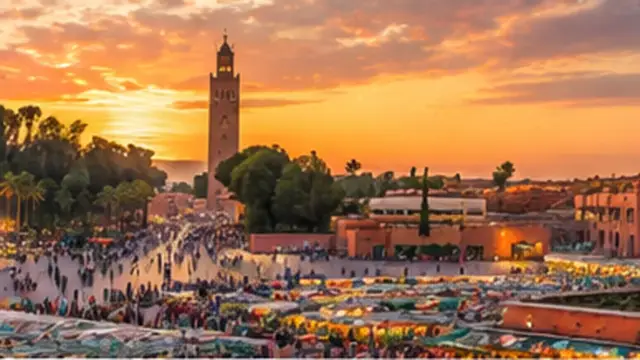
Arrive in Marrakech and meet your driver for the transfer to the riad. The day is intentionally flexible because flight times vary. If you have several hours of daylight, walk around the Koutoubia, enter the souks from the quieter western side and finish at Jemaa el-Fna as the evening food stalls appear. With a late arrival, simply settle in and save the city for the end of the trip, when you return after the Sahara. This itinerary starts by heading west to the Atlantic tomorrow, so there is no need to exhaust Marrakech on day one. A relaxed dinner and an early night make a better beginning.
Day 2
Marrakech to Essaouira: Argan Country and the Atlantic Port
Meals: Breakfast unless otherwise confirmed
Included: Private transport and route coordination
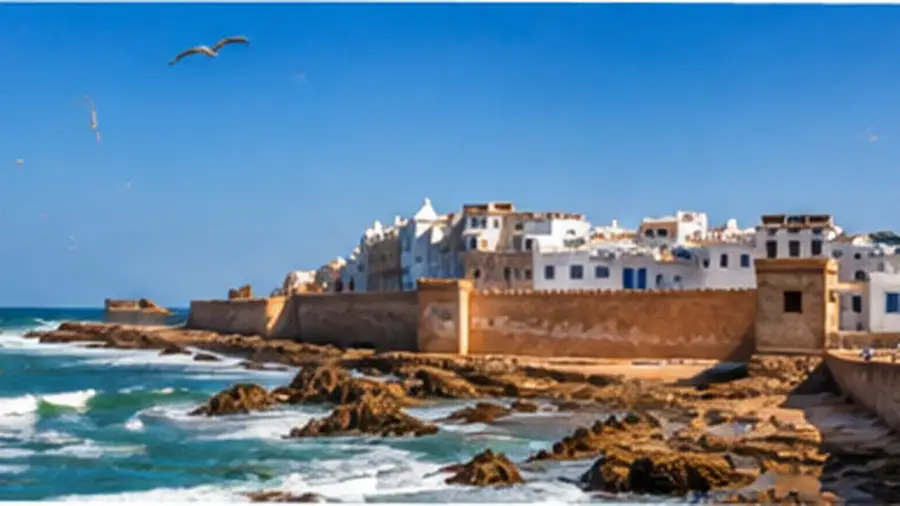
Drive west from Marrakech across open plains and argan country. Stop at a cooperative if you are interested in how the oil is produced, but keep the visit informative rather than a shopping obligation. Arrive in Essaouira around midday, check in and spend the afternoon on foot. Walk through the fishing port, climb the Skala ramparts and wander the medina’s straight, breezy lanes. The city’s Portuguese-influenced fortifications, blue boats and strong Atlantic light create a completely different atmosphere from inland Morocco. Have dinner on your own and listen to the wind and gulls instead of traffic. Tomorrow is a full day here, so no part of the medina needs to be rushed.
Day 3
Essaouira: Free Day for the Medina, Beach and Coastal Life
Meals: Breakfast unless otherwise confirmed
Included: Private transport where useful and planned local guiding
Wake without a departure deadline and use the day according to the weather. The port is most active in the morning, while the ramparts and galleries can be explored later. You might walk the long beach, arrange a surf lesson, visit a woodworking shop known for thuya craft, or simply move between cafés and small restaurants. Essaouira works best when not over-programmed; its appeal lies in the mix of fishing culture, art, sea air and a medina that is easy to navigate independently. If you want a guided history walk, it can be arranged for a few hours rather than the whole day. Stay a second night by the ocean.
Day 4
Essaouira to El Jadida: A Long Atlantic Road with a Quiet Fortified Finish
Meals: Breakfast unless otherwise confirmed
Included: Private transport and route coordination
Leave Essaouira and follow the Atlantic north toward El Jadida. This is a longer coastal transfer, so the day is built around the journey rather than multiple city tours. Depending on the chosen road and timing, stop for lunch near Safi or another coastal town, then continue to El Jadida in the afternoon. Walk through the Portuguese City, climb the sea-facing ramparts and visit the famous cistern if it is open. El Jadida’s old quarter is smaller and less commercial than Essaouira, making the contrast worthwhile despite both being Atlantic ports. Overnight nearby and keep the evening free for a seafood dinner or a quiet walk along the waterfront.
Day 5
El Jadida to Rabat: Portuguese Heritage to Morocco’s Capital
Meals: Breakfast unless otherwise confirmed
Included: Private transport and route coordination
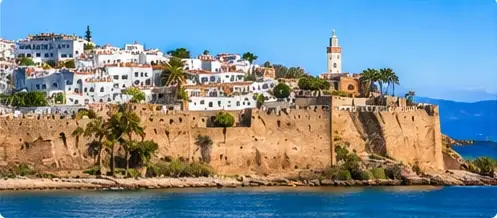
Enjoy a final look at El Jadida in the morning, then travel north past Casablanca toward Rabat. Arrive with enough time to visit Hassan Tower, the Mausoleum of Mohammed V and the Kasbah of the Udayas. The capital’s monumental spaces and carefully maintained gardens feel very different from the compact Portuguese quarter you left that morning. Walk through the Udayas to the viewpoint over the Bou Regreg, then check into your hotel or riad. The evening can be spent in the medina or along the river. Tomorrow continues to Fes with stops that add Roman and imperial history, so there is no need to force Meknes into today.
Day 6
Rabat to Fes via Meknes and Volubilis: From Capital to Ancient Heartland
Meals: Breakfast unless otherwise confirmed
Included: Private transport and route coordination
Leave Rabat for Meknes and focus on the imperial core associated with Moulay Ismail. See Bab Mansour and Place el Hedim, adding the granaries or stables when open. Continue to Volubilis, where mosaics, columns and agricultural views make the Roman city one of the most legible archaeological sites in Morocco. A short guided visit is useful before the final drive to Fes. Check into your riad and keep the evening simple. You have a full day in Fes tomorrow, so entering the medina after dark is optional rather than necessary. This stage shifts the trip from Atlantic history to Morocco’s inland imperial and pre-Islamic layers.
Day 7
Fes: Guided Medina Day from Madrasas to Tanneries
Meals: Breakfast unless otherwise confirmed
Included: Private transport where useful and planned local guiding
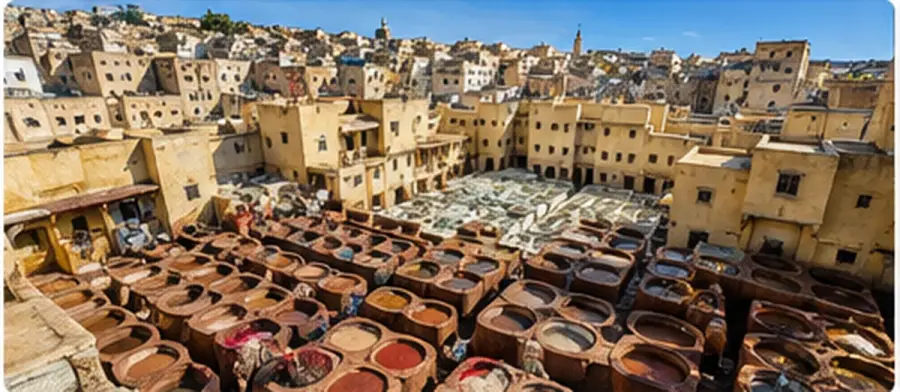
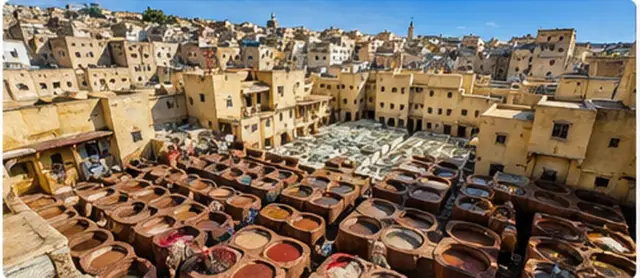
Spend the day with a local guide in Fes el-Bali. Start with a historic madrasa when available, then move through food markets and artisan quarters where metal, wood, textile and leather work still define entire streets. View the tanneries from a terrace and visit the Nejjarine area before stopping for lunch in the medina. Continue through a less commercial neighborhood in the afternoon or add the mellah and palace gates. Fes is dense enough that trying to “see everything” usually makes the day worse; a well-chosen route is more valuable than a long checklist. Finish with a panoramic view of the old city before returning to the riad.
Day 8
Fes to Merzouga: Middle Atlas, Midelt and the Ziz Valley
Meals: Breakfast unless otherwise confirmed
Included: Private transport and route coordination
An early departure from Fes takes you into the Middle Atlas, past Ifrane and the cedar belt around Azrou before the road turns toward Midelt. After the cooler uplands, continue to Midelt for lunch and descend through mountain gorges toward Errachidia. Stop above the Ziz Valley, where palms stretch along the river below barren cliffs, then continue via Erfoud and Rissani to Merzouga. By late afternoon, the horizon opens and Erg Chebbi rises ahead. It is a long drive, but the sequence of landscapes is the point of the day. Check in near the dunes, walk to the sand for sunset if you wish, and keep the 4x4 circuit and camp experience for tomorrow when there is no road deadline.
Day 9
Erg Chebbi: Desert Exploration and Camp Night
Meals: Breakfast unless otherwise confirmed
Included: Private transport, desert logistics and the confirmed Sahara activity
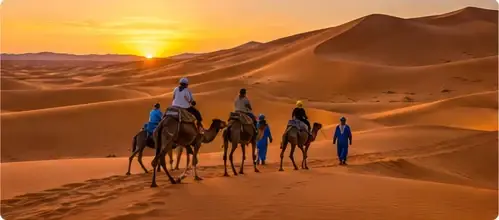
Explore the surroundings of Erg Chebbi by 4x4, reaching areas that are not accessible on a standard road transfer. Stop in Khamlia for Gnawa music, cross black-desert plains and include other local visits only when they are confirmed and meaningful. After lunch and a rest, prepare a small overnight bag and head into the dunes by camel or 4x4. Sunset is best enjoyed away from the main camp line, where the dune ridges create long shadows and the sound drops away. Dinner and overnight follow at camp. The exact camp category, private facilities and transfer method are agreed before travel so the experience matches your comfort expectations.
Day 10
Merzouga to Dadès: Rissani Market, Todra Gorge and Valley Roads
Meals: Breakfast unless otherwise confirmed
Included: Private transport and route coordination
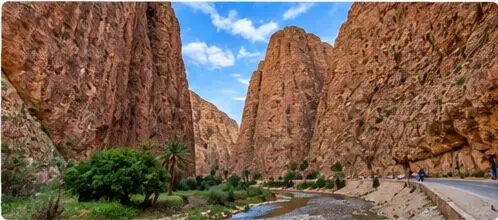
Leave the dunes and stop in Rissani if the market is active, then travel toward Tinghir through small desert towns and oasis corridors. Walk into Todra Gorge beneath the high limestone walls before continuing west into the Dadès Valley. The day moves from wide Saharan horizons to narrow canyon country, with cultivated riverbeds and old kasbahs appearing more frequently as you approach the foothills. Stop at a viewpoint over the valley if light and road conditions are good, then check into your accommodation before dark. The cooler evening and green pockets of the valley make a natural transition between Erg Chebbi and the kasbah route ahead.
Day 11
Dadès to Aït Ben Haddou: Rose Valley and Skoura Oasis
Meals: Breakfast unless otherwise confirmed
Included: Private transport and route coordination
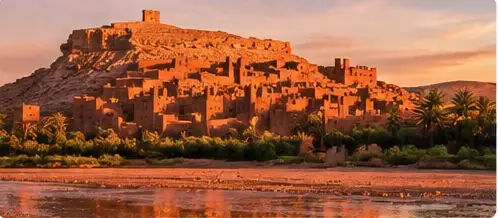
Continue through Kelaat M’Gouna and the Rose Valley, where local cooperatives make rosewater and related products, especially active around the spring harvest. Travel through Skoura’s large palm oasis and past surviving kasbahs before reaching Ouarzazate. Continue to Aït Ben Haddou and spend the afternoon inside the ksar rather than viewing it only from the road. Climb through the earthen passages to a high point above the Ounila Valley, then return to your nearby accommodation as the light softens. Overnighting here lets the site feel like a place rather than a quick stop between desert and Marrakech.
Day 12
Aït Ben Haddou to Marrakech: High Atlas Crossing and Return to the Red City
Meals: Breakfast unless otherwise confirmed
Included: Private transport and route coordination
Leave Aït Ben Haddou after breakfast and cross the High Atlas toward Marrakech. When weather and road conditions are favorable, take the Ounila Valley route via Telouet for remote villages and the old Glaoui kasbah; otherwise use the main Tizi n’Tichka road. Stop at a small number of safe viewpoints and arrive in Marrakech in the afternoon. Check into your riad and use the remaining time for whatever feels right after the long circuit: a hammam, a quiet rooftop, a short souk walk or dinner near Jemaa el-Fna. You already saw the city briefly on arrival, so this return has a different feeling—Marrakech now becomes the endpoint rather than the starting gate.
Day 13
Marrakech: Departure or Final Medina Time
Meals: Breakfast unless otherwise confirmed
Included: Private transport and route coordination
Your final schedule depends on the flight. With a late departure, choose one or two experiences you deliberately skipped on day one: Bahia Palace, Ben Youssef Madrasa, a garden, a favorite shop or simply breakfast without a hurry. For earlier flights, your driver meets you at the closest vehicle access to the riad and transfers you directly to the airport. There is no reason to add another city tour after a route that has already crossed the Atlantic coast, imperial cities, Middle Atlas, Sahara and southern valleys. The last hours are kept flexible so the trip ends with enough margin for traffic and check-in rather than a final race through Marrakech.