Day 1
Marrakech to Dadès: Across the High Atlas into Southern Morocco
Included: Private vehicle and local driver on the confirmed route; scenic High Atlas crossing; arrival in the Dadès region. Accommodation and meals depend on the confirmed package.
Leave Marrakech from the agreed pickup point and begin climbing toward the High Atlas. The transition starts quickly: urban traffic thins, the road gains altitude, and the broad Marrakech plain gives way to mountain slopes, cultivated terraces and villages set into the rock. This is a travel day, but it should not feel like dead time. The pass is the first chapter of the desert journey because it explains why southern Morocco looks and feels so different from the country north of the range.
The route follows the Tizi n’Tichka corridor, with stops chosen according to weather, road conditions and the pace of the group. Viewpoints are useful for stretching your legs and seeing how the valleys open below the road. Village architecture, roadside stalls and changing vegetation offer a better sense of place than rushing from one famous landmark to another.
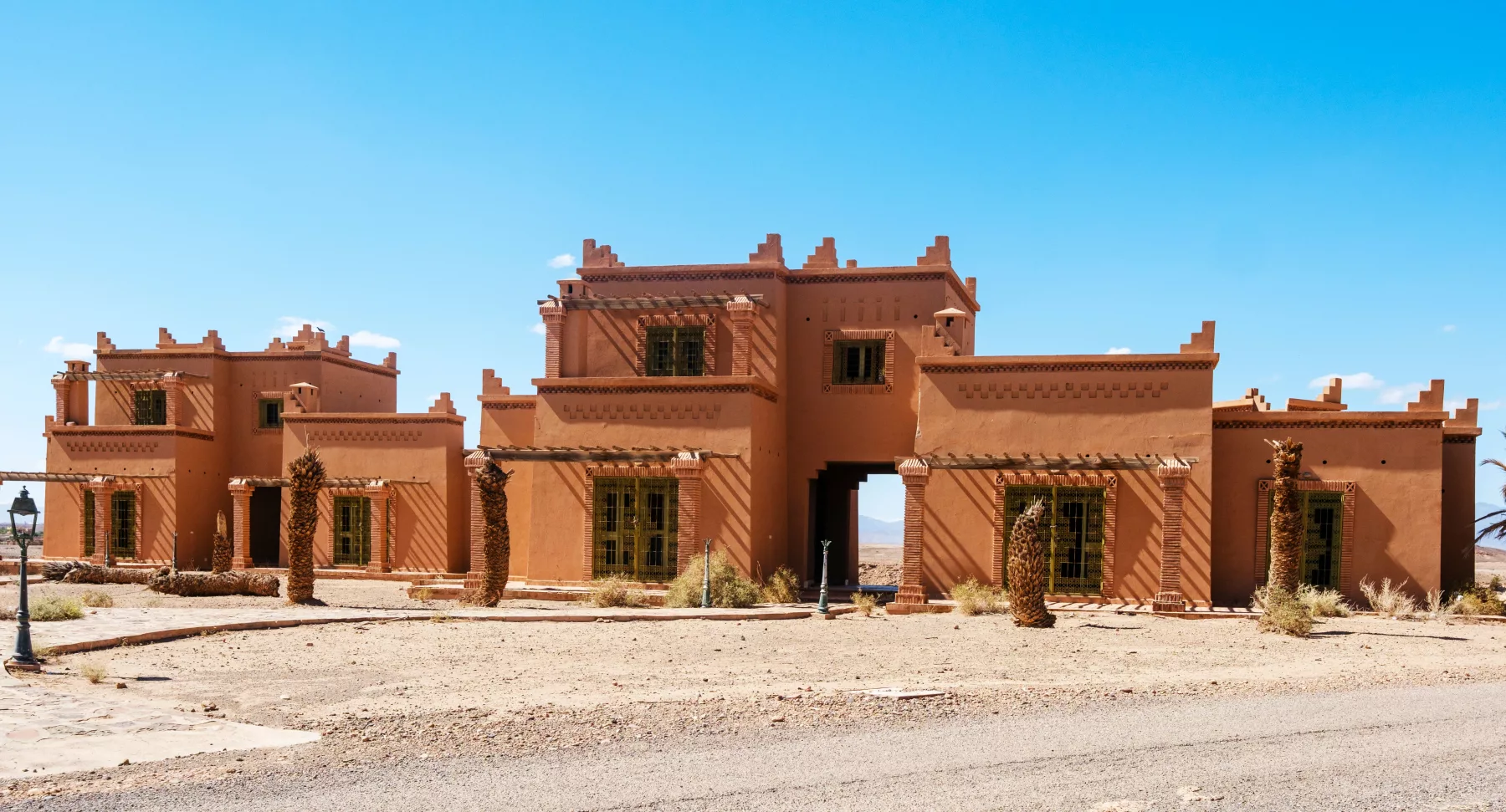
On the southern side of the mountains, the climate becomes visibly drier. Continue through the Ouarzazate area and then east toward the Dadès country, where palms, fields, earthen villages and kasbah-style buildings sit beneath rugged rock formations. The light is often at its best later in the day, when the valley walls take on warmer tones.
The aim is to reach the Dadès region with enough time to settle in rather than turning the first day into an exhausting push toward Merzouga. Your exact accommodation depends on the confirmed package. Dinner or other meals should also be checked in the booking details rather than assumed. This first overnight is important for pacing: it breaks the long Marrakech-to-Sahara distance and puts you in the right position for Todra Gorge and Erg Chebbi the following day.
Day 2
Dadès to Erg Chebbi: Todra Gorge and the First Sight of the Dunes
Included: Todra Gorge route stop; private transport to the Erg Chebbi area; camel or 4x4 camp access when included in the confirmed plan. Camp category and meals are package-dependent.
The road east from Dadès moves through a landscape where cultivated valleys and bare rock sit close together. Before the Sahara, stop at Todra Gorge, where the river corridor narrows between steep limestone walls. A short walk at the base of the gorge gives you a welcome change of rhythm after the previous day’s mountain drive. The path is generally straightforward, but the length of the walk can be adjusted to the group and the conditions.
Beyond Tinghir and the gorge, the road continues through oasis towns such as Tinejdad, then toward Erfoud and Rissani. This is the point where the landscape becomes unmistakably pre-Saharan. Date palms cluster around water, settlements become more dispersed, and the horizon begins to open. Erfoud is associated with fossil workshops, while Rissani has a long history as a regional market and trading center; visits or extra stops can be added when timing and the confirmed itinerary allow.
Erg Chebbi does not arrive as a gradual sandy blur. The dune field rises distinctly from the surrounding plain, which is why the first view can feel so dramatic. Once near Merzouga, the approach to the camp area can be made by camel or 4x4 according to preference, mobility, weather and what has been booked. Neither option needs to be forced simply for the sake of a photograph.
The evening is about slowing down after two days of changing landscapes. Sunset light moves quickly across the dune faces, and the atmosphere after dark is very different from the road. Your exact tent category, meals and any music or camp activities depend on the confirmed package. The essential experience is the location itself: one night beside Erg Chebbi, with enough time to see the dunes in both evening and early-morning light.
Day 3
Erg Chebbi to Ouarzazate: From Open Desert to the Draa Valley
Included: Private transport from Erg Chebbi to Ouarzazate via the southern route and Draa Valley; flexible comfort and viewpoint stops. Overnight and meals follow the confirmed package.
Morning in the Erg Chebbi area offers a final look at the dunes before the route turns west. If you enjoy early light, this is the quietest moment to step outside and watch the colors change; there is no need to promise a perfect sunrise, because weather and visibility decide that. After departure, the route reconnects with the desert towns around Rissani and then leaves the dune country behind.
This day matters because the return is deliberately different from the approach. Instead of immediately retracing Dadès and Todra, the road crosses broad, dry plains where acacia and low mountain silhouettes replace the tall dunes. Settlements can be far apart, and the sense of scale is one of the strongest parts of the journey. Stops are kept flexible for comfort, photographs and local road conditions rather than tied to an artificial minute-by-minute schedule.
As the route approaches the Draa Valley, palms and cultivated strips reappear. The contrast is sharp: water changes the landscape within a short distance, creating green corridors beside villages and older earthen architecture. Depending on timing, there may be opportunities to pause in the valley and look more closely at the relationship between the river, agriculture and settlement.
The final section crosses the Anti-Atlas landscape toward Ouarzazate, including the Tizi n’Tinififft corridor. Rock colors and geological forms replace the dunes once again, reinforcing how varied southern Morocco is within a relatively compact map. Arrive in Ouarzazate for the third overnight. The exact riad or hotel and any meals are determined by the confirmed package. By ending here, the final day has room for Aït Ben Haddou and the High Atlas instead of becoming one very long direct drive back to Marrakech.
Day 4
Ouarzazate to Marrakech: Aït Ben Haddou and the High Atlas Return
Included: Private return transport to Marrakech; Aït Ben Haddou route visit; High Atlas crossing. Optional Ouarzazate visits and entrance fees apply only when confirmed.
The last day begins in Ouarzazate, where you can keep the morning simple or add a local visit if it is part of the confirmed itinerary. Taourirt Kasbah and the city’s film studios are possible options, but they should not be presented as automatic inclusions because opening hours, interest and ticket arrangements vary.
From Ouarzazate, travel west to Aït Ben Haddou. The fortified ksar is one of southern Morocco’s best-known examples of earthen architecture and developed beside an old trans-Saharan route. Rather than treating it as a quick photo stop, allow time to cross into the settlement and walk through its lanes if conditions and mobility permit. The climb higher into the ksar is optional; travelers who prefer an easier visit can still appreciate the architecture and landscape from lower levels.
After Aït Ben Haddou, the road climbs again into the High Atlas. Seeing the mountains from the southern side gives the return a different perspective from Day 1. The route gradually leaves the dry plateau behind, crosses the Tizi n’Tichka corridor and descends toward the Marrakech plain. Weather, mountain traffic and roadworks can affect the rhythm, so the schedule is intentionally flexible rather than built around an exact arrival minute.
Return to the agreed point in Marrakech later in the day. If you have an onward flight or another fixed commitment, that timing should be discussed before the tour is confirmed so the route can be planned responsibly. Four days to Erg Chebbi is still an active road journey, but splitting the return through Ouarzazate makes the final day more useful: you finish with a major cultural site and a second view of the Atlas rather than spending the entire day on a direct desert-to-city transfer.