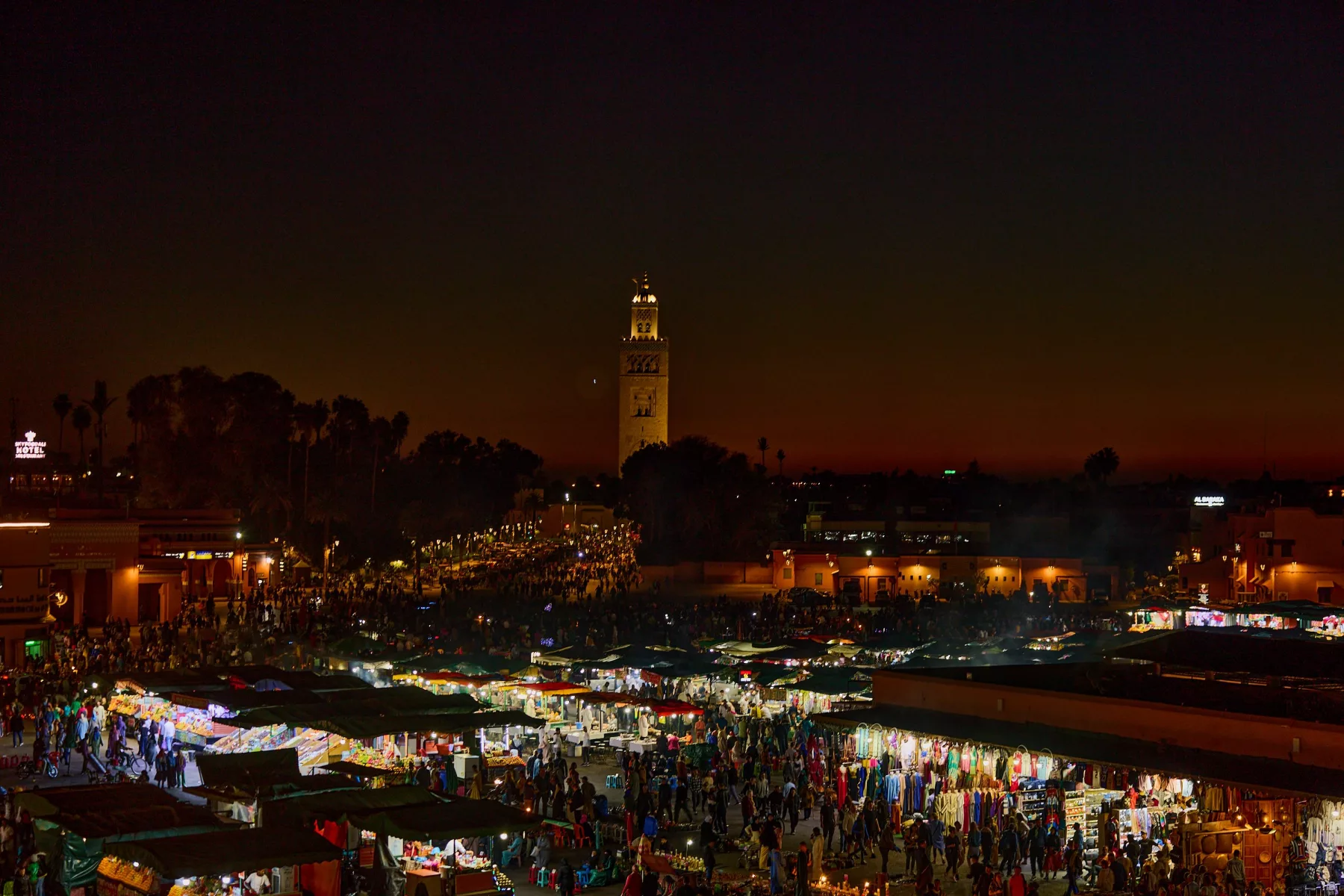
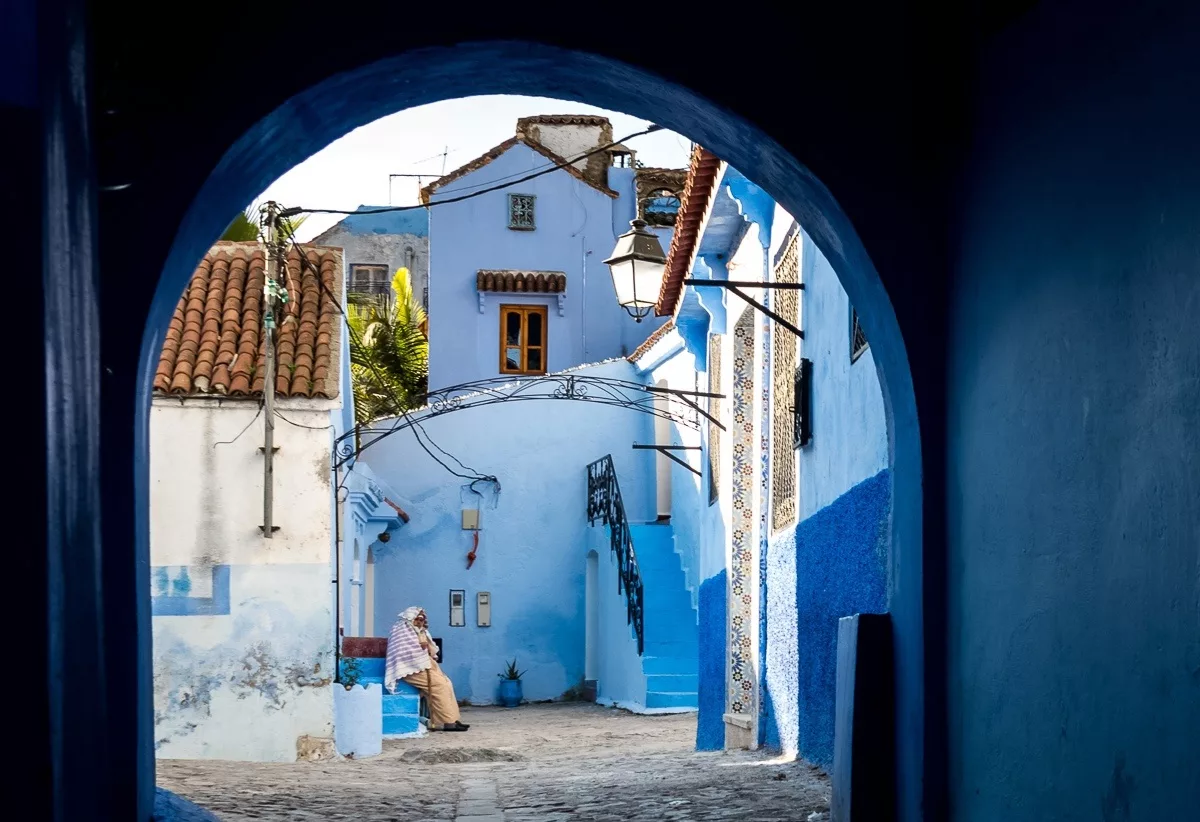
Day 1
Casablanca → Rabat: Arriving Without Rushing
Meals: No meals unless arranged
Included: Private transport and planned visits
The day begins with a clear sense of movement rather than a race through a checklist. The practical shape of the day is Casablanca → Rabat. The main experiences are Hassan II Mosque, Atlantic Casablanca and the first imperial-city stop in Rabat. We arrange them in an order that respects geography, opening times and the energy of the travelers rather than forcing a timetable that only looks good on paper.
Casablanca introduces modern Morocco through Atlantic light, broad boulevards and the monumental Hassan II Mosque. Rabat feels calmer and more ordered than many visitors expect, with royal avenues, the Bou Regreg, the Oudayas and layers of Roman and Islamic history.
The road is part of the experience. Landscapes, villages and regional changes give meaning to the drive, so stops are chosen because they improve the day—not because an itinerary needs more bullet points.
There is time for photographs and short pauses, but the aim is to understand the place rather than constantly jump back into the vehicle. When a stop deserves longer, a private journey gives us room to make that choice.
We also pay attention to the small things that usually disappear from a rushed itinerary: when a market is actually active, where the light is best later in the day, when a walk makes more sense than another vehicle stop, and when simply sitting for tea gives a clearer picture of local life.
Because this is a private route, we keep timing realistic. Your driver manages the road and logistics, while local guides are added where their knowledge changes the experience. Families, photographers and active travelers can all adjust the pace before departure.
The night is planned in Rabat. We try to arrive with enough time to settle in, eat well and feel the atmosphere of the place before the day disappears.
What matters is not collecting attractions. The value comes from understanding how landscape, history and daily life connect, while still arriving with enough energy to enjoy the place where you sleep.
Day 2
Rabat → Akchour → Chefchaouen: Walking at a Human Pace
Meals: Breakfast
Included: Private transport and planned visits
Today the journey changes character again, and that change is part of what makes Morocco so rewarding. The practical shape of the day is Rabat → Akchour → Chefchaouen. The main experiences are Rif Mountains, forest walk and waterfalls before entering the Blue City. We arrange them in an order that respects geography, opening times and the energy of the travelers rather than forcing a timetable that only looks good on paper.
Rabat feels calmer and more ordered than many visitors expect, with royal avenues, the Bou Regreg, the Oudayas and layers of Roman and Islamic history. Chefchaouen is most rewarding when the blue lanes are allowed to slow the day rather than become a quick photo stop.
Walking changes the scale of the journey. Villages, fields, trails and conversation become more visible when you move at human speed, and the guide can adjust distance to fitness, weather and interest.
There is time for photographs and short pauses, but the aim is to understand the place rather than constantly jump back into the vehicle. When a stop deserves longer, a private journey gives us room to make that choice.
The sequence stays flexible enough for real travel conditions. Traffic, weather, prayer times, market days and the energy of the group can all change what makes sense. Good planning is not about forcing the original timetable; it is about protecting the quality of the day.
Because this is a private route, we keep timing realistic. Your driver manages the road and logistics, while local guides are added where their knowledge changes the experience. Families, photographers and active travelers can all adjust the pace before departure.
The night is planned in Chefchaouen. We try to arrive with enough time to settle in, eat well and feel the atmosphere of the place before the day disappears.
What matters is not collecting attractions. The value comes from understanding how landscape, history and daily life connect, while still arriving with enough energy to enjoy the place where you sleep.
Day 3
Chefchaouen → Volubilis → Meknes → Fes: Watching Morocco Change on the Road
Meals: Breakfast
Included: Private transport and planned visits
This is a day where the road, the place and the people matter equally. The practical shape of the day is Chefchaouen → Volubilis → Meknes → Fes. The main experiences are blue lanes, Roman ruins, Meknes and Fes arrival. We arrange them in an order that respects geography, opening times and the energy of the travelers rather than forcing a timetable that only looks good on paper.
Chefchaouen is most rewarding when the blue lanes are allowed to slow the day rather than become a quick photo stop. Fes rewards context: craft quarters, religious learning, family commerce and medieval urban life still sit very close together. Meknes adds imperial history in a more compact and less pressured setting than Fes. Volubilis places Morocco inside a much older Mediterranean history through mosaics, arches and open countryside.
The road is part of the experience. Landscapes, villages and regional changes give meaning to the drive, so stops are chosen because they improve the day—not because an itinerary needs more bullet points.
There is time for photographs and short pauses, but the aim is to understand the place rather than constantly jump back into the vehicle. When a stop deserves longer, a private journey gives us room to make that choice.
Photography and local encounters are treated naturally rather than staged. We choose pauses that fit the route and respect the people who live there, which usually creates better memories than trying to manufacture a perfect moment.
Because this is a private route, we keep timing realistic. Your driver manages the road and logistics, while local guides are added where their knowledge changes the experience. Families, photographers and active travelers can all adjust the pace before departure.
The night is planned in Fes. We try to arrive with enough time to settle in, eat well and feel the atmosphere of the place before the day disappears.
What matters is not collecting attractions. The value comes from understanding how landscape, history and daily life connect, while still arriving with enough energy to enjoy the place where you sleep.
Day 4
Fes: Reading the City Beyond the Landmarks
Meals: Breakfast
Included: Private transport and planned visits
Today is designed as a complete chapter of the journey, not simply a transfer between hotels. The practical shape of the day is Fes. The main experiences are guided medieval medina and major craft quarters. We arrange them in an order that respects geography, opening times and the energy of the travelers rather than forcing a timetable that only looks good on paper.
Fes rewards context: craft quarters, religious learning, family commerce and medieval urban life still sit very close together.
A city day works best when monuments, markets and neighborhoods are connected by context. We leave time for tea, workshops, street life and the small transitions that show how the city actually works rather than spending the whole day moving from one entrance ticket to the next.
There is time for photographs and short pauses, but the aim is to understand the place rather than constantly jump back into the vehicle. When a stop deserves longer, a private journey gives us room to make that choice.
There is always a difference between seeing a place and understanding why it belongs in the journey. We use the day to build that connection so the route feels coherent rather than like unrelated attractions joined by a road.
Because this is a private route, we keep timing realistic. Your driver manages the road and logistics, while local guides are added where their knowledge changes the experience. Families, photographers and active travelers can all adjust the pace before departure.
The night is planned in Fes. We try to arrive with enough time to settle in, eat well and feel the atmosphere of the place before the day disappears.
What matters is not collecting attractions. The value comes from understanding how landscape, history and daily life connect, while still arriving with enough energy to enjoy the place where you sleep.
Day 5
Fes: Reading the City Beyond the Landmarks
Meals: Breakfast
Included: Private transport and planned visits
The day begins with a clear sense of movement rather than a race through a checklist. The practical shape of the day is Fes. The main experiences are slower second day for workshops, gardens, food and neighborhoods beyond the standard route. We arrange them in an order that respects geography, opening times and the energy of the travelers rather than forcing a timetable that only looks good on paper.
Fes rewards context: craft quarters, religious learning, family commerce and medieval urban life still sit very close together.
A city day works best when monuments, markets and neighborhoods are connected by context. We leave time for tea, workshops, street life and the small transitions that show how the city actually works rather than spending the whole day moving from one entrance ticket to the next.
A city day works best when monuments, markets and neighborhoods are connected by context. We leave time for tea, workshops, street life and the small transitions that show how the city actually works rather than spending the whole day moving from one entrance ticket to the next.
We also pay attention to the small things that usually disappear from a rushed itinerary: when a market is actually active, where the light is best later in the day, when a walk makes more sense than another vehicle stop, and when simply sitting for tea gives a clearer picture of local life.
Because this is a private route, we keep timing realistic. Your driver manages the road and logistics, while local guides are added where their knowledge changes the experience. Families, photographers and active travelers can all adjust the pace before departure.
The night is planned in Fes. We try to arrive with enough time to settle in, eat well and feel the atmosphere of the place before the day disappears.
What matters is not collecting attractions. The value comes from understanding how landscape, history and daily life connect, while still arriving with enough energy to enjoy the place where you sleep.
Day 6
Fes → Midelt → Ziz Valley → Merzouga: Giving the Sahara Time to Matter
Meals: Breakfast
Included: Private transport and planned visits
Today the journey changes character again, and that change is part of what makes Morocco so rewarding. The practical shape of the day is Fes → Midelt → Ziz Valley → Merzouga. The main experiences are Middle Atlas road, oasis landscapes and Sahara camp. We arrange them in an order that respects geography, opening times and the energy of the travelers rather than forcing a timetable that only looks good on paper.
Fes rewards context: craft quarters, religious learning, family commerce and medieval urban life still sit very close together. Near Merzouga, Erg Chebbi rises abruptly from the desert plain and changes completely with the light. Midelt makes a practical and interesting bridge between the Middle Atlas and the desert regions farther south.
The desert rewards a slower rhythm. Light, silence, wind and distance become part of the experience, so we avoid filling every hour and leave space for the landscape itself to matter.
There is time for photographs and short pauses, but the aim is to understand the place rather than constantly jump back into the vehicle. When a stop deserves longer, a private journey gives us room to make that choice.
The sequence stays flexible enough for real travel conditions. Traffic, weather, prayer times, market days and the energy of the group can all change what makes sense. Good planning is not about forcing the original timetable; it is about protecting the quality of the day.
Because this is a private route, we keep timing realistic. Your driver manages the road and logistics, while local guides are added where their knowledge changes the experience. Families, photographers and active travelers can all adjust the pace before departure.
The night is planned in Merzouga. We try to arrive with enough time to settle in, eat well and feel the atmosphere of the place before the day disappears.
What matters is not collecting attractions. The value comes from understanding how landscape, history and daily life connect, while still arriving with enough energy to enjoy the place where you sleep.
Day 7
Merzouga → Rissani → Todra: Giving the Sahara Time to Matter
Meals: Breakfast
Included: Private transport and planned visits
This is a day where the road, the place and the people matter equally. The practical shape of the day is Merzouga → Rissani → Todra. The main experiences are desert morning, market town, Tinghir oasis and canyon walk. We arrange them in an order that respects geography, opening times and the energy of the travelers rather than forcing a timetable that only looks good on paper.
Near Merzouga, Erg Chebbi rises abruptly from the desert plain and changes completely with the light. Todra Gorge narrows the landscape into steep rock walls before the route opens again toward wider southern valleys.
The desert rewards a slower rhythm. Light, silence, wind and distance become part of the experience, so we avoid filling every hour and leave space for the landscape itself to matter.
There is time for photographs and short pauses, but the aim is to understand the place rather than constantly jump back into the vehicle. When a stop deserves longer, a private journey gives us room to make that choice.
Photography and local encounters are treated naturally rather than staged. We choose pauses that fit the route and respect the people who live there, which usually creates better memories than trying to manufacture a perfect moment.
Because this is a private route, we keep timing realistic. Your driver manages the road and logistics, while local guides are added where their knowledge changes the experience. Families, photographers and active travelers can all adjust the pace before departure.
The night is planned in Todra Gorge. We try to arrive with enough time to settle in, eat well and feel the atmosphere of the place before the day disappears.
What matters is not collecting attractions. The value comes from understanding how landscape, history and daily life connect, while still arriving with enough energy to enjoy the place where you sleep.
Day 8
Todra → Dadès → Ouarzazate → Ait Ben Haddou: Watching Morocco Change on the Road
Meals: Breakfast
Included: Private transport and planned visits
Today is designed as a complete chapter of the journey, not simply a transfer between hotels. The practical shape of the day is Todra → Dadès → Ouarzazate → Ait Ben Haddou. The main experiences are Dadès landscapes, southern road and late light at the ksar. We arrange them in an order that respects geography, opening times and the energy of the travelers rather than forcing a timetable that only looks good on paper.
The Dadès region combines dramatic rock formations, cultivated valleys and villages that make southern Morocco feel inhabited rather than empty. Todra Gorge narrows the landscape into steep rock walls before the route opens again toward wider southern valleys. Ait Ben Haddou matters not only for its appearance but for its position on old routes linking the Sahara, Ouarzazate and Marrakech. Ouarzazate sits between High Atlas roads, kasbah country and the desert routes of the south.
The road is part of the experience. Landscapes, villages and regional changes give meaning to the drive, so stops are chosen because they improve the day—not because an itinerary needs more bullet points.
There is time for photographs and short pauses, but the aim is to understand the place rather than constantly jump back into the vehicle. When a stop deserves longer, a private journey gives us room to make that choice.
There is always a difference between seeing a place and understanding why it belongs in the journey. We use the day to build that connection so the route feels coherent rather than like unrelated attractions joined by a road.
Because this is a private route, we keep timing realistic. Your driver manages the road and logistics, while local guides are added where their knowledge changes the experience. Families, photographers and active travelers can all adjust the pace before departure.
The night is planned in Ait Ben Haddou. We try to arrive with enough time to settle in, eat well and feel the atmosphere of the place before the day disappears.
What matters is not collecting attractions. The value comes from understanding how landscape, history and daily life connect, while still arriving with enough energy to enjoy the place where you sleep.
Day 9
Ait Ben Haddou → High Atlas → Marrakech: Watching Morocco Change on the Road
Meals: Breakfast
Included: Private transport and planned visits
The day begins with a clear sense of movement rather than a race through a checklist. The practical shape of the day is Ait Ben Haddou → High Atlas → Marrakech. The main experiences are Tizi n’Tichka crossing and first evening in Marrakech. We arrange them in an order that respects geography, opening times and the energy of the travelers rather than forcing a timetable that only looks good on paper.
Ait Ben Haddou matters not only for its appearance but for its position on old routes linking the Sahara, Ouarzazate and Marrakech. Marrakech is intense, beautiful and easy to misunderstand if it is reduced to Jemaa el-Fna and shopping.
The road is part of the experience. Landscapes, villages and regional changes give meaning to the drive, so stops are chosen because they improve the day—not because an itinerary needs more bullet points.
There is time for photographs and short pauses, but the aim is to understand the place rather than constantly jump back into the vehicle. When a stop deserves longer, a private journey gives us room to make that choice.
We also pay attention to the small things that usually disappear from a rushed itinerary: when a market is actually active, where the light is best later in the day, when a walk makes more sense than another vehicle stop, and when simply sitting for tea gives a clearer picture of local life.
Because this is a private route, we keep timing realistic. Your driver manages the road and logistics, while local guides are added where their knowledge changes the experience. Families, photographers and active travelers can all adjust the pace before departure.
The night is planned in Marrakech. We try to arrive with enough time to settle in, eat well and feel the atmosphere of the place before the day disappears.
What matters is not collecting attractions. The value comes from understanding how landscape, history and daily life connect, while still arriving with enough energy to enjoy the place where you sleep.
Day 10
Marrakech: Reading the City Beyond the Landmarks
Meals: Breakfast
Included: Private transport and planned visits
Today the journey changes character again, and that change is part of what makes Morocco so rewarding. The practical shape of the day is Marrakech. The main experiences are guided medina, palaces, souks and Jemaa el-Fna. We arrange them in an order that respects geography, opening times and the energy of the travelers rather than forcing a timetable that only looks good on paper.
Marrakech is intense, beautiful and easy to misunderstand if it is reduced to Jemaa el-Fna and shopping.
A city day works best when monuments, markets and neighborhoods are connected by context. We leave time for tea, workshops, street life and the small transitions that show how the city actually works rather than spending the whole day moving from one entrance ticket to the next.
There is time for photographs and short pauses, but the aim is to understand the place rather than constantly jump back into the vehicle. When a stop deserves longer, a private journey gives us room to make that choice.
The sequence stays flexible enough for real travel conditions. Traffic, weather, prayer times, market days and the energy of the group can all change what makes sense. Good planning is not about forcing the original timetable; it is about protecting the quality of the day.
Because this is a private route, we keep timing realistic. Your driver manages the road and logistics, while local guides are added where their knowledge changes the experience. Families, photographers and active travelers can all adjust the pace before departure.
The night is planned in Marrakech. We try to arrive with enough time to settle in, eat well and feel the atmosphere of the place before the day disappears.
What matters is not collecting attractions. The value comes from understanding how landscape, history and daily life connect, while still arriving with enough energy to enjoy the place where you sleep.
Day 11
Marrakech: Understanding Morocco Through Food
Meals: Breakfast
Included: Private transport and planned visits
This is a day where the road, the place and the people matter equally. The practical shape of the day is Marrakech. The main experiences are gardens, food, hammam or flexible city experiences. We arrange them in an order that respects geography, opening times and the energy of the travelers rather than forcing a timetable that only looks good on paper.
Marrakech is intense, beautiful and easy to misunderstand if it is reduced to Jemaa el-Fna and shopping.
A city day works best when monuments, markets and neighborhoods are connected by context. We leave time for tea, workshops, street life and the small transitions that show how the city actually works rather than spending the whole day moving from one entrance ticket to the next.
A city day works best when monuments, markets and neighborhoods are connected by context. We leave time for tea, workshops, street life and the small transitions that show how the city actually works rather than spending the whole day moving from one entrance ticket to the next.
Photography and local encounters are treated naturally rather than staged. We choose pauses that fit the route and respect the people who live there, which usually creates better memories than trying to manufacture a perfect moment.
Because this is a private route, we keep timing realistic. Your driver manages the road and logistics, while local guides are added where their knowledge changes the experience. Families, photographers and active travelers can all adjust the pace before departure.
The night is planned in Marrakech. We try to arrive with enough time to settle in, eat well and feel the atmosphere of the place before the day disappears.
What matters is not collecting attractions. The value comes from understanding how landscape, history and daily life connect, while still arriving with enough energy to enjoy the place where you sleep.
Day 12
Marrakech → Essaouira: Letting the Ocean Change the Rhythm
Meals: Breakfast
Included: Private transport and planned visits
Today is designed as a complete chapter of the journey, not simply a transfer between hotels. The practical shape of the day is Marrakech → Essaouira. The main experiences are argan country, Atlantic ramparts, port and relaxed medina. We arrange them in an order that respects geography, opening times and the energy of the travelers rather than forcing a timetable that only looks good on paper.
Marrakech is intense, beautiful and easy to misunderstand if it is reduced to Jemaa el-Fna and shopping. Essaouira brings sea air, white walls, ramparts, fishing life and a slower Atlantic rhythm.
The coast changes the mood of the trip. Atlantic or Mediterranean air, wider streets, fishing life and sea light create a useful contrast after dense medinas, mountains or desert roads.
There is time for photographs and short pauses, but the aim is to understand the place rather than constantly jump back into the vehicle. When a stop deserves longer, a private journey gives us room to make that choice.
There is always a difference between seeing a place and understanding why it belongs in the journey. We use the day to build that connection so the route feels coherent rather than like unrelated attractions joined by a road.
Because this is a private route, we keep timing realistic. Your driver manages the road and logistics, while local guides are added where their knowledge changes the experience. Families, photographers and active travelers can all adjust the pace before departure.
The night is planned in Essaouira. We try to arrive with enough time to settle in, eat well and feel the atmosphere of the place before the day disappears.
What matters is not collecting attractions. The value comes from understanding how landscape, history and daily life connect, while still arriving with enough energy to enjoy the place where you sleep.
Day 13
Essaouira → Casablanca: Letting the Ocean Change the Rhythm
Meals: Breakfast
Included: Private transport and planned visits
The day begins with a clear sense of movement rather than a race through a checklist. The practical shape of the day is Essaouira → Casablanca. The main experiences are coastal transfer with optional historic Atlantic stops. We arrange them in an order that respects geography, opening times and the energy of the travelers rather than forcing a timetable that only looks good on paper.
Casablanca introduces modern Morocco through Atlantic light, broad boulevards and the monumental Hassan II Mosque. Essaouira brings sea air, white walls, ramparts, fishing life and a slower Atlantic rhythm.
The coast changes the mood of the trip. Atlantic or Mediterranean air, wider streets, fishing life and sea light create a useful contrast after dense medinas, mountains or desert roads.
There is time for photographs and short pauses, but the aim is to understand the place rather than constantly jump back into the vehicle. When a stop deserves longer, a private journey gives us room to make that choice.
We also pay attention to the small things that usually disappear from a rushed itinerary: when a market is actually active, where the light is best later in the day, when a walk makes more sense than another vehicle stop, and when simply sitting for tea gives a clearer picture of local life.
Because this is a private route, we keep timing realistic. Your driver manages the road and logistics, while local guides are added where their knowledge changes the experience. Families, photographers and active travelers can all adjust the pace before departure.
The night is planned in Casablanca. We try to arrive with enough time to settle in, eat well and feel the atmosphere of the place before the day disappears.
What matters is not collecting attractions. The value comes from understanding how landscape, history and daily life connect, while still arriving with enough energy to enjoy the place where you sleep.
Day 14
Casablanca: Closing the Journey Well
Meals: Breakfast
Included: Private transport and planned visits
Today the journey changes character again, and that change is part of what makes Morocco so rewarding. The practical shape of the day is Casablanca. The main experiences are last hours in Casablanca and airport transfer. We arrange them in an order that respects geography, opening times and the energy of the travelers rather than forcing a timetable that only looks good on paper.
Casablanca introduces modern Morocco through Atlantic light, broad boulevards and the monumental Hassan II Mosque.
The road is part of the experience. Landscapes, villages and regional changes give meaning to the drive, so stops are chosen because they improve the day—not because an itinerary needs more bullet points.
There is time for photographs and short pauses, but the aim is to understand the place rather than constantly jump back into the vehicle. When a stop deserves longer, a private journey gives us room to make that choice.
The sequence stays flexible enough for real travel conditions. Traffic, weather, prayer times, market days and the energy of the group can all change what makes sense. Good planning is not about forcing the original timetable; it is about protecting the quality of the day.
Because this is a private route, we keep timing realistic. Your driver manages the road and logistics, while local guides are added where their knowledge changes the experience. Families, photographers and active travelers can all adjust the pace before departure.
The night is planned in Departure. We try to arrive with enough time to settle in, eat well and feel the atmosphere of the place before the day disappears.
What matters is not collecting attractions. The value comes from understanding how landscape, history and daily life connect, while still arriving with enough energy to enjoy the place where you sleep.