Day 1
Casablanca to Rabat: Hassan II Mosque and the First Imperial Capital
Meals: Breakfast unless otherwise confirmed
Included: Private transport and route coordination
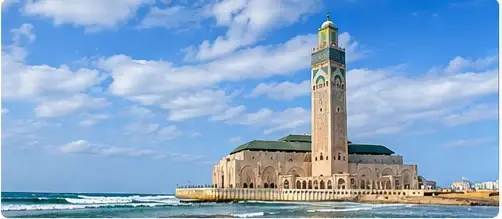
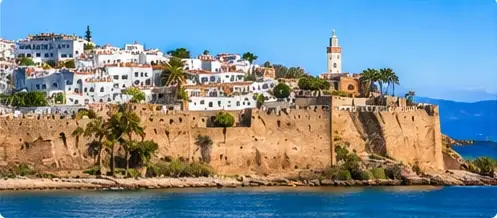
Meet your driver in Casablanca and begin with a visit to the Hassan II Mosque according to the day’s tour schedule, or an exterior walk along the Atlantic if your arrival time is limited. From there, travel north to Rabat, Morocco’s administrative capital and one of its four historic imperial cities. After check-in, visit the Hassan Tower, the Mausoleum of Mohammed V and the Kasbah of the Udayas. The city is spacious and calm enough to make a comfortable first day, especially after a flight. Finish with a walk near the Bou Regreg or dinner inside the medina. Tomorrow continues directly into the imperial history of Meknes and Fes.
Day 2
Rabat to Fes via Meknes and Volubilis: Imperial Gates and Roman Mosaics
Meals: Breakfast unless otherwise confirmed
Included: Private transport and route coordination
Leave Rabat for Meknes, the seventeenth-century capital associated with Moulay Ismail. Focus on the monumental core around Bab Mansour and Place el Hedim, adding the granary or stables if open and of interest. Continue to Volubilis, where Roman mosaics and public buildings survive in open countryside with the Rif foothills in the distance. A local guide here is useful because many of the details are easy to miss. By afternoon, drive on to Fes and check into your riad. The route ties together three very different periods—Roman North Africa, an Alaouite imperial capital and medieval Fes—without requiring a long detour.
Day 3
Fes: A Guided Introduction to Fes el-Bali
Meals: Breakfast unless otherwise confirmed
Included: Private transport where useful and planned local guiding
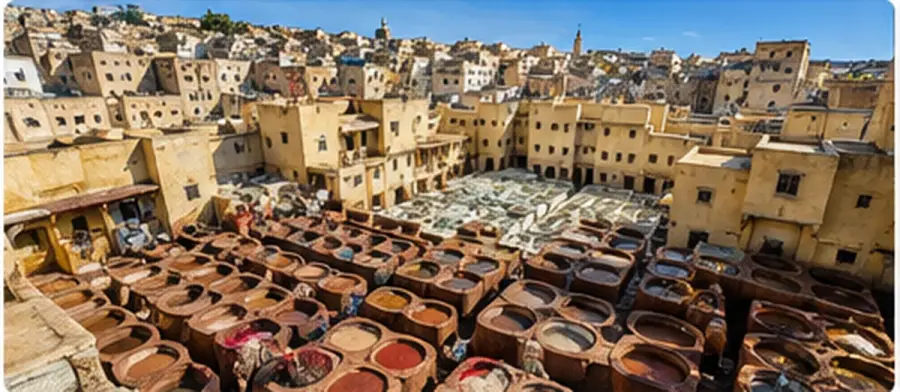
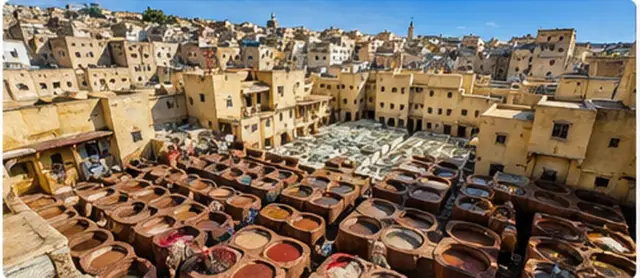
Enter Fes el-Bali with a licensed guide and spend the day understanding how the medina works. Visit a historic madrasa when access allows, pass through the food markets and specialized craft quarters, and look over the Chouara tanneries from a terrace that does not require a purchase. The Nejjarine area, metalworkers and narrow residential streets show different sides of the old city. Stop for lunch inside the medina, then continue through another sector rather than repeating the same commercial route. Finish with the mellah, palace gates or a panoramic viewpoint according to time. This first Fes day is about orientation and history; tomorrow can be more personal and less structured.
Day 4
Fes: Pottery, Gardens and Time for Your Own Interests
Meals: Breakfast unless otherwise confirmed
Included: Private transport where useful and planned local guiding
Keep a second day in Fes to go beyond the standard guided circuit. Visit a pottery and zellige workshop on the edge of the city to see clay shaping, painting and mosaic cutting, then choose the rest of the day around your interests. You might return to the medina for shopping with more confidence, spend time in Jnan Sbil gardens, explore the mellah more deeply, or book a cooking class that starts with market shopping. This extra day also acts as a buffer after the long journey from home and before the Sahara crossing. The driver is available for agreed city transfers, but much of the day can be done on foot from the riad.
Day 5
Fes to Merzouga: Ifrane, Cedar Forests and the Ziz Valley
Meals: Breakfast unless otherwise confirmed
Included: Private transport and route coordination
Depart Fes early and climb into the Middle Atlas, passing Ifrane and the cedar country around Azrou. The route then crosses a high plateau to Midelt before descending through dramatic mountain scenery toward Errachidia. Stop above the Ziz Valley for a broad view of palms, villages and dry escarpments, then continue through Erfoud to Merzouga. This is one of the trip’s longest drives, but the changing geography is the reason to travel overland rather than fly: alpine-looking uplands become stony desert and, finally, the high dunes of Erg Chebbi. Arrive before evening, settle in and save the 4x4 circuit and camp transfer for tomorrow.
Day 6
Erg Chebbi: Sahara Circuit and a Night Among the Dunes
Meals: Breakfast unless otherwise confirmed
Included: Private transport, desert logistics and the confirmed Sahara activity
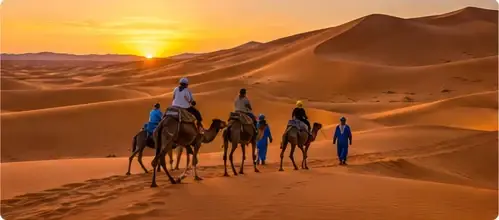
Spend the morning exploring the country around Erg Chebbi by 4x4. Depending on local conditions and the confirmed plan, visit Khamlia for Gnawa music, cross black-desert tracks, stop near a seasonal lake or meet a nomadic family for tea. The purpose is to understand the communities and terrain around the dunes, not only the sand itself. Return to Merzouga for lunch and rest during the warmest hours. In the late afternoon, take a camel or 4x4 transfer into camp, climb a nearby dune for sunset and have dinner after dark. Camp comfort level is chosen in advance, so the night can range from simple to high-end without changing the route.
Day 7
Merzouga to Dadès: Rissani, Todra Gorge and Oasis Landscapes
Meals: Breakfast unless otherwise confirmed
Included: Private transport and route coordination
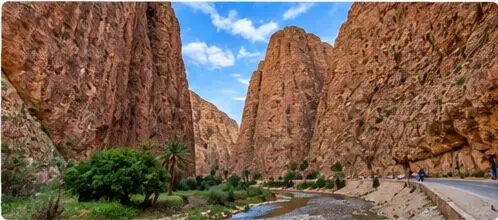
Leave Merzouga and stop at Rissani when market day or timing makes it worthwhile. Continue toward Tinghir, where the oasis spreads below the road in long bands of palms and cultivated plots. Walk into Todra Gorge beneath its limestone walls, then continue through smaller valleys toward Dadès. The scenery becomes more sculpted as the road approaches the gorge country, with red rock, old kasbahs and villages set beside the river. Arrive at your accommodation before nightfall. After the desert, this stage feels greener and more enclosed, giving a useful pause between Erg Chebbi and the broad plateaus around Ouarzazate.
Day 8
Dadès to Aït Ben Haddou: Rose Valley, Skoura and the Kasbah Route
Meals: Breakfast unless otherwise confirmed
Included: Private transport and route coordination
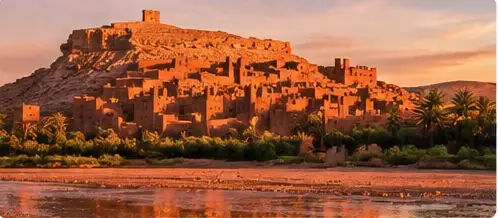
Travel west through the Dadès region and Kelaat M’Gouna, center of Morocco’s rose-growing area. In spring, cooperatives and distilleries are active; at other times, the stop is more about the valley landscape and local products. Continue through Skoura’s palm groves, where earthen kasbahs rise among cultivated fields, then pass Ouarzazate on the way to Aït Ben Haddou. Spend the late afternoon walking through the ksar, climbing between mud-brick towers and narrow passages to viewpoints over the Ounila Valley. Overnight nearby rather than pushing on to Marrakech. The slower end to the day gives this UNESCO-listed site the time it deserves.
Day 9
Aït Ben Haddou to Marrakech: Cross the High Atlas
Meals: Breakfast unless otherwise confirmed
Included: Private transport and route coordination
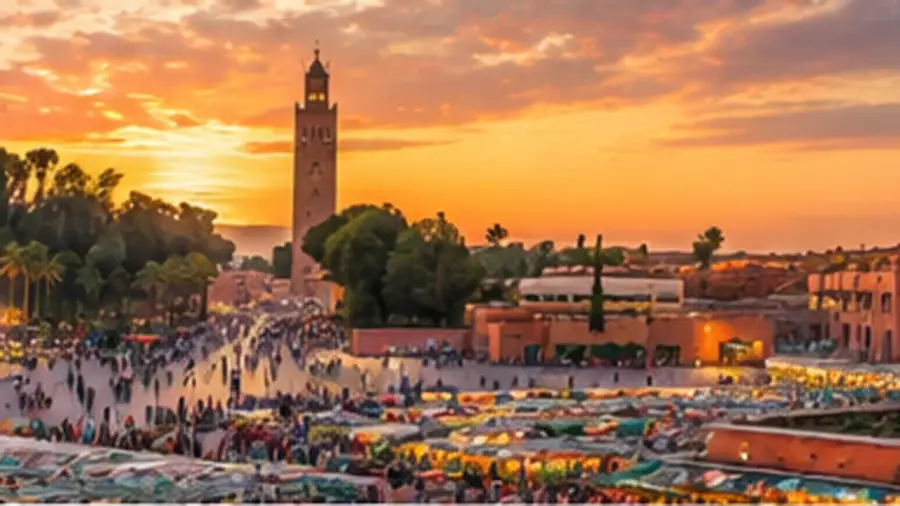
After breakfast, leave kasbah country and climb into the High Atlas. The standard route crosses Tizi n’Tichka, with short stops at safe viewpoints and roadside villages. When conditions permit, the Ounila Valley via Telouet can be substituted for a more remote approach through mountain settlements and the old Glaoui kasbah. Descend to Marrakech in the afternoon and check into your riad. The city is a sharp change after the south, so use the first evening simply to orient yourself around the Koutoubia and Jemaa el-Fna. The major monuments and souks are reserved for tomorrow, when you can explore with a guide rather than arriving tired from the pass.
Day 10
Marrakech: Bahia Palace, Saadian Tombs and the Souks
Meals: Breakfast unless otherwise confirmed
Included: Private transport where useful and planned local guiding
Meet a local guide for a full day through Marrakech’s historic center. Begin with major architecture such as Bahia Palace and the Saadian Tombs, then work through the medina toward the craft districts and Ben Youssef area. The exact monument mix can change with opening times, but the day should connect palace history, religious learning, trade and everyday market life rather than rushing between entrances. Stop for lunch inside the medina and allow time to observe artisans at work. Near sunset, return toward Jemaa el-Fna to see how the square changes after dark. It is busy, theatrical and completely different from the quiet lanes of Fes.
Day 11
Marrakech: Gardens and the Modern City Beyond the Medina
Meals: Breakfast unless otherwise confirmed
Included: Private transport where useful and planned local guiding
Use the second Marrakech day to see a side of the city that does not fit a classic medina walk. Reserve an early time at Jardin Majorelle if it is a priority, then continue through Gueliz for cafés, design shops and broad avenues built outside the old walls. Alternatively, visit the Menara area or choose a museum and a long lunch. You can also keep the afternoon free for a hammam, shopping or a hotel pool. This slower day is deliberate after the Sahara and High Atlas road sections. It gives you room to enjoy Marrakech instead of turning three nights into three versions of the same souk walk.
Day 12
Marrakech: Food, Crafts or an Optional Day Outside the City
Meals: Breakfast unless otherwise confirmed
Included: Private transport where useful and planned local guiding
Your final full day is open to a more personal experience. Join a cooking workshop that begins in a local market, spend several hours with a specialist shopping guide, book a traditional hammam, or arrange a day in the nearby foothills if you want one last change of scenery. Travelers who prefer to stay independent can revisit a favorite café, museum or neighborhood without a guide. The vehicle is not automatically used just to fill the schedule. Having this flexible day is one of the advantages of a 13-day imperial-city route: the trip still includes the Sahara and southern valleys, but Marrakech does not have to be compressed into a single hectic afternoon.
Day 13
Marrakech: Departure Day
Meals: Breakfast unless otherwise confirmed
Included: Private transport and route coordination
Check-out and airport transfer are arranged around your confirmed flight. For an afternoon departure, keep the morning simple with breakfast, a last walk near the riad and perhaps one final purchase. Early flights require leaving the medina before the streets become busy, and your driver will meet you at the closest accessible point if the riad is in a pedestrian lane. Travelers extending the trip can be dropped at the train station, another hotel or an agreed meeting point. No sightseeing is scheduled after the transfer time is fixed. The route ends in Marrakech after linking all four imperial-city traditions with the Sahara and southern kasbah country.