Day 1
Marrakech Arrival: Begin With the City, Not With a Checklist
Meals: No meals unless confirmed
Included: Private arrival transfer, Marrakech orientation according to arrival time, accommodation
Arrive in Marrakech and let the first day stay light. After airport or hotel pickup, settle into your riad or hotel before stepping into the medina when you are ready. The point is not to race through monuments after a flight.
It is to understand the rhythm of the city: ochre walls, narrow lanes, roof terraces, crafts, scooters, courtyards and the gradual build-up around Jemaa el-Fna. If arrival time allows, walk through part of the souks and around the Koutoubia area, then watch the square change toward evening. Within 13-Day Grand Morocco Tour from Marrakech: Coast, Imperial Cities & Sahara, this stage comes after “arrival” and before “Marrakech to Essaouira: Trade City to Atlantic Wind”, so its job is to change the pace rather than repeat the previous day.
On day 1 of 13-Day Grand Morocco Tour from Marrakech: Coast, Imperial Cities & Sahara, a local guide is especially useful for the first medina visit, but free time matters too: a rooftop tea, a quiet courtyard or an evening walk often becomes as memorable as a formal sight. In the context of Marrakech Arrival: Begin With the City, Not With a Checklist, for arrival day 1, we keep the schedule deliberately light: transfer first, orientation second, and only then an optional visit if flight timing and energy make it sensible. By evening, day 1 of 13 should leave enough energy for the next stage, “Marrakech to Essaouira: Trade City to Atlantic Wind”, rather than making the itinerary feel overfilled.
Day 2
Marrakech to Essaouira: Trade City to Atlantic Wind
Meals: Breakfast
Included: Private transfer to Essaouira, flexible coastal stops, Essaouira accommodation
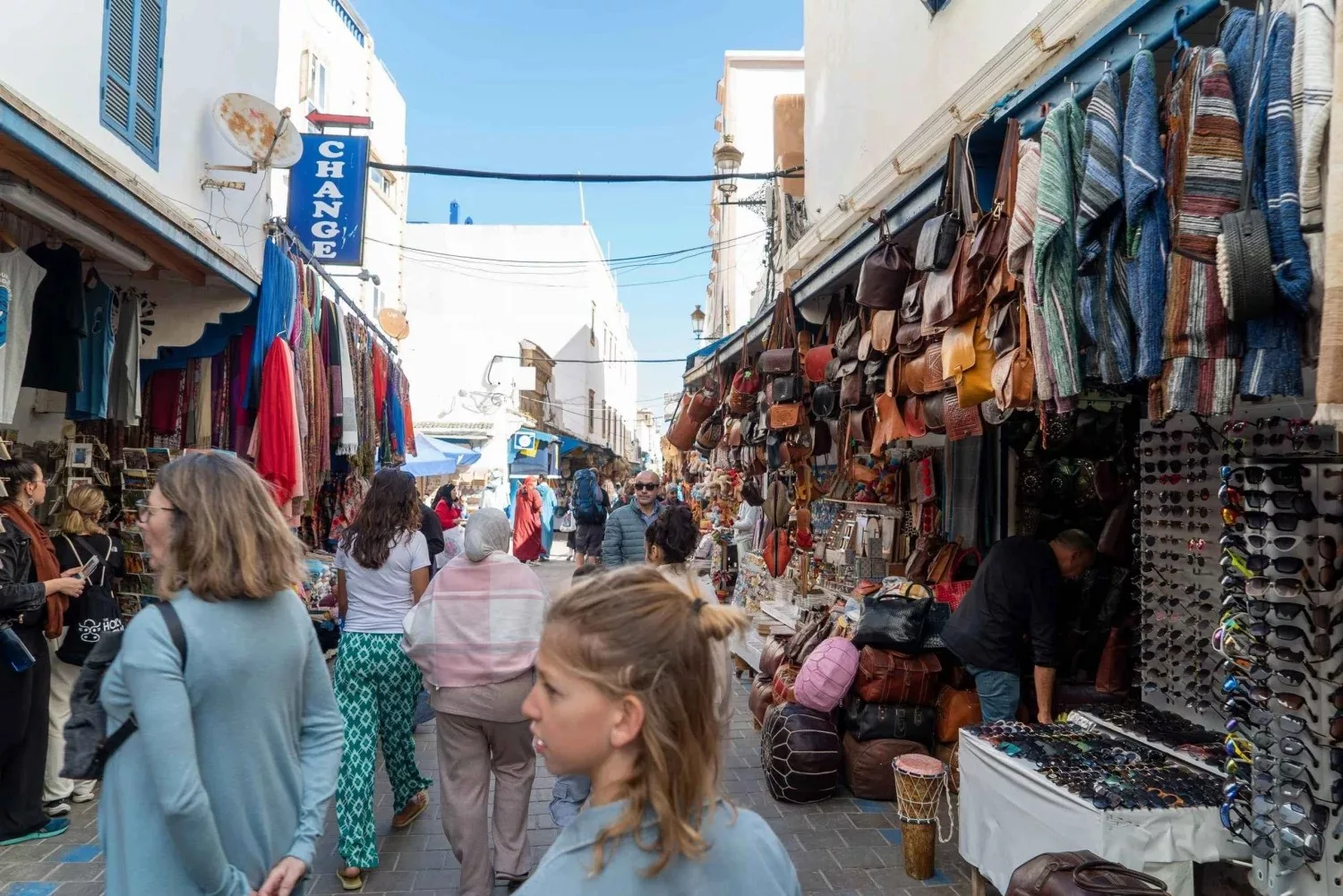
Leave Marrakech after breakfast and travel west through open countryside and argan landscapes toward Essaouira. The change in atmosphere is immediate when the ocean appears. Essaouira is smaller, cooler and easier to read than Marrakech, which makes it a good place to slow down early in the trip.
After arrival, walk the fortified medina, the Skala ramparts and the fishing harbour. The blue boats, gulls, stone walls and Atlantic light give the town a character unlike Morocco’s imperial cities. Within 13-Day Grand Morocco Tour from Marrakech: Coast, Imperial Cities & Sahara, here the itinerary deliberately changes texture.
“Marrakech Arrival: Begin With the City, Not With a Checklist” belongs to one part of Morocco; Marrakech to Essaouira: Trade City to Atlantic Wind prepares you for the different atmosphere of “Essaouira to Casablanca: Following Morocco’s Atlantic Face”. On Marrakech to Essaouira: Trade City to Atlantic Wind, the practical priority today is a smooth arrival. In the context of Marrakech to Essaouira: Trade City to Atlantic Wind, check-in, luggage and rest come before sightseeing, so any city visit remains flexible rather than becoming an obligation after a flight.
On Marrakech to Essaouira: Trade City to Atlantic Wind, during this specific stage, essaouira changes the rhythm of a Morocco itinerary. In the context of Marrakech to Essaouira: Trade City to Atlantic Wind, the medina is smaller and easier to navigate than Marrakech, the Atlantic air keeps the streets open and bright, and the fishing port gives the city a working coastal identity. In the context of Marrakech to Essaouira: Trade City to Atlantic Wind, during this specific stage, a local guide is especially useful for the first medina visit, but free time matters too: a rooftop tea, a quiet courtyard or an evening walk often becomes as memorable as a formal sight.
For 13-Day Grand Morocco Tour from Marrakech: Coast, Imperial Cities & Sahara, the success of this day is measured by how clearly Marrakech to Essaouira: Trade City to Atlantic Wind feels different from both “Marrakech Arrival: Begin With the City, Not With a Checklist” and “Essaouira to Casablanca: Following Morocco’s Atlantic Face”.
Day 3
Essaouira to Casablanca: Following Morocco’s Atlantic Face
Meals: Breakfast
Included: Private Atlantic route transfer, Casablanca orientation, accommodation
Leave Essaouira and travel north toward Casablanca, with comfort stops according to the day. The road is less about famous monuments and more about seeing Morocco’s western side change from smaller coastal landscapes toward the country’s biggest urban centre. Casablanca is often misunderstood by travelers expecting another Marrakech.
It is a working city first: broad avenues, modern neighbourhoods, Art Deco traces, busy traffic and the Atlantic at its edge. The Hassan II Mosque gives the city its clearest landmark, rising directly beside the ocean. Instead of treating Essaouira to Casablanca: Following Morocco’s Atlantic Face as an isolated excursion, we plan it in relation to yesterday’s “Marrakech to Essaouira: Trade City to Atlantic Wind” and tomorrow’s “Casablanca to Chefchaouen via Rabat: Royal Morocco Before the Rif”.
Here, before the itinerary moves on, on the coast, we avoid over-programming. For travelers following this 13-day route, walking, a seafood lunch and time by the water often need fewer reservations and more space than an inland sightseeing day. On Essaouira to Casablanca: Following Morocco’s Atlantic Face, during this specific stage, the city is especially good for slower days: rampart walks, seafood, artisan workshops, beach time and cafés can fill a day without creating the feeling of a checklist.
In the context of Essaouira to Casablanca: Following Morocco’s Atlantic Face, during this specific stage, casablanca works best as Morocco’s modern Atlantic gateway: broad boulevards, Art Deco traces, the oceanfront Corniche and the monumental Hassan II Mosque set a very different tone from the old imperial medinas. At this stage of 13-Day Grand Morocco Tour from Marrakech: Coast, Imperial Cities & Sahara, during this specific stage, marrakech makes more sense when it is read as a working city rather than a collection of monuments. For day 3 of this route, jemaa el-Fna, souks, palace districts, gardens and neighborhood bakeries all operate at different rhythms.
We finish Essaouira to Casablanca: Following Morocco’s Atlantic Face with tomorrow in mind: “Casablanca to Chefchaouen via Rabat: Royal Morocco Before the Rif” has its own rhythm, so today is not pushed beyond what the route can comfortably absorb.
Day 4
Casablanca to Chefchaouen via Rabat: Royal Morocco Before the Rif
Meals: Breakfast
Included: Rabat cultural stop, private transfer into the Rif, Chefchaouen accommodation
Leave Casablanca for Rabat, a city that often surprises travelers with how calm it feels. Explore the Hassan Tower and Mausoleum of Mohammed V, then continue toward the Kasbah of the Oudayas or another historic area according to timing. Rabat introduces Morocco’s royal and administrative identity without the intensity of larger tourist centres.
After lunch, turn north toward the Rif Mountains. The road gradually leaves the Atlantic plain and becomes greener and more folded as Chefchaouen approaches. Because 13-Day Grand Morocco Tour from Marrakech: Coast, Imperial Cities & Sahara is private, the time given to Casablanca to Chefchaouen via Rabat: Royal Morocco Before the Rif can respond to how the group feels after “Essaouira to Casablanca: Following Morocco’s Atlantic Face” and before continuing toward “Chefchaouen to Tangier: Blue Lanes, Rif Views and the Strait”.
Within 13-Day Grand Morocco Tour from Marrakech: Coast, Imperial Cities & Sahara, at this point in the route, rabat is calmer than Morocco’s more famous tourist cities, which is precisely its value. For travelers on 13-Day Grand Morocco Tour from Marrakech: Coast, Imperial Cities & Sahara, during “Casablanca to Chefchaouen via Rabat: Royal Morocco Before the Rif”, here, before the itinerary moves on, royal avenues, the Hassan Tower, the Mausoleum of Mohammed V and the Kasbah of the Udayas sit within a city that still feels spacious and lived-in. Here, before the itinerary moves on, for arrival day 4, we keep the schedule deliberately light: transfer first, orientation second, and only then an optional visit if flight timing and energy make it sensible.
Because this is “Casablanca to Chefchaouen via Rabat: Royal Morocco Before the Rif” on 13-Day Grand Morocco Tour from Marrakech: Coast, Imperial Cities & Sahara, for travelers following this 13-day route, at this point in the route, the city is useful at the beginning or end of a circuit because airport logistics are simple, yet there is enough architecture and coastal life to make the stop feel intentional rather than purely functional. At this stage of 13-Day Grand Morocco Tour from Marrakech: Coast, Imperial Cities & Sahara, at this point in the route, its mountain setting changes the pace of a Morocco road trip: evenings are cooler, traffic disappears inside much of the medina, and an overnight stay gives a far calmer experience than a midday stop. By evening, day 4 of 13 should leave enough energy for the next stage, “Chefchaouen to Tangier: Blue Lanes, Rif Views and the Strait”, rather than making the itinerary feel overfilled.
Day 5
Chefchaouen to Tangier: Blue Lanes, Rif Views and the Strait
Meals: Breakfast
Included: Chefchaouen free/guided exploration, private transfer to Tangier, city orientation, accommodation
Use the morning for Chefchaouen while the medina is still relatively calm. Walk deeper into the blue lanes, browse local craft shops and, if you enjoy viewpoints, climb toward the Spanish Mosque area when weather and timing are suitable. The goal is to experience the town before leaving, not just photograph one famous staircase.
Africa and Europe face each other across the Strait, and Tangier carries layers of Moroccan, Mediterranean and international history. Depending on arrival time, explore the kasbah, medina, Grand Socco, Café Hafa surroundings or the seafront. Instead of treating Chefchaouen to Tangier: Blue Lanes, Rif Views and the Strait as an isolated excursion, we plan it in relation to yesterday’s “Casablanca to Chefchaouen via Rabat: Royal Morocco Before the Rif” and tomorrow’s “Tangier to Fes via Volubilis and Meknes: From the Strait to Imperial Morocco”.
Because this day centers on Chefchaouen to Tangier: Blue Lanes, Rif Views and the Strait, for arrival day 5, we keep the schedule deliberately light: transfer first, orientation second, and only then an optional visit if flight timing and energy make it sensible. For Chefchaouen to Tangier: Blue Lanes, Rif Views and the Strait, its mountain setting changes the pace of a Morocco road trip: evenings are cooler, traffic disappears inside much of the medina, and an overnight stay gives a far calmer experience than a midday stop. On Chefchaouen to Tangier: Blue Lanes, Rif Views and the Strait, during this specific stage, a local guide is especially useful for the first medina visit, but free time matters too: a rooftop tea, a quiet courtyard or an evening walk often becomes as memorable as a formal sight.
We finish Chefchaouen to Tangier: Blue Lanes, Rif Views and the Strait with tomorrow in mind: “Tangier to Fes via Volubilis and Meknes: From the Strait to Imperial Morocco” has its own rhythm, so today is not pushed beyond what the route can comfortably absorb.
Day 6
Tangier to Fes via Volubilis and Meknes: From the Strait to Imperial Morocco
Meals: Breakfast
Included: Private Tangier–Fes transfer, Volubilis and Meknes stops, Fes accommodation
Leave Tangier and turn inland toward Morocco’s historic heart. Volubilis is the first major stop: Roman columns, mosaics and foundations spread across open countryside, reminding you that Morocco’s story extends far beyond its imperial dynasties. A local guide can add context when arranged.
Continue to Meknes, one of the four imperial cities. It is usually quieter than Fes and offers a useful introduction to royal architecture, gates and the legacy of Moulay Ismail. The value of Tangier to Fes via Volubilis and Meknes: From the Strait to Imperial Morocco is partly geographical: it connects the experience of “Chefchaouen to Tangier: Blue Lanes, Rif Views and the Strait” with the direction of “Fes: A Medina That Needs Context, Not Speed” without forcing an artificial detour.
For travelers following this 13-day route, for arrival day 6, we keep the schedule deliberately light: transfer first, orientation second, and only then an optional visit if flight timing and energy make it sensible. At this stage of 13-Day Grand Morocco Tour from Marrakech: Coast, Imperial Cities & Sahara, during this specific stage, volubilis gives the route a much older historical layer. At this stage of 13-Day Grand Morocco Tour from Marrakech: Coast, Imperial Cities & Sahara, the open Roman site is easy to read on foot, with mosaics, columns and foundations spread across rolling agricultural country rather than enclosed inside a modern city.
For Tangier to Fes via Volubilis and Meknes: From the Strait to Imperial Morocco, meknes offers imperial history without the same intensity as Fes. For travelers following this 13-day route, monumental gates, long walls and Moulay Ismail’s legacy make it a useful stop between Volubilis and the larger medina cities. On day 6 of 13-Day Grand Morocco Tour from Marrakech: Coast, Imperial Cities & Sahara, fes rewards context.
In practical terms for 13-Day Grand Morocco Tour from Marrakech: Coast, Imperial Cities & Sahara, on “Tangier to Fes via Volubilis and Meknes: From the Strait to Imperial Morocco”, here, before the itinerary moves on, the medina is not arranged for cars or easy orientation, so a good local guide helps connect tanneries, madrasas, craft quarters, fondouks and food markets into one coherent story. We finish Tangier to Fes via Volubilis and Meknes: From the Strait to Imperial Morocco with tomorrow in mind: “Fes: A Medina That Needs Context, Not Speed” has its own rhythm, so today is not pushed beyond what the route can comfortably absorb.
Day 7
Fes: A Medina That Needs Context, Not Speed
Meals: Breakfast
Included: Licensed local Fes guide when included, medina exploration, accommodation
Fes is one of the places where a local guide changes the experience completely. Inside Fes el-Bali, streets narrow, twist and divide into artisan quarters, markets, religious buildings, fountains, workshops and residential lanes. Without context, it can feel like a maze; with context, it becomes a living city shaped by craft, trade and learning.
A full-day visit can include Bab Boujloud, the main souk arteries, Chouara Tanneries viewpoint, Al Attarine Madrasa, Nejjarine area, traditional workshops and the surroundings of Al-Qarawiyyin according to access. The exact sequence should respond to crowds and opening conditions rather than follow a rigid list. The sequence matters here: “Tangier to Fes via Volubilis and Meknes: From the Strait to Imperial Morocco” is behind you, while “Fes to Merzouga: Watching Morocco Become Desert” comes next, which makes Fes: A Medina That Needs Context, Not Speed the bridge between two different parts of the route.
On Fes: A Medina That Needs Context, Not Speed, inside the city, the useful question is not how many monuments fit into the day but which areas belong together on foot. Because this day centers on Fes: A Medina That Needs Context, Not Speed, we group visits logically so the medina feels coherent and there is still room for pauses. For Fes: A Medina That Needs Context, Not Speed, what makes Fes memorable is not a single monument but the density of living craft: metalwork, leather, carved wood, ceramics and textiles still sit beside homes, bakeries, mosques and neighborhood commerce.
Within 13-Day Grand Morocco Tour from Marrakech: Coast, Imperial Cities & Sahara, at this point in the route, marrakech makes more sense when it is read as a working city rather than a collection of monuments. Here in 13-Day Grand Morocco Tour from Marrakech: Coast, Imperial Cities & Sahara, while following “Fes: A Medina That Needs Context, Not Speed”, here, before the itinerary moves on, jemaa el-Fna, souks, palace districts, gardens and neighborhood bakeries all operate at different rhythms. By evening, day 7 of 13 should leave enough energy for the next stage, “Fes to Merzouga: Watching Morocco Become Desert”, rather than making the itinerary feel overfilled.
Day 8
Fes to Merzouga: Watching Morocco Become Desert
Meals: Breakfast
Included: Private Middle Atlas and Ziz Valley transfer, scenic/comfort stops, Merzouga accommodation
This is a long road day, but the landscape earns the distance. Leave Fes and climb through the Middle Atlas toward Ifrane, cedar country and the high plateaus around Midelt. The Morocco of dense medinas disappears quickly; forests, open uplands and colder air take its place.
Continue south and descend toward the Ziz Valley. Palm groves begin to cut green lines through an increasingly dry landscape, and fortified villages appear along the route. The value of Fes to Merzouga: Watching Morocco Become Desert is partly geographical: it connects the experience of “Fes: A Medina That Needs Context, Not Speed” with the direction of “Merzouga & Erg Chebbi: Give the Sahara Its Own Day” without forcing an artificial detour.
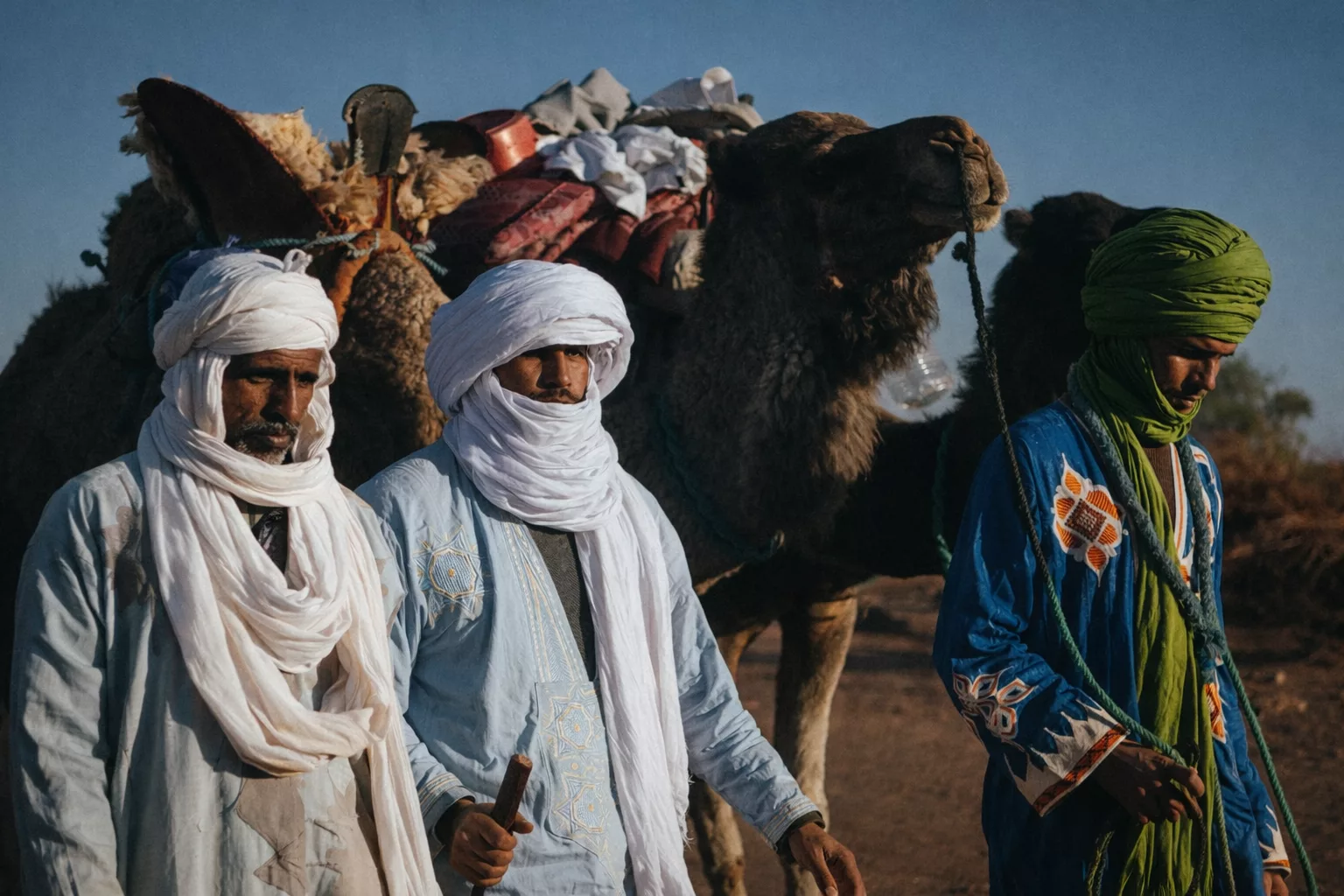
Within 13-Day Grand Morocco Tour from Marrakech: Coast, Imperial Cities & Sahara, in the Sahara section, practical details are agreed before the dunes: camel or 4x4 access, luggage handling, camp comfort and the amount of activity you actually want. For Fes to Merzouga: Watching Morocco Become Desert, a desert night is strongest when it is not reduced to a camel photo. On Fes to Merzouga: Watching Morocco Become Desert, time for sunset, a quiet walk, dinner at camp and an unhurried morning lets the silence and scale of the dunes become the real experience.
On day 8 of 13-Day Grand Morocco Tour from Marrakech: Coast, Imperial Cities & Sahara, fes rewards context. On Fes to Merzouga: Watching Morocco Become Desert, the medina is not arranged for cars or easy orientation, so a good local guide helps connect tanneries, madrasas, craft quarters, fondouks and food markets into one coherent story. On day 8 of 13-Day Grand Morocco Tour from Marrakech: Coast, Imperial Cities & Sahara, a local guide is especially useful for the first medina visit, but free time matters too: a rooftop tea, a quiet courtyard or an evening walk often becomes as memorable as a formal sight.
By evening, day 8 of 13 should leave enough energy for the next stage, “Merzouga & Erg Chebbi: Give the Sahara Its Own Day”, rather than making the itinerary feel overfilled.
Day 9
Merzouga & Erg Chebbi: Give the Sahara Its Own Day
Meals: Breakfast and dinner; lunch according to confirmed program
Included: Merzouga/Erg Chebbi discovery, camel or 4x4 camp access, Sahara camp night
A full desert day changes the meaning of this route. Instead of leaving immediately after sunrise, explore the area around Erg Chebbi. Depending on interests and the confirmed program, visit Khamlia for its musical heritage, cross parts of the desert edge by 4x4, stop in local settlements, or visit Rissani when market timing makes sense.
Choose camel access for a slower approach or 4x4 if that suits your comfort better. Authenticity is not measured by discomfort; what matters is entering the landscape with enough time to notice it. Because 13-Day Grand Morocco Tour from Marrakech: Coast, Imperial Cities & Sahara is private, the time given to Merzouga & Erg Chebbi: Give the Sahara Its Own Day can respond to how the group feels after “Fes to Merzouga: Watching Morocco Become Desert” and before continuing toward “Merzouga to Dadès via Todra Gorge: From Open Dunes to Narrow Stone”.
On Merzouga & Erg Chebbi: Give the Sahara Its Own Day, in the Sahara section, practical details are agreed before the dunes: camel or 4x4 access, luggage handling, camp comfort and the amount of activity you actually want. Because this day centers on Merzouga & Erg Chebbi: Give the Sahara Its Own Day, during this specific stage, merzouga sits at the edge of Erg Chebbi, where the high dunes rise abruptly from a stony desert plain. On Merzouga & Erg Chebbi: Give the Sahara Its Own Day, the approach matters because the landscape becomes drier in stages before the sand finally appears on the horizon.
On day 9 of 13-Day Grand Morocco Tour from Marrakech: Coast, Imperial Cities & Sahara, marrakech makes more sense when it is read as a working city rather than a collection of monuments. On Merzouga & Erg Chebbi: Give the Sahara Its Own Day, jemaa el-Fna, souks, palace districts, gardens and neighborhood bakeries all operate at different rhythms. By evening, day 9 of 13 should leave enough energy for the next stage, “Merzouga to Dadès via Todra Gorge: From Open Dunes to Narrow Stone”, rather than making the itinerary feel overfilled.
Day 10
Merzouga to Dadès via Todra Gorge: From Open Dunes to Narrow Stone
Meals: Breakfast
Included: Private transfer, Rissani stop when appropriate, Todra Gorge walk, Dadès accommodation
Leave the Sahara after breakfast and travel west through Rissani and oasis country toward Tinghir. If the market is active and timing is right, Rissani can add a strong local contrast to the stillness of the dunes. At Todra Gorge, stop the vehicle and walk.
The walls rise sharply around the river corridor, and the scale is difficult to understand through a windscreen. Even a short walk gives the place more meaning than a quick roadside photograph. Merzouga to Dadès via Todra Gorge: From Open Dunes to Narrow Stone changes the rhythm of 13-Day Grand Morocco Tour from Marrakech: Coast, Imperial Cities & Sahara: the previous stage was “Merzouga & Erg Chebbi: Give the Sahara Its Own Day”, and the route will move toward “Dadès to Aït Ben Haddou: Valleys, Kasbah Country and Ouarzazate” afterward.
On day 10 of 13-Day Grand Morocco Tour from Marrakech: Coast, Imperial Cities & Sahara, merzouga sits at the edge of Erg Chebbi, where the high dunes rise abruptly from a stony desert plain. For travelers following this 13-day route, the approach matters because the landscape becomes drier in stages before the sand finally appears on the horizon. For day 10 of this route, during this specific stage, the Dadès region is not only a night stop.
On Merzouga to Dadès via Todra Gorge: From Open Dunes to Narrow Stone, the road threads between cultivated valley floors, eroded rock formations and old kasbah architecture, giving the route a strong sense of transition between the High Atlas and pre-Saharan Morocco. For Merzouga to Dadès via Todra Gorge: From Open Dunes to Narrow Stone, todra Gorge is most rewarding when there is time to leave the vehicle and walk beneath the limestone walls. For travelers following this 13-day route, even a short stroll changes the day from a scenic drive into a physical sense of the canyon’s scale.
Because this day centers on Merzouga to Dadès via Todra Gorge: From Open Dunes to Narrow Stone, desert timing on this stage follows light and temperature more than the clock. For day 10 of this route, we protect the late-afternoon window, confirm how you want to reach camp, and avoid turning sunset into a rushed transfer. By evening, day 10 of 13 should leave enough energy for the next stage, “Dadès to Aït Ben Haddou: Valleys, Kasbah Country and Ouarzazate”, rather than making the itinerary feel overfilled.
Day 11
Dadès to Aït Ben Haddou: Valleys, Kasbah Country and Ouarzazate
Meals: Breakfast
Included: Private transfer through Valley of Roses and Ouarzazate, Aït Ben Haddou visit, accommodation
Travel west through the Valley of Roses and the wider kasbah country toward Ouarzazate. The road passes villages and earthen architecture that make southern Morocco feel built from the same colours as the landscape. Stop where the day benefits from it rather than collecting viewpoints for the sake of a checklist.
Ouarzazate acts as a crossroads between the desert routes and the High Atlas. Film studios attract attention, but the region’s older story is about trade, fortified settlements and the movement of people between Sahara and mountain country. Because this day centers on Dadès to Aït Ben Haddou: Valleys, Kasbah Country and Ouarzazate, here the itinerary deliberately changes texture.
“Merzouga to Dadès via Todra Gorge: From Open Dunes to Narrow Stone” belongs to one part of Morocco; Dadès to Aït Ben Haddou: Valleys, Kasbah Country and Ouarzazate prepares you for the different atmosphere of “Aït Ben Haddou to Marrakech: Crossing the High Atlas to Close the Circle”. For Dadès to Aït Ben Haddou: Valleys, Kasbah Country and Ouarzazate, the Atlas crossings are not empty transfer time. On Dadès to Aït Ben Haddou: Valleys, Kasbah Country and Ouarzazate, roads climb through villages, terraces and exposed mountain slopes, and weather can change quickly enough that flexible timing matters more than a rigid schedule.
On day 11 of 13-Day Grand Morocco Tour from Marrakech: Coast, Imperial Cities & Sahara, the Dadès region is not only a night stop. As part of day 11, “Dadès to Aït Ben Haddou: Valleys, Kasbah Country and Ouarzazate”, here, before the itinerary moves on, the road threads between cultivated valley floors, eroded rock formations and old kasbah architecture, giving the route a strong sense of transition between the High Atlas and pre-Saharan Morocco. For day 11 of this route, during this specific stage, ouarzazate is a practical hinge between desert routes and the High Atlas.
In the context of Dadès to Aït Ben Haddou: Valleys, Kasbah Country and Ouarzazate, film studios made the city internationally known, but the wider appeal is its location among kasbah country, dry valleys and roads leading toward both Draa and Marrakech. In the context of Dadès to Aït Ben Haddou: Valleys, Kasbah Country and Ouarzazate, in the Sahara section, practical details are agreed before the dunes: camel or 4x4 access, luggage handling, camp comfort and the amount of activity you actually want. By evening, day 11 of 13 should leave enough energy for the next stage, “Aït Ben Haddou to Marrakech: Crossing the High Atlas to Close the Circle”, rather than making the itinerary feel overfilled.
Day 12
Aït Ben Haddou to Marrakech: Crossing the High Atlas to Close the Circle
Meals: Breakfast
Included: Private High Atlas transfer, scenic stops according to conditions, Marrakech accommodation
Leave the pre-Saharan landscape and climb into the High Atlas via the Tizi n’Tichka road. Exact timing depends on traffic, road conditions and weather, so this day is kept flexible. The drive deserves stops because the landscape is changing again: dry valleys give way to higher slopes, mountain villages and wide passes.
Arrive in Marrakech later in the day and settle in. After nearly two weeks, the city will not feel the same as it did on Day 1. Look at Aït Ben Haddou to Marrakech: Crossing the High Atlas to Close the Circle as a hinge in the route, not a box to tick: it follows “Dadès to Aït Ben Haddou: Valleys, Kasbah Country and Ouarzazate” and opens the way to “Marrakech Departure: Leave Space for the Last Morning”.
On day 12 of 13-Day Grand Morocco Tour from Marrakech: Coast, Imperial Cities & Sahara, the Atlas crossings are not empty transfer time. For travelers following this 13-day route, roads climb through villages, terraces and exposed mountain slopes, and weather can change quickly enough that flexible timing matters more than a rigid schedule. For travelers following this 13-day route, for arrival day 12, we keep the schedule deliberately light: transfer first, orientation second, and only then an optional visit if flight timing and energy make it sensible.
Here, before the itinerary moves on, during this specific stage, fes rewards context. Because this is “Aït Ben Haddou to Marrakech: Crossing the High Atlas to Close the Circle” on 13-Day Grand Morocco Tour from Marrakech: Coast, Imperial Cities & Sahara, here, before the itinerary moves on, the medina is not arranged for cars or easy orientation, so a good local guide helps connect tanneries, madrasas, craft quarters, fondouks and food markets into one coherent story. On day 12 of 13-Day Grand Morocco Tour from Marrakech: Coast, Imperial Cities & Sahara, marrakech makes more sense when it is read as a working city rather than a collection of monuments.
For travelers following this 13-day route, jemaa el-Fna, souks, palace districts, gardens and neighborhood bakeries all operate at different rhythms. By evening, day 12 of 13 should leave enough energy for the next stage, “Marrakech Departure: Leave Space for the Last Morning”, rather than making the itinerary feel overfilled.
Day 13
Marrakech Departure: Leave Space for the Last Morning
Meals: Breakfast
Included: Final Marrakech time according to departure schedule, private airport or onward transfer
The final day is intentionally light because departure times differ. With a later flight, use the morning for a place you missed at the beginning: Bahia Palace, Ben Youssef Madrasa, a garden, a hammam, a last craft purchase or simply breakfast on a terrace while the medina wakes up. If your flight is early, keep the schedule calm and transfer directly to the airport.
A well-designed itinerary should protect the final day rather than force sightseeing into an unrealistic window. Thirteen days has taken you from Marrakech to the Atlantic, through royal and northern Morocco, into Fes, down to the Sahara and back across the great southern road. On Marrakech Departure: Leave Space for the Last Morning, here the itinerary deliberately changes texture.
“Aït Ben Haddou to Marrakech: Crossing the High Atlas to Close the Circle” belongs to one part of Morocco; Marrakech Departure: Leave Space for the Last Morning prepares you for the different atmosphere of “departure”. For day 13 of this route, during this specific stage, fes rewards context. At this stage of 13-Day Grand Morocco Tour from Marrakech: Coast, Imperial Cities & Sahara, the medina is not arranged for cars or easy orientation, so a good local guide helps connect tanneries, madrasas, craft quarters, fondouks and food markets into one coherent story.
For travelers following this 13-day route, at this point in the route, a local guide is especially useful for the first medina visit, but free time matters too: a rooftop tea, a quiet courtyard or an evening walk often becomes as memorable as a formal sight. For travelers following this 13-day route, in the Sahara section, practical details are agreed before the dunes: camel or 4x4 access, luggage handling, camp comfort and the amount of activity you actually want. For 13-Day Grand Morocco Tour from Marrakech: Coast, Imperial Cities & Sahara, the success of this day is measured by how clearly Marrakech Departure: Leave Space for the Last Morning feels different from both “Aït Ben Haddou to Marrakech: Crossing the High Atlas to Close the Circle” and “departure”.